Table of contents
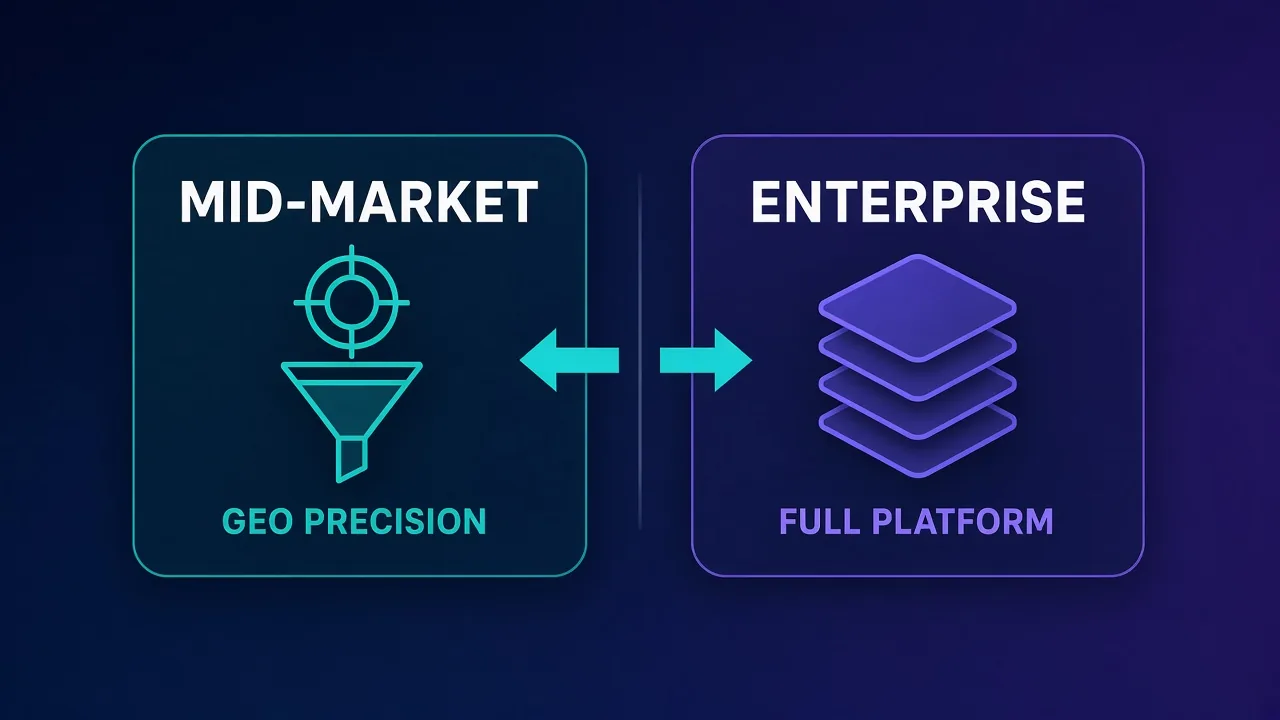
SOAX and Bright Data both sell residential, mobile, ISP, and datacenter proxies, both offer managed unblocking for hard targets, and both show up on almost every shortlist a data team builds. Yet they are aimed at different buyers. Bright Data positions itself as a full web-data platform for enterprises that need scale, compliance paperwork, and every product under one roof. SOAX positions itself as a clean, flexible mid-market network where precise geo-targeting is available on every plan instead of being reserved for premium tiers.
So the honest answer to "SOAX vs Bright Data — which is better?" is that it depends on your stack: how much traffic you push, how precise your targeting has to be, how much engineering time you have, and how heavy your procurement process is. This guide compares the two on proxy types, targeting, unblocking, pricing model, developer experience, compliance, and fit. We do not quote sticker prices or success-rate percentages in the prose because those change often; live ratings, plans, and current starting prices sit on the review cards below.
Quick framing
Bright Data is the "buy the whole platform" choice: proxies, Web Unlocker, Scraping Browser, scraper templates, and ready-made datasets. SOAX is the "buy a precise, well-maintained network without enterprise overhead" choice. Most teams should decide by workload shape and budget, not by brand recognition.
SOAX vs Bright Data: the quick verdict
If you only read one section, read this one:
- Choose Bright Data when you need enterprise scale, the most granular targeting options on the market (down to ZIP code, ASN, and mobile carrier), a managed scraping stack beyond raw proxies, and audit-ready compliance processes that satisfy a legal or procurement team.
- Choose SOAX when you want city- and ISP-level targeting without paying for an enterprise contract, prefer small low-commitment plans you can scale gradually, and value a regularly cleaned pool over a sprawling product catalog.
- Consider both if you run mixed workloads. Plenty of teams keep a premium provider for the hardest targets and a mid-market provider for high-volume, lower-risk traffic.
Here they are side by side, with pricing, ratings, and any current deals pulled live from our reviews:

SOAX
Proxy
Bright Data
Proxy
Editor score
User rating
Starting price
Founded
What is SOAX?
SOAX is a proxy provider founded in 2019 that has built its reputation around two things: targeting precision and pool hygiene. Its network spans residential, mobile, ISP, and datacenter IPs across a very wide set of countries, and country, region, city, and ISP-level selection are available to every customer rather than being locked behind higher tiers. The provider also continuously sanitizes its pool to remove flagged or low-quality addresses, which is a large part of how it keeps success rates steady on protected sites.
On top of raw proxies, SOAX offers a Web Unblocker that manages rotation, headers, and anti-bot challenges for you. You can authenticate by IP whitelist or username and password, choose rotating or sticky sessions, and manage endpoints and sub-users through an API. The trade-offs are modest but real: raw speed trails the very fastest networks, the dashboard feels a little dated, and SOCKS5 is not available on every product.
SOAX
SOAX is the targeting specialist. City- and ISP-level selection on every plan — not locked behind premium tiers — is genuinely rare, and the continuously cleaned pool keeps success rates high where it matters. It is not the fastest network, the interface could use a refresh, and SOCKS5 coverage is uneven. Those are real but minor gripes against a provider that nails the fundamentals of precision and reliability. For ad verification, localized market research, and social-media work that depends on appearing in an exact location, SOAX is one of the best mid-market options available.
What is Bright Data?
Bright Data, originally known as Luminati Networks, has been operating since 2014 and is one of the most established names in web data. It runs four proxy networks (residential, datacenter, ISP, and mobile) and wraps them in a broad data-collection suite: Web Unlocker for automated anti-bot handling, a Scraping Browser for headless automation with built-in unblocking, a Web Scraper IDE with pre-built templates, an open-source Proxy Manager, and a marketplace of ready-made datasets.
That breadth is the point. Teams that scrape many verticals, need rendered pages, and want unblocking plus raw proxies from one vendor often end up here. The costs are price and complexity. Bright Data sits at the premium end per gigabyte, the dashboard has a learning curve, and mandatory KYC verification adds friction before you can route traffic, especially for residential access. If you are already weighing it against other vendors, our Bright Data alternatives roundup and Bright Data vs Oxylabs head-to-head go deeper.
Bright Data
Bright Data remains the most complete data-collection platform money can buy. No competitor matches its combination of network scale, targeting granularity, and compliance tooling — and for enterprise teams whose revenue depends on reliable data, that completeness justifies the premium. The trade-offs are real: it is one of the priciest providers per gigabyte, the interface overwhelms newcomers, and KYC verification adds friction before you can route a single request. Smaller projects will get better value from Decodo or IPRoyal. But if you need city-level residential targeting at scale, a managed unblocker for the hardest targets, and audit-ready compliance, Bright Data is the default — and our highest-rated proxy provider overall.
Comparison table: how they stack up
Treat this as a qualitative map. Pool sizes, per-GB rates, and plan minimums move, so confirm current numbers on the live cards and each vendor's pricing page before you commit.
| Dimension | SOAX | Bright Data |
|---|---|---|
| Positioning | Mid-market network focused on targeting precision and pool quality | Enterprise web-data platform: proxies, unblocking, browser, datasets |
| Proxy types | Residential, mobile, ISP, datacenter | Residential, mobile, ISP, datacenter |
| Targeting depth | Country, region, city, and ISP on every plan | Country, state, city, ZIP, ASN, and mobile carrier |
| Managed unblocking | Web Unblocker | Web Unlocker plus Scraping Browser |
| Scraping tooling | Proxies and unblocker; you build the scraper | Scraper IDE, templates, scraper APIs, ready-made datasets |
| Plan shape | Small, flexible plans with a low-cost trial | Pay-as-you-go with no monthly minimum; best rates need commitments |
| Onboarding | Lighter, though KYC still applies | Strict KYC and compliance review; slower start |
| Dashboard | Functional but dated | Powerful but steep learning curve |
| Best fit | Ad verification, local research, social and account work | Large-scale collection, hard targets, regulated buyers |
Proxy types and network quality
Both providers cover the four main proxy types, so the question is not whether a type exists but how each network behaves for your workload. If you need a refresher on what separates the types, our guide to residential vs ISP vs datacenter proxies explains the trade-offs.
Residential
Residential IPs come from real consumer connections and are the default for scraping protected sites, because they look like ordinary household traffic. Bright Data's residential pool is one of the largest commercial networks available, which helps when you need volume across many geographies at once. SOAX's pool is also large, and its main differentiator is maintenance: continuous cleaning of flagged addresses means fewer burned IPs in rotation. In practice, pool size matters most when you are spreading heavy traffic across many locations; pool hygiene matters most when every failed request costs you a retry and a ban risk.
Mobile
Mobile IPs sit behind carrier-grade NAT, so many real users share each address, and platforms tend to be cautious about blocking them. Both providers sell mobile proxies. Bright Data adds carrier-level targeting, which is useful for app testing and ad verification on specific networks. SOAX's mobile offering is a common pick for social-media and account management work where appearing on a real carrier in a specific city is the goal.
ISP and datacenter
ISP (static residential) proxies give you a stable IP registered to a consumer ISP, which suits long-lived sessions and accounts. Datacenter proxies are the fastest and cheapest per request but the easiest to detect. Bright Data's ISP and datacenter pools are broad and backed by an enterprise uptime SLA. SOAX offers both too, which is convenient if you want one dashboard for everything, but teams whose primary need is static IPs at scale should compare dedicated options in our best ISP proxies roundup.
Targeting: where the gap is narrower than you think
Targeting is often the deciding factor between these two, and the comparison is more nuanced than "enterprise has more options."
Bright Data offers the deepest menu: country, state, city, ZIP code, ASN, and mobile carrier. If your job is verifying ads in a specific postal area or testing how a service behaves on one carrier's network, that depth is hard to match.
SOAX's strength is accessibility. Country, region, city, and ISP targeting come with every plan, so a small team can run city-level checks from day one without negotiating an upgrade. For most localized research, price monitoring, and social workflows, city plus ISP is enough, and getting it without a premium contract is the real advantage.
Rule of thumb
If your spec says "city" or "ISP", SOAX covers it on any plan. If your spec says "ZIP code", "ASN", or "this exact carrier", Bright Data is the safer bet. Write the targeting requirement down before you compare prices.
Unblocking and scraping tools
Raw proxies only solve part of the problem on heavily protected targets. You also need fingerprint management, header handling, CAPTCHA solving, and retry logic. Both vendors sell a managed layer for that.
SOAX Web Unblocker handles rotation, headers, and anti-bot challenges so you send a request and get the page back. It is a good fit when you already have your own scraper and parsing code and just want the hard targets to stop failing.
Bright Data goes further. Web Unlocker covers the same job, the Scraping Browser gives Puppeteer, Playwright, and Selenium users a remote browser with unblocking built in, the Web Scraper IDE ships pre-built templates for common sites, and the dataset marketplace lets you skip scraping entirely for some sources. If your team would rather buy collection than build it, that ecosystem is Bright Data's biggest edge.
The honest trade-off: more managed tooling means more products, more billing lines, and more documentation to learn. If you only need a proxy that works, the extra surface area can be overhead rather than value.
Pricing model: how you actually get billed
We keep exact rates on the live cards because they change, but the shape of each pricing model matters as much as the headline number.
- Bright Data bills residential and mobile traffic per gigabyte and static IPs per IP. Pay-as-you-go plans have no monthly minimum, which makes small tests possible, but the better per-GB rates and premium support arrive with monthly commitments, and the largest discounts come through annual enterprise contracts. Managed products such as Web Unlocker and datasets are billed separately. Our Bright Data pricing explainer breaks down each line.
- SOAX also bills per gigabyte for rotating traffic, with smaller, flexible plans designed to let teams start with a low commitment and scale up. A low-cost trial makes it easy to test your actual targets before buying more.
Per-GB price is only half the cost. The other half is efficiency: a cheaper gigabyte that fails more often on your target costs more per successful page. Always measure cost per successful request on your own workload, not list price per GB.
Hidden cost check
Before you sign, estimate retries, page weight (images and scripts add gigabytes fast), and whether you need the unblocker on top of proxies. Those three factors swing real spend more than a small difference in headline rates.
Performance and reliability
Bright Data backs its network with an enterprise uptime SLA and is generally regarded as one of the most reliable large networks, which matters when a data pipeline feeds revenue-critical decisions. SOAX is reliable as well, and its continuous pool cleaning supports consistent success rates, though raw speed trails the very fastest premium networks.
Published benchmarks are useful starting points, but they rarely match your targets, request patterns, or geographies. The only number that matters is how each network performs on the sites you actually collect from. Run both on the same target list, at the same concurrency, with the same session settings, and compare success rate, median latency, and cost per successful page.
Developer experience and onboarding
Both providers support the usual integrations: Puppeteer, Playwright, Selenium, Scrapy, and plain cURL. Both offer whitelist or credential authentication and rotating or sticky sessions. If you have not decided which session mode you need, our explainer on sticky sessions covers when holding an IP helps and when it hurts.
Where they differ is the first week:
- Bright Data asks more of you up front. KYC verification and compliance review can slow onboarding, and the dashboard exposes a lot of products and settings at once. Once configured, the tooling is deep, and official SDKs and the Proxy Manager help larger teams standardize.
- SOAX is quicker to start for most teams. The dashboard is less polished, but there is less to learn, and the small plans mean you can be testing real targets the same day.
Compliance, ethics, and procurement
Bright Data runs one of the strictest compliance programs in the industry: mandatory KYC, a dedicated compliance team, opt-in and compensated residential peers, usage monitoring, and certifications that procurement teams look for. If your legal team needs documentation before approving a vendor, that program is a genuine advantage.
SOAX also emphasizes ethically sourced IPs, KYC, GDPR compliance, and acceptable-use enforcement. For most commercial teams that is sufficient. Highly regulated buyers should request each vendor's documentation directly and compare it against their own requirements rather than relying on marketing pages.
Who should choose SOAX?
- Small and mid-sized teams that need city or ISP targeting without an enterprise contract.
- Ad-verification and localized market-research teams who care about appearing in an exact location.
- Social-media and account-management operators who need clean mobile or residential IPs with sticky sessions.
- Developers who already have scraping code and want a reliable network plus an unblocker for the hard sites.
- Anyone who wants to test on real targets with a small, low-commitment plan first.
Who should choose Bright Data?
- Enterprises collecting data at large scale across many countries and verticals.
- Teams that need ZIP, ASN, or carrier-level targeting.
- Organizations that would rather buy managed collection (Scraping Browser, templates, datasets) than build and maintain scrapers.
- Buyers whose procurement or legal teams require extensive compliance documentation and SLAs.
- Pipelines where reliability on the hardest targets justifies a premium price.
Common mistakes when choosing between them
- Comparing list prices only. Cost per successful page on your targets is the number that matters.
- Overbuying targeting. Paying for ZIP or ASN depth when city targeting would do wastes budget.
- Underestimating onboarding time. Plan for KYC review, especially with Bright Data residential access.
- Ignoring session needs. Account work needs sticky sessions; broad scraping usually wants rotation. Test the mode you will actually use.
- Skipping a real trial. Benchmarks from other people's targets are no substitute for your own.
How to decide in one afternoon
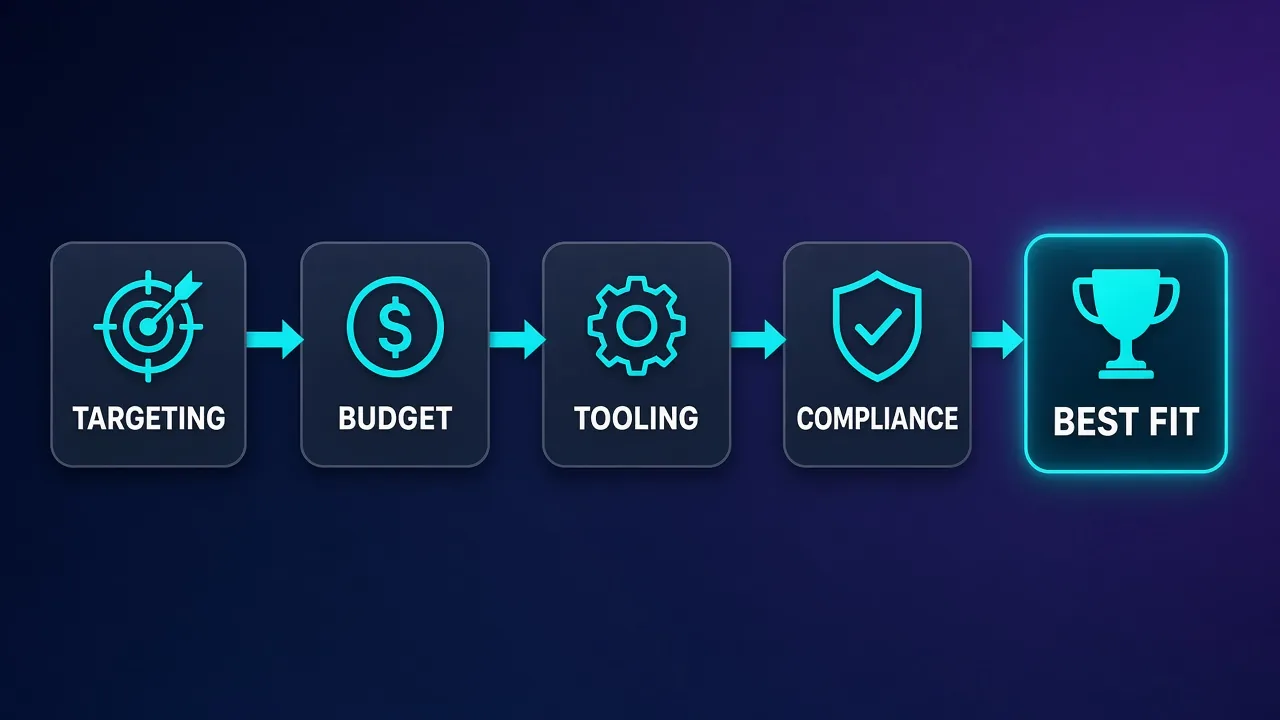
- Write down your targeting requirement (country, city, ISP, ZIP, ASN, or carrier) and your session mode.
- Pick 20 to 50 representative URLs from your real targets, including the hardest ones.
- Run the same test on both providers at the same concurrency and session settings.
- Record success rate, median latency, and gigabytes used, then calculate cost per successful page.
- Factor in onboarding time and whether you need managed tooling beyond proxies.
- Choose the provider that wins on your numbers, not on reputation.
For a broader framework you can reuse with any vendor, see our buyer's guide to choosing a proxy provider.
Bottom line
Bright Data is the more complete platform: the deepest targeting, the broadest managed tooling, and the strongest compliance story, at a premium price and with more onboarding friction. SOAX is the more approachable network: precise city and ISP targeting on every plan, a well-maintained pool, and flexible small plans, with slightly slower speeds and a dated dashboard as the trade-offs.
If you are an enterprise with hard targets and a procurement process, start with Bright Data. If you are a lean team that needs precise geo-targeting at sensible cost, start with SOAX. Either way, run both on your own targets before you commit. Current ratings, plans, and prices are on the cards below:
SOAX
Proxy
Bright Data
Proxy
Editor score
User rating
Starting price
Founded
Frequently asked questions
Neither is better for everyone. Bright Data suits enterprises that need the deepest targeting, managed scraping tools, and strong compliance documentation. SOAX suits smaller and mid-sized teams that want city and ISP targeting on every plan with flexible, low-commitment pricing.
SOAX generally positions itself below Bright Data on price and offers smaller, flexible plans plus a low-cost trial. Exact rates change, so compare the live starting prices on our review cards and measure cost per successful request on your own targets rather than list price alone.
Bright Data offers deeper options, including ZIP code, ASN, and mobile carrier targeting. SOAX offers country, region, city, and ISP targeting on every plan, which covers most localized research, ad verification, and social workflows without an enterprise contract.
Yes. Both sell residential, mobile, ISP, and datacenter proxies. The differences are in pool scale, targeting depth, pool maintenance, and the tooling built around each network.
Yes. SOAX offers a Web Unblocker that manages rotation, headers, and anti-bot challenges. Bright Data offers Web Unlocker and also a Scraping Browser, a Web Scraper IDE with templates, and ready-made datasets.
SOAX is usually quicker for small teams because its dashboard has less to learn and its small plans let you test the same day. Bright Data requires stricter KYC and compliance review, and its larger product catalog takes longer to learn.
SOCKS5 is supported on some SOAX products but not all. If your tooling depends on SOCKS5, confirm support for the specific product you plan to buy before committing.
Yes. Some teams route their hardest or most compliance-sensitive targets through a premium provider like Bright Data and send high-volume, lower-risk traffic through a mid-market network like SOAX to balance cost and success rate.