Table of contents
Bright Data and Oxylabs sit at the top of the enterprise proxy market. Both sell residential, ISP, datacenter, and mobile pools. Both ship scraping APIs and unblockers. Both sell to data teams that cannot afford silent failures on hard targets. So when buyers ask "which is better in 2026?", the useful answer is almost never a slogan — it is a fit decision: which product surface matches your volume, sticky needs, compliance bar, and engineering bandwidth.
This head-to-head compares Bright Data vs Oxylabs on residential and ISP networks, scraping APIs, pricing model shape, developer experience, and who each provider actually fits. We do not invent sticker prices or success-rate percentages here — those move often. Live ratings, plans, and current deals sit on the review cards below so you can verify before you buy.
Quick framing
Both are enterprise-grade. Bright Data usually wins on breadth of the data platform (proxies + unlocker + scraping browser + datasets). Oxylabs usually wins on a cleaner developer path into proxy + scraper APIs with strong session control docs. Pick by workload shape, not by brand heat.
Bright Data vs Oxylabs: the quick verdict
If you need the shortest decision rule:
- Choose Bright Data when you want the widest commercial proxy footprint plus a full web-data platform — Web Unlocker, Scraping Browser, SERP / scraper APIs, and ready datasets — and your legal or procurement team expects deep compliance paperwork, KYC, and enterprise onboarding.
- Choose Oxylabs when you want a sharp enterprise proxy + scraper stack with clear session semantics, strong ISP and residential targeting (including ASN-level options), and a product surface that feels more like "buy the proxy / API you need" than "buy a data platform."
- Neither is the budget pick. If you are an individual, a startup, or a team that only needs mid-tier residential, look at more approachable providers first — for example our Oxylabs vs Decodo comparison — before committing enterprise spend.
Here they are side by side. Pricing, ratings, and any current deals pull live from our reviews:
Bright Data
Proxy

Oxylabs
Proxy
Editor score
User rating
Starting price
Founded
What is Bright Data?
Bright Data (formerly Luminati) is a large web-data company built around proxy infrastructure and the products that sit on top of it. The company is widely known for residential, ISP, datacenter, and mobile networks, plus managed tools such as a Web Unlocker, Scraping Browser, scraper / SERP APIs, and a marketplace of pre-collected datasets. The pitch is less "here is a proxy list" and more "here is a platform for collecting public web data at scale."
That breadth is the product. Teams that scrape many verticals, need browser-rendered pages, or want unlocker + raw proxies under one vendor often land here. The trade-off is complexity: more products means more billing surfaces, more docs to learn, and often a heavier compliance / verification path before residential access is fully unlocked.
Bright Data
Bright Data remains the most complete data-collection platform money can buy. No competitor matches its combination of network scale, targeting granularity, and compliance tooling — and for enterprise teams whose revenue depends on reliable data, that completeness justifies the premium. The trade-offs are real: it is one of the priciest providers per gigabyte, the interface overwhelms newcomers, and KYC verification adds friction before you can route a single request. Smaller projects will get better value from Decodo or IPRoyal. But if you need city-level residential targeting at scale, a managed unblocker for the hardest targets, and audit-ready compliance, Bright Data is the default — and our highest-rated proxy provider overall.
What is Oxylabs?
Oxylabs is a Lithuania-based enterprise proxy and web-scraping company. Its core offer is a large residential network alongside datacenter, ISP, and mobile proxies, plus a mature scraper API suite (general Web Scraper API, dedicated e-commerce and SERP-oriented products, and an unblocker-style path for hard targets). The product story is closer to "reliable proxy infrastructure and purpose-built scraping APIs with enterprise support" than to a full dataset marketplace.
Oxylabs is frequently chosen by SEO, e-commerce monitoring, and data engineering teams that want predictable session control, strong geo / ASN targeting, and SLA-backed support without adopting an entire data platform on day one.
Oxylabs
Oxylabs is the enterprise provider that gets the fundamentals right. The network is huge and well-maintained, the scraper APIs are genuinely best-in-class, and the documentation and SDKs make integration faster than almost any competitor. What sets it apart from Bright Data is service: dedicated account managers, responsive support, and cleaner tooling mean less time fighting the platform and more time shipping. The cost is higher entry pricing, and the deepest discounts favor high-volume commitments. For serious commercial data operations that can justify the spend, Oxylabs is a top-two choice and frequently the one teams stay with long-term.
Comparison table: how they stack up
Use this as a qualitative map. Exact pool sizes, per-GB rates, and plan minimums change — confirm on the live cards and each vendor's pricing page before you commit.
| Dimension | Bright Data | Oxylabs |
|---|---|---|
| Primary positioning | Full web-data platform (proxies + unlocker + browser + datasets) | Enterprise proxies + scraper / unlocker APIs |
| Residential | Very large rotating residential footprint; deep geo coverage | Large residential pool with fine geo and ASN targeting |
| ISP / static residential | Strong ISP inventory for sticky, long-lived exits | Strong ISP offering; shared and dedicated styles commonly marketed |
| Datacenter & mobile | Both available; mobile useful for app-looking traffic | Both available; mobile often subscription-oriented |
| Scraping APIs | Web Scraper API, SERP API, Web Unlocker, Scraping Browser | Web Scraper API, e-commerce / SERP APIs, Web Unblocker |
| Pricing model shape | Usage-based across products; platform minimums common on managed plans | Tiered / usage-based per product; volume ladders on residential and APIs |
| Onboarding | Often verification-heavy for sensitive products | Enterprise sales + self-serve paths; still serious compliance |
| Best fit | Platform buyers, hard multi-product pipelines, compliance-heavy orgs | Proxy-first teams, SERP / ecom monitoring, clear session control needs |
Residential proxies: pool, targeting, and when rotation wins
Residential proxies exit through consumer ISP peers. That ASN class is why they remain the default for public-page collection on sites that fingerprint hosting ranges. Both Bright Data and Oxylabs sell rotating residential at global scale with city-level (and often finer) targeting.
Where they feel different in practice:
- Pool depth vs. targeting clarity. Bright Data markets an extremely large residential footprint and pairs it with platform tools when rotation alone is not enough. Oxylabs documents targeting axes (country, city, state, ZIP, coordinates, ASN in many setups) and session ports in a way many engineering teams find easy to operationalize.
- Rotation vs. sticky windows. For short public scrapes, rotate freely. For multi-step flows that should keep one exit for minutes to hours, use sticky residential — or step up to ISP when you need days of identity stability. That type decision matters more than brand; see our guide on residential vs ISP vs datacenter proxies.
- Hard targets. When Akamai, DataDome, or similar stacks are in play, raw residential is often only half the story. Both vendors push you toward unlocker / scraper APIs for those jobs. Do not assume "bigger pool" alone beats a well-tuned unblocker.
Do not buy residential for the wrong job
Logged-in social seats, messaging apps, and long-lived multi-account browsers often need ISP / static residential, not pure rotating peers. If your use case looks like Telegram or LinkedIn automation, start from sticky ISP thinking — our static proxies for Telegram and LinkedIn automation proxies posts cover that pattern.
ISP / static residential: sticky identity and ASN optics
ISP proxies (sometimes marketed as static residential) give you a longer-lived IP on ISP-looking ranges, usually priced per IP rather than per GB. That is the right tool when a destination expects the same user to keep the same exit across hours or days.
Both Bright Data and Oxylabs compete seriously here:
- Bright Data ISP is positioned as datacenter-speed exits on ISP-sourced ranges — useful when you want sticky optics without the latency tax of some mobile paths.
- Oxylabs ISP commonly shows up as shared vs dedicated inventory with clear per-IP framing, which helps teams that need predictable seat counts for anti-detect browsers or account farms.
Decision rule: if your scraper is one-shot public HTML, residential rotation is usually enough. If your stack is Multilogin / AdsPower / GoLogin profiles, ad accounts, or messaging logins, budget ISP seats first and treat rotating residential as overflow. Pair ISP exits with good browser hygiene — proxies alone do not defeat fingerprinting (see proxies with anti-detect browsers).
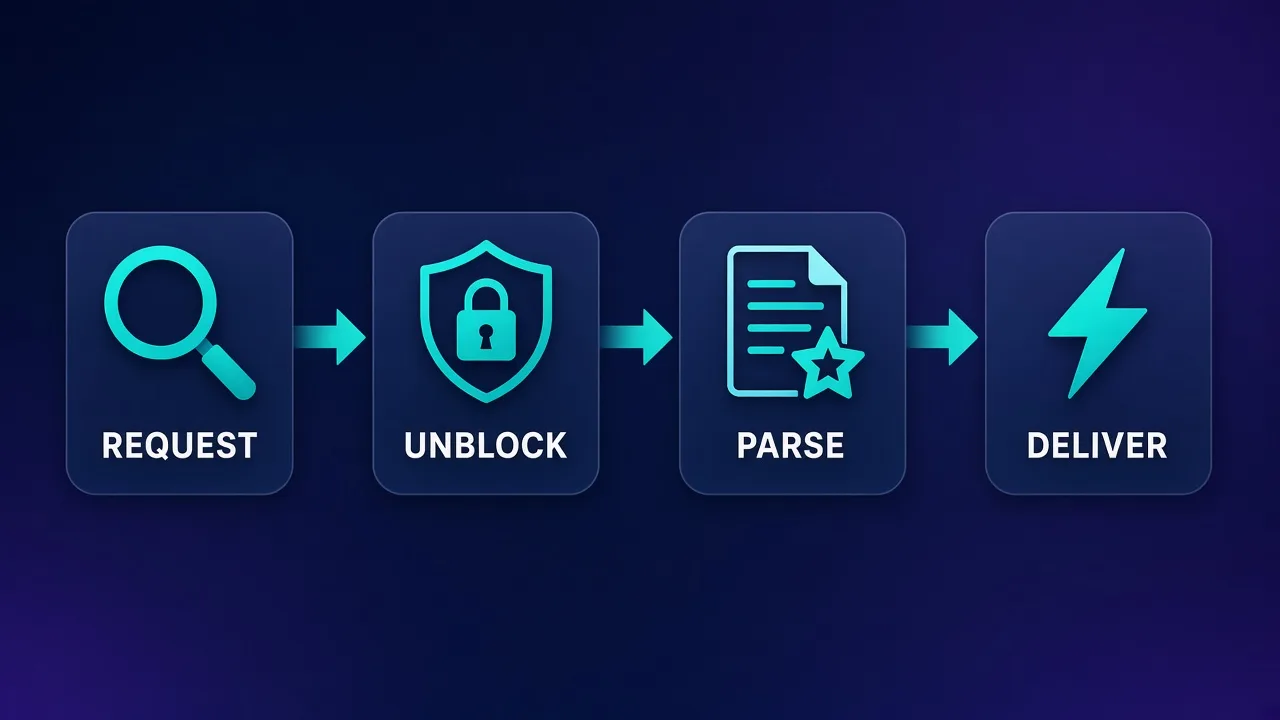
Scraping APIs and unblockers
Modern hard-target collection often skips "raw proxy + your Playwright" for a managed API that returns HTML or parsed JSON. Both vendors have invested heavily here.
Bright Data's data-collection surface
Bright Data's toolkit typically includes:
- Web Unlocker — managed unblocking for difficult sites; you send a URL and get a successful response path without running your own CAPTCHA / retry mesh.
- Scraping Browser — remote browser sessions when you need real rendering and interaction, not just HTTP fetch.
- Web Scraper API / SERP API — structured or semi-structured extraction paths for common patterns.
- Datasets — buy already-collected data when building your own crawler is not the bottleneck.
The advantage is coverage: one vendor can move you from "I need IPs" to "I need rendered pages" to "I need a dataset." The cost is cognitive and commercial fragmentation — multiple products, multiple meters, sometimes multiple plan minimums.
Oxylabs' scraper API suite
Oxylabs leans into purpose-built scraper APIs:
- Web Scraper API for general sites.
- E-commerce and SERP-oriented APIs when you want parsed fields rather than raw HTML.
- Web Unblocker for targets that punish naive HTTP clients.
Teams that already know they need "Google SERP JSON" or "product page fields" often find Oxylabs' API packaging straightforward. Session control for the proxy products is also well documented (rotating vs sticky ports), which reduces trial-and-error during integration.
Pricing model: how you actually get billed
We will not paste ephemeral dollar figures that go stale in a week. Instead, understand the shape of each bill so you can model cost correctly:
- Residential / mobile — usually metered by GB (sometimes by bandwidth tiers). Failed retries still consume budget on many plans, so success rate on your targets matters more than list price.
- ISP / datacenter — often per IP per month (dedicated or shared). Model seats, not gigabytes.
- Unlocker / scraper APIs — per successful request, per result, or hybrid. Rendering and JS-heavy paths cost more than simple HTTP.
- Platform minimums — enterprise vendors frequently gate managed plans behind monthly commitments. A low per-unit rate with a high floor can lose to a slightly higher rate with no floor if your volume is modest.
Practical modeling tip: compare cost per successful outcome on a pilot of your real URLs, not brochure GB rates. Include engineering time for unlocker integration vs. maintaining your own headless fleet. Point your finance model at the live
Bright Data
Bright Data remains the most complete data-collection platform money can buy. No competitor matches its combination of network scale, targeting granularity, and compliance tooling — and for enterprise teams whose revenue depends on reliable data, that completeness justifies the premium. The trade-offs are real: it is one of the priciest providers per gigabyte, the interface overwhelms newcomers, and KYC verification adds friction before you can route a single request. Smaller projects will get better value from Decodo or IPRoyal. But if you need city-level residential targeting at scale, a managed unblocker for the hardest targets, and audit-ready compliance, Bright Data is the default — and our highest-rated proxy provider overall.
and
Oxylabs
Oxylabs is the enterprise provider that gets the fundamentals right. The network is huge and well-maintained, the scraper APIs are genuinely best-in-class, and the documentation and SDKs make integration faster than almost any competitor. What sets it apart from Bright Data is service: dedicated account managers, responsive support, and cleaner tooling mean less time fighting the platform and more time shipping. The cost is higher entry pricing, and the deepest discounts favor high-volume commitments. For serious commercial data operations that can justify the spend, Oxylabs is a top-two choice and frequently the one teams stay with long-term.
Pilot before you commit
Run the same 1–2k URL sample through each vendor's residential path and, separately, through each unlocker / scraper API. Record success, median latency, and fully loaded cost. That beats any blog table — including this one.
Performance, reliability, and what benchmarks miss
Third-party latency and success benchmarks exist, but they are snapshots: different URL sets, concurrency, and regions produce different winners. Treat published averages as directional, not gospel.
What tends to hold in 2026 buyer reports:
- Both are "enterprise reliable" relative to budget residential. Neither is immune to regional soft patches or sudden anti-bot changes.
- Latency often favors the vendor whose POP and routing match your worker region. If your scrapers run in the EU, test EU exits; US-only numbers can mislead.
- Unlocker success on the hardest sites can matter more than raw residential RTT. If your failure mode is CAPTCHA walls, budget for the API product, not just cheaper GB.
- Concurrency policy — some plans soft-cap threads; others advertise effectively unlimited concurrency under fair use. Read the contract if you burst.
Also remember: proxies get blocked for reasons beyond vendor quality — fingerprint reuse, bad pacing, leaked DNS, and reused accounts. Our guide on why proxies get blocked and how websites detect bots covers the non-IP half of the problem.
Developer experience and onboarding
Bright Data gives you a powerful console and many product entry points. New users can feel lost among unlocker vs browser vs raw proxy vs datasets. Expect verification steps for sensitive products; procurement and legal often like that, while indie hackers do not.
Oxylabs is still enterprise, but many teams describe the proxy and scraper API docs as easier to turn into a first working integration — especially session ports, geo parameters, and vertical scraper APIs. You still should not expect "free tier hobby" friction levels; both vendors are serious commercial tools.
Integration checklist both sides share:
- Confirm protocol needs (HTTP(S) vs SOCKS5) for your client.
- Decide rotate-every-request vs sticky TTL before you write retry logic.
- Pin geo / ASN only as tightly as the use case needs — over-narrow targeting shrinks effective pool.
- Log exit IP, status code, and bytes separately so you can attribute failures to proxy vs application.
- Keep secrets in env / secret manager; never commit gateway passwords.
Compliance, ethics, and procurement
Both companies market consent-based residential sourcing and enterprise compliance postures (think GDPR / CCPA awareness, SOC 2 style controls, KYC for risky use cases). That does not make every customer use case legal. Collecting public data still has to respect applicable law, contracts, and site terms. If your general counsel needs a vendor with mature paperwork, both can usually satisfy that bar — Bright Data in particular leans hard into compliance messaging because of its history and scale.
Procurement tip: ask for data processing terms, residential sourcing attestations, and clarity on who is liable when a target sends a cease-and-desist. Price is not the only line item on an enterprise proxy deal.
Who should choose Bright Data?
- You want one vendor for proxies, unlocker, scraping browser, and datasets.
- Your targets are heterogeneous and often need managed unblocking or real browsers, not just rotating IPs.
- Legal / security review is a first-class gate and you value deep compliance tooling.
- You are already standardized on Bright Data elsewhere in the org and switching costs dominate.
Skip Bright Data (or start narrower) if you only need cheap datacenter exits, a tiny residential pilot, or a beginner dashboard with no sales process — look at lighter providers first, or read Webshare vs Bright Data for the budget-vs-enterprise contrast.
Who should choose Oxylabs?
- Your roadmap is proxy network + scraper APIs, not a full dataset marketplace.
- You care about session control clarity, ASN / fine geo targeting, and vertical APIs (SERP, e-commerce).
- ISP sticky seats and residential rotation both matter in the same stack.
- Your team wants enterprise SLAs without adopting six Bright Data product SKUs on day one.
Skip Oxylabs if your budget is SMB / hobby tier — compare mid-market options such as Decodo in Oxylabs vs Decodo before you pay enterprise rates for capacity you will not use.
Use-case playbooks
SERP and SEO monitoring
Prefer scraper / SERP APIs over raw residential when you need stable parsed results. Both vendors compete; pilot your keyword set and locales. Oxylabs' vertical SERP packaging is a common shortlist pick; Bright Data's SERP API is equally in the conversation for platform buyers.
E-commerce price and availability
Start with residential or unlocker depending on bot difficulty. If you only need structured product fields, try each vendor's e-commerce-oriented API before building parsers. Watch bandwidth on image-heavy pages — GB meters punish naive full-page downloads.
AI agents and tool-using browsers
Agents that browse on behalf of users need sticky sessions, clean exits, and often browser-level tooling. Bright Data's Scraping Browser can shorten that path; Oxylabs pairs well when you already run your own browser fleet behind their proxies. See also best proxies for AI agents.
Account operations and anti-detect
Buy ISP / static seats, one identity per profile, and keep rotation away from login cookies. Brand of enterprise proxy matters less than sticky hygiene.
Common pitfalls when choosing between them
- Buying residential GB for sticky login work. Wrong product class.
- Comparing list $/GB without measuring success on your URLs. Retries erase "cheap."
- Ignoring platform minimums. A discounted unit rate with a high floor can be more expensive at your real volume.
- Assuming unlocker is optional on hard targets. Sometimes the API is the product; the proxy is an implementation detail.
- Skipping ASN strategy. If you care about which network you egress from, read what an ASN is and test ASN targeting where offered.
- No exit plan. Abstract your proxy client behind an interface so switching vendors later is a config change, not a rewrite.
How to decide in one afternoon
- Write down traffic class: public scrape, SERP, e-commerce parse, or sticky accounts.
- Pick product class first (residential vs ISP vs unlocker / scraper API).
- Open both review cards and current vendor pricing pages — note floors and meters.
- Run a fixed URL pilot on each shortlisted path; log success and fully loaded cost.
- Score DX, support responsiveness, and compliance paperwork if enterprise procurement is involved.
- Commit for a quarter, not a year, unless volume discounts force a longer term you have already validated.
Bottom line
Bright Data vs Oxylabs is not a blowout. Both are top-tier enterprise options in 2026. Bright Data is usually the better platform bet when you want unlocker + browser + datasets beside proxies. Oxylabs is usually the better proxy-and-API bet when you want sharp residential / ISP networking and vertical scraper APIs with clear session semantics. Confirm live pricing on the cards, pilot your real targets, and choose the fit — not the louder homepage.
If you are still mapping proxy types before you pick a vendor, start with residential vs ISP vs datacenter. If your workload is Telegram-style sticky sessions, jump to static proxies for Telegram.
Frequently asked questions
It depends on fit. Bright Data is usually stronger when you want a full web-data platform — proxies plus unlocker, scraping browser, and datasets. Oxylabs is usually stronger when you want enterprise residential and ISP networking with clear session control and purpose-built scraper APIs. Pilot your real URLs before you commit.
Both sell large global residential networks with fine geo targeting. Bright Data emphasizes platform depth around that pool; Oxylabs emphasizes targeting clarity and session semantics. Success depends more on your targets and whether you need an unlocker than on brochure pool size.
Yes. Both compete on ISP / static residential inventory for sticky, long-lived exits. Choose ISP when logged-in or multi-day identity stability matters; use rotating residential for short public scrapes.
Both offer managed scraping and unblocker products. Bright Data pairs unlocker and scraping browser with a broader data platform. Oxylabs leans into Web Scraper API plus vertical e-commerce and SERP APIs. Pick based on whether you need browser sessions, parsed SERP or product fields, or raw HTML unblocking.
Both are enterprise-priced. Exact per-GB, per-IP, and per-result rates change often, and platform minimums can dominate at modest volume. Compare cost per successful outcome on a pilot and check the live pricing on our Bright Data and Oxylabs review cards.
Oxylabs is often described as easier to integrate for proxy plus scraper API workflows, with clear session and targeting docs. Bright Data is more powerful as a multi-product platform but steeper to learn. Neither is a no-sales hobby free tier.
Choose Bright Data if you want one vendor for proxies, unlocker, scraping browser, and datasets, or if procurement expects deep compliance tooling and platform breadth. Skip it if you only need a narrow proxy or mid-market budget.
Choose Oxylabs if your roadmap is proxy network plus scraper APIs — especially SERP or e-commerce parsing — with strong ISP and residential session control, without adopting a full dataset marketplace on day one.