Table of contents
Webshare is a strong starting point for many teams: a free plan, a plan builder that prices by proxy count, and cheap shared datacenter IPs that are easy to spin up. Plenty of scrapers, SEO tools and account workflows begin there and never leave. Others outgrow it. When you need larger residential pools, traffic that does not expire, sticky ISP sessions at scale, or human support on a hard target, it is fair to look at Webshare alternatives without pretending Webshare itself is a bad product.
This roundup compares six budget-friendly providers that show up on shortlists when people leave Webshare's datacenter-first model: IPRoyal, Proxy-Seller, Decodo, Rayobyte, Proxy-Cheap and DataImpulse. Prices and plan shapes were re-checked on official sites on 7 November 2026. Use the cards for live ratings and offers, and treat published rates as a snapshot — every provider changes them.
Stay vs switch
Stay on Webshare if shared or private datacenter IPs, a free starter plan, and a customisable proxy-count builder still match your work. Switch when residential success rates, unused traffic that expires, static ISP depth, or support response become the bottleneck. Many teams keep Webshare for light DC work and add a residential specialist beside it.
Why people look past Webshare
Webshare's pricing page is unusual in a good way. Proxy Server (datacenter) plans are billed per proxy: about $0.0299 per proxy for 100 shared proxies, falling to about $0.0179 per proxy at 60,000, with a free tier of 10 proxies. Static Residential (ISP) starts around $6 per month for 20 proxies ($0.30 per proxy) and drops toward $0.225 per proxy at 10,000. Rotating Residential is bandwidth-based, from about $3.50/GB on a 1GB plan down to about $1.40/GB at 3,000GB. Proxy Server and Static Residential plans include 250GB of bandwidth (upgradable toward unlimited under fair use); rotating residential is sold by the gigabyte. Full detail lives in our Webshare pricing explained guide.
Those numbers explain the loyalty. They also explain the exits. Datacenter IPs remain the cheapest way to move volume, but many modern targets treat hosting ranges harshly. Webshare's rotating residential product exists and is priced competitively at volume, yet buyers who want traffic that never expires, city/ASN targeting as a default, or a provider whose marketing is residential-first often try specialists. Support expectations rise too once a pipeline is revenue-critical. None of that makes Webshare wrong for its sweet spot; it just means the shortlist should widen.
How we picked these alternatives
Every provider below has a published Proxyaxis card, offers a real budget path (self-serve entry without an enterprise sales call as the only door), and covers at least one of residential, ISP/static residential, or flexible pay-as-you-go. We excluded NetNut and Thordata by site policy, and we do not recommend IPIDEA-linked brands. Fairness matters: Webshare still wins on free trials of datacenter capacity and on builder-style pricing, so each pick below is framed as "better when…" rather than "better than Webshare at everything."
| Provider | Best for | Residential snapshot (7 Nov 2026) | Notable edge vs Webshare |
|---|---|---|---|
| IPRoyal | Residential that does not expire | Subscription from ~$7/GB (1GB) to $1.75/GB at 10TB; PAYG slightly higher | Unused residential traffic never expires |
| Proxy-Seller | Dedicated IPs + residential GB packs | Residential from $3.50/GB (1GB) to $1.45/GB (1TB) | Strong dedicated IPv4/ISP/mobile catalogue |
| Decodo | Balanced mid-market residential | Monthly from $3.75/GB (3GB) to $2/GB (1TB); PAYG $4/GB | 115M+ pool, city/ZIP/ASN targeting, free trial |
| Rayobyte | High-volume Scale residential | Scale plans from ~$0.015/GB ($100/mo) to ~$0.0095/GB ($5,000/mo) | Own network thesis; very low Scale rates at volume |
| Proxy-Cheap | Ultra-budget rotating & static mixes | Rotating residential plans from about $1.50/GB (3GB+); site also lists from ~$0.78/GB | Low entry for ISP + rotating residential |
| DataImpulse | Simple PAYG, no expiry | Residential from $1/GB; $0.80/GB above 1TB; DC $0.50/GB; mobile $2/GB | No subscription required; traffic does not expire |
For a head-to-head that focuses only on IPRoyal and Webshare, see IPRoyal vs Webshare. For how Webshare stacks against an enterprise-heavy residential giant, see Webshare vs Bright Data.
IPRoyal — residential traffic that never expires
IPRoyal is the usual first stop when the complaint about Webshare is unused residential gigabytes vanishing at month-end. On 7 November 2026 its residential page listed subscription rates of $7.00/GB (1GB), $5.95/GB (2GB) and $5.25/GB (10GB), with custom plans from $1.75/GB starting at 10TB. Pay-as-you-go sat slightly higher ($7.35 / $6.25 / $5.51 / custom from $1.84/GB at 10TB). The marketing claim that matters for switchers is that purchased residential traffic does not expire. ISP proxies start from about $1.80 per proxy, datacenter from about $1.39 per proxy, and mobile from about $117 per month, with a listed residential pool of 64M+ IPs.
That combination suits irregular scrapers, agency work with bursty clients, and anyone who hates forcing volume into a calendar month. Entry per-GB rates are not the cheapest on this list — DataImpulse and high-volume Rayobyte Scale undercut them — but the no-expiry policy changes the effective cost if your usage is lumpy. Dashboard controls for sticky vs rotating sessions and country targeting cover most self-serve needs.

IPRoyal
IPRoyal is the best pure pay-as-you-go deal in proxies. Non-expiring traffic is a genuinely customer-friendly policy that no major rival matches — buy what you need, use it whenever, lose nothing. The pool is smaller than the premium networks and success rates can soften on the most heavily defended targets, so high-volume enterprise scraping is not its strength. The dashboard is also fairly basic. For intermittent scraping, account work, and sneaker copping on a predictable budget, IPRoyal is an easy recommendation and one of the best value picks for occasional users.
Note on Pawns / bandwidth-sharing reports
Residential IPs have to come from real home connections, and IPRoyal's pool relies on people sharing bandwidth through an app. Security firm GreyNoise describes Pawns.app as a "direct partner" of IPRoyal that supplies proxy nodes, and says it appears to be a rebrand of "IPRoyal Pawns" owned by the same people. That model has been abused. In October 2026, GreyNoise reported an actor that compromised edge devices and installed Pawns.app under the attacker's payout account. AhnLab's ASEC team has documented similar cases: droppers spread through adware that installed IPRoyal Pawns without permission, and attacks on poorly managed MS-SQL servers that installed it alongside other proxyware.
None of these reports says IPRoyal installed the software itself. In the reported cases, criminals used it on devices they did not own and collected the payouts. GreyNoise notes that the Pawns binaries "are not necessarily malware unless installed without consent." IPRoyal's sourcing policy says suppliers must show that device owners gave informed consent, and that it checks its pool against public abuse databases. A low price per GB does not tell you how every exit was obtained — ask any residential provider how it proves consent before you commit large spend. More detail, including buyer context, is in IPRoyal pricing explained.
What this means for buyers
Treat residential sourcing as a due-diligence item, not a gotcha unique to one brand. Use residential IPs only for legitimate work, read the acceptable use policy, and prefer providers that publish consent and abuse-monitoring practices.
Proxy-Seller — dedicated IPs with residential packs
Proxy-Seller leans into private proxies: dedicated IPv4, ISP, mobile and IPv6 lines alongside residential bandwidth packs. On its pricing page on 7 November 2026, residential volume ran from $3.50/GB for 1GB down through $2.70/GB (10GB), $2.20/GB (100GB) and $1.45/GB at 1,000GB. Plans advertise SOCKS5 and HTTPS, authentication by login or IP allowlist, and dedicated (non-shared) IPs on many products. Volume discounts of up to about 30–40% appear on larger IP packages, with a 24-hour replacement/refund window if delivered proxies miss stated specs.
That mix is useful when you are leaving Webshare because you need long-lived dedicated IPs for account work or multi-geo ISP sessions, not only a rotating residential pipe. Residential GB pricing sits in the same mid-budget band as Decodo's smaller monthly plans. Expect to pick location at purchase for datacenter/ISP/mobile SKUs; residential geo is chosen when you build proxy lists in the dashboard.

Proxy-Seller
Proxy-Seller is excellent value if you want fixed, dedicated IPs instead of metered bandwidth. Per-IP pricing from $1.30 with unlimited bandwidth, flexible rental terms, and unusually cheap IPv6 make it a smart choice for account management and SEO. It is not the place for large rotating-residential workloads — the per-IP model does not scale to mass scraping that needs thousands of fresh addresses. The dashboard is also plain and functional rather than polished. But for stable, dedicated identities at a low cost, backed by 24/7 support, Proxy-Seller is one of the better dedicated-proxy specialists around.
Decodo — mid-market residential with targeting depth
Decodo (the Smartproxy rebrand) is the "grown-up Webshare residential" pick for many teams. Residential pricing checked on 7 November 2026: monthly plans from $3.75/GB on 3GB ($11.25) through $3.50 (10GB), $3.25 (25GB), $3.00 (50GB) and $2.75/GB on 100GB; Enterprise from $2.50/GB (250GB) to $2.00/GB (1TB); pay-as-you-go at $4/GB. Every plan claims access to a 115M+ ethically sourced pool across 195+ locations, HTTP(S) and SOCKS5, continent-to-ZIP and ASN targeting, rotating and sticky sessions, and 24/7 support. A 3-day free trial with 100MB and a 14-day money-back policy lower the trial risk.
Compared with Webshare's rotating residential ladder ($3.50 → $1.40/GB), Decodo's published small-plan rates start a bit higher but include deeper targeting and a larger marketed pool. PAYG at $4/GB is clearly for short projects. If your reason for leaving Webshare is "residential works, but I need city/ZIP precision and a dashboard built around it," Decodo is the straightforward switch.

Decodo
Decodo offers the best price-to-performance ratio in the industry. It delivers roughly 90% of what the enterprise leaders provide — high success rates, a large clean pool, sticky sessions, an unblocker — at a fraction of their cost. The dashboard is the friendliest of any major provider, the 14-day money-back guarantee removes the risk of trying it, and support actually responds. The main gaps are enterprise-grade compliance tooling and the very deepest targeting, neither of which most teams need. For startups, solo developers, and any team that wants professional results without enterprise pricing, Decodo is our top value pick and an easy recommendation.
Rayobyte — Scale rates when volume is the point
Rayobyte splits residential into Scale (monthly plans, very low per-GB rates, excludes premium domains) and Premium (pay-as-you-go style tiers that include premium domains). On 7 November 2026, Scale residential listed $100/mo for 6,600GB (~$0.015/GB), $500/mo for 40,000GB (~$0.0125/GB), $1,500/mo for 136,000GB (~$0.011/GB) and $5,000/mo for 526,000GB (~$0.0095/GB). Premium residential PAYG steps included $3.50/GB, $2/GB, $1.50/GB, $0.70/GB and from $0.50/GB at the top published tiers. Static ISP starts around $5/IP per month (volume discounts to ~$4.60, enterprise from ~$0.95). Mobile starts at $3/GB on a $250/mo plan.
Read those Scale numbers carefully: concurrency is tied to plan size (about one concurrent request per dollar on Scale), and premium domains are excluded. This is not a casual 5GB/month product. It is a Webshare alternative when you have already proven a high-volume pipeline and Webshare's residential GB ladder or datacenter pool is the wrong tool. Rayobyte also markets an owned residential network and opt-in sourcing story — still ask for consent proof on large contracts.

Rayobyte
Rayobyte is a dependable, transparent US provider that does the basics very well. Its unlimited-bandwidth datacenter proxies are the highlight — predictable costs for heavy scraping, backed by a responsive US-based support team. The ethical residential sourcing program is a genuine plus for compliance-minded teams, even if the pool is mid-sized rather than enormous. The interface is functional rather than polished, and datacenter country coverage is narrower than some. For SEO tooling, high-volume datacenter scraping, and anyone who values support and transparency, Rayobyte is a solid, no-drama choice.
Proxy-Cheap — lowest advertised entry for mixed types
Proxy-Cheap targets buyers who want static residential, rotating residential, datacenter and mobile without enterprise paperwork. On 7 November 2026 the pricing page showed static residential (ISP) basic plans from about $1.99 per week (7-day trial) and about $2.71 per month, with promotional static residential from roughly $2.44/month. Rotating residential service pages listed bandwidth plans from $1.50/GB (3GB+) and $1.20/GB (4GB+), while the overview also advertised rotating residential from about $0.78/GB. Datacenter IPv4 was listed around $1.49 per proxy per month; rotating mobile around $5.99/GB. The rotating residential product claims 80M+ IPs, 195+ locations, sticky or rotating sessions, and up to 100 concurrent connections.
Treat the lowest "from" figures as starting points and confirm the exact SKU in the order form — Proxy-Cheap's UI mixes shared/basic/dedicated/premium tiers. As a Webshare alternative it makes most sense when you want cheap static ISP seats or a small rotating residential bucket without Decodo's mid-market pricing. Validate success rates on your targets before moving production traffic.

Proxy-Cheap
Proxy-Cheap is one of the best value plays in the mid-market, and its cheap static residential (ISP) proxies are the headline: a stable, residential-grade identity per account at a price small operators can actually afford. The rotating residential pool is decent for everyday targets but not a match for premium networks on the hardest sites, and the product experience — dashboard, docs, support — feels a step behind the polish of bigger rivals. For multi-account work and general-purpose proxying on a budget, it earns its place. For high-stakes, high-volume scraping, look up-market.
DataImpulse — pay-as-you-go from $1/GB, no expiry
DataImpulse's pitch is almost the opposite of a locked monthly builder: pay-as-you-go residential from $1/GB, datacenter at $0.50/GB, mobile at $2/GB, with no subscription required and traffic that does not expire. The site (checked 7 November 2026) lists 90M+ ethical residential IPs across 195+ countries, country targeting included, and city/state/ZIP/ASN targeting for a small extra fee. Volume above 1TB is advertised at $0.80/GB, with custom pricing for 5TB+. Sticky sessions up to 120 minutes and rotating modes are both supported. A 7-day refund policy appears in marketing copy.
If you leave Webshare because rotating residential feels like the wrong unit of purchase, or because unused GB would die at month-end, DataImpulse and IPRoyal solve the same pain from different price points. DataImpulse's $1/GB headline undercuts IPRoyal's small-plan subscription rates; IPRoyal still wins mindshare on the "never expires" narrative and a broader ISP/datacenter/mobile menu with familiar card coverage. For pure PAYG residential testing, DataImpulse is hard to ignore on price alone — still run a small pilot on your domains.

DataImpulse
DataImpulse delivers the most convincing $1/GB offer we have seen: real pay-as-you-go pricing with country and city targeting, SOCKS5, and sticky sessions included rather than upsold. For budget scraping it resets expectations of what cheap should include. As a young network its long-term consistency is still being proven, and heavy-duty targets expose the gap to premium pools. For light-to-moderate scraping, testing, and cost-sensitive production work, it is arguably the best value in the market right now.
When to keep Webshare anyway
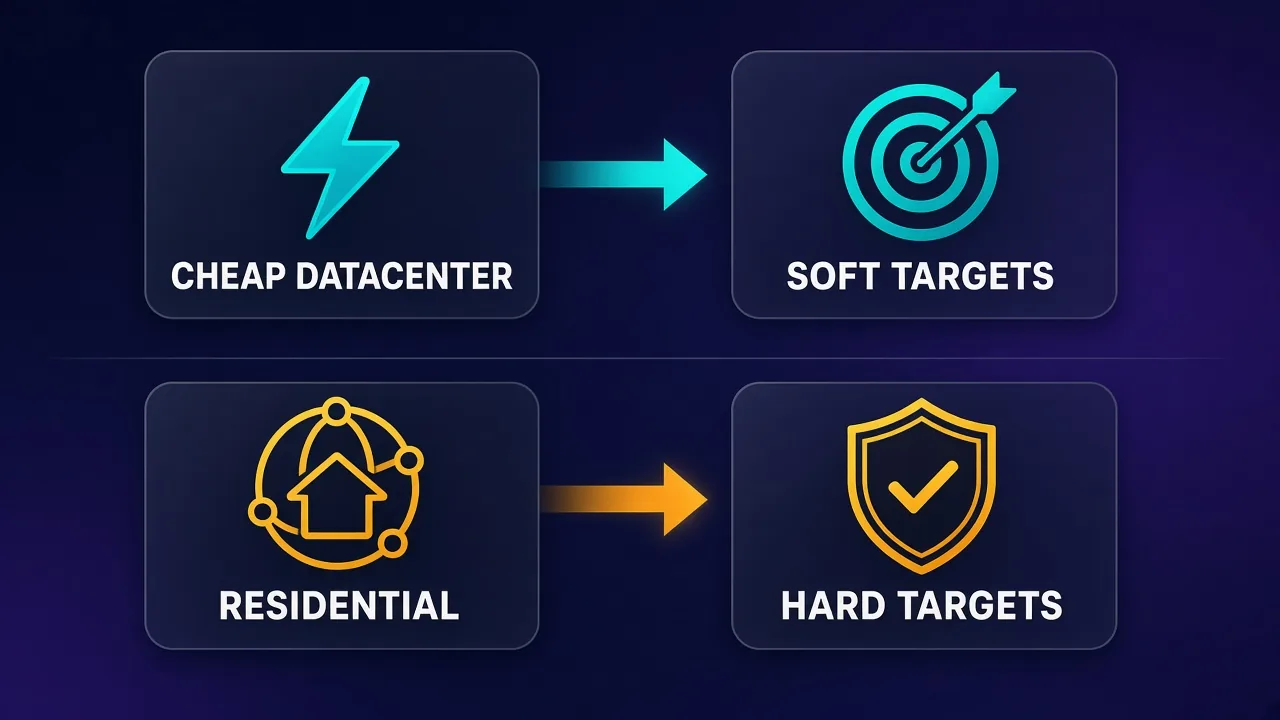
Switching providers has a cost: new auth strings, allowlists, monitoring, and a week of comparing success rates. Keep Webshare when most of your traffic is still happiest on shared or private datacenter IPs, when the free plan or low proxy-count builder is enough for prototypes, and when 250GB included bandwidth on Proxy Server / Static Residential plans covers you. Many operators run a barbell: Webshare (or another cheap DC vendor) for soft targets, plus one residential specialist from this list for hard targets. That is often cheaper than forcing everything through residential GB.
Practical migration tip
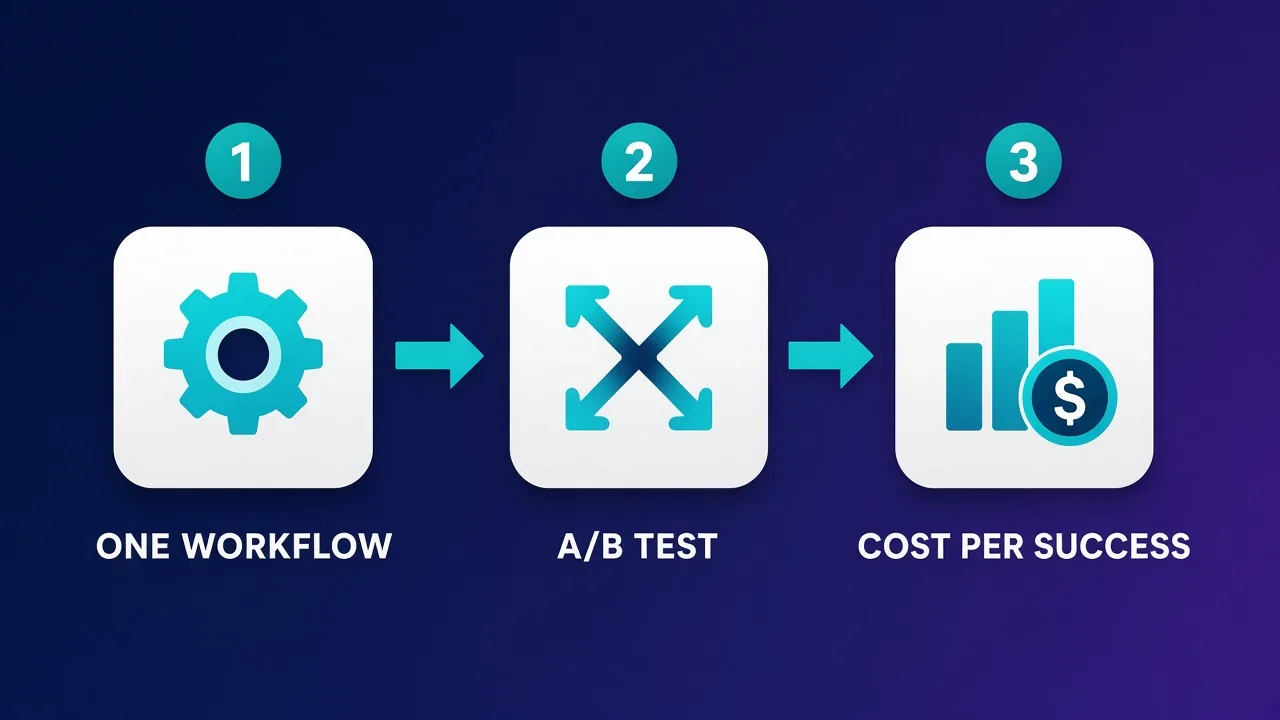
Move one workflow at a time. Mirror auth in your scraper or antidetect profiles, keep Webshare as fallback for two billing cycles, and compare block rates and cost per successful request — not sticker price per GB alone.
How to choose among these six
Match the reason you are leaving, not the loudest headline rate:
- Unused residential GB dies every month → IPRoyal or DataImpulse (no-expiry / PAYG).
- Need city, ZIP or ASN targeting with a polished mid-market UX → Decodo.
- Need dedicated ISP or private IPv4 for accounts → Proxy-Seller or Proxy-Cheap static ISP; Rayobyte static ISP at higher volume.
- Already burning tens of thousands of residential GB → Rayobyte Scale (watch concurrency and domain rules) or DataImpulse volume tiers.
- Want the cheapest small rotating residential trial → Proxy-Cheap or DataImpulse; verify on your targets.
- Still mostly datacenter-happy → stay on Webshare, or keep it and add a residential card only where needed.
Also price the real unit you consume. Per-proxy datacenter math and per-GB residential math are not interchangeable. A $0.02 datacenter proxy that fails half its requests can cost more than a $3 residential GB that succeeds. Run the same job through two providers for a day before you cancel anything.
Pitfalls when switching proxy providers
First, authentication and rotation semantics differ. Sticky session length, DNS handling (especially SOCKS5 vs socks5h), and geo syntax all change. Second, "from $X/GB" often requires a huge plan — IPRoyal's $1.75/GB and Rayobyte's sub-cent Scale rates are not what a 5GB buyer pays. Third, residential sourcing diligence applies to every app-powered pool, not only the brand that made the news; ask for consent and abuse-monitoring practices. Fourth, legal and ToS limits still apply: proxies do not legalise scraping or account abuse. Fifth, do not multi-home five providers at once — two is enough to A/B; more usually means wasted prepaid traffic.
Conclusion
These alternatives are for developers, agencies and small data teams who already understand proxies and find Webshare's datacenter-first economics limiting for residential or sticky ISP work. They are not a magic unblock button, not a substitute for respectful crawling, and not necessary if Webshare's free plan or cheap DC seats still clear your targets. Enterprise buyers who need contractual SLAs, KYC-heavy compliance packs or managed unblocking may still need a higher tier — Bright Data and peers sit in that lane, which is why we keep a separate Webshare vs Bright Data comparison.
Webshare remains one of the best on-ramps in the proxy market: free capacity, transparent builder pricing, and inexpensive datacenter inventory. The alternatives above earn a place when your bottleneck is residential quality, unused traffic expiry, static ISP depth, volume economics or support — not when you simply want a different logo. IPRoyal and DataImpulse compete on flexible residential billing; Decodo on mid-market targeting and UX; Proxy-Seller and Proxy-Cheap on dedicated and ultra-budget mixes; Rayobyte on Scale volume. Re-check live pricing, pilot on your real targets, and keep Webshare in the stack until the new provider proves it.
Frequently asked questions
It depends why you are leaving. IPRoyal and DataImpulse suit flexible residential billing with no traffic expiry. Decodo fits mid-market residential with deep targeting. Proxy-Seller and Proxy-Cheap help with dedicated or ultra-budget ISP mixes. Rayobyte Scale targets very high residential volume. Webshare itself remains strong for cheap datacenter proxies and a free starter plan.
Common reasons are needing larger or stickier residential pools, unused residential gigabytes that expire monthly, deeper city or ASN targeting, dedicated ISP inventory, or faster support on hard targets. Many teams still keep Webshare for light datacenter work and add a residential specialist beside it.
Not always at small volumes. On 7 November 2026 IPRoyal subscription residential started around $7/GB for 1GB and fell to $1.75/GB at 10TB, with traffic that never expires. Webshare rotating residential ran from about $3.50/GB to $1.40/GB on large plans. Compare effective cost after unused traffic and success rates on your targets.
No. DataImpulse markets pay-as-you-go residential from $1/GB, datacenter at $0.50/GB and mobile at $2/GB, with no subscription required and traffic that does not expire. Volume above 1TB is advertised at $0.80/GB. Confirm current rates on dataimpulse.com before buying.
Yes. Decodo is the Smartproxy rebrand. It offers residential, mobile, ISP and datacenter proxies with rotating or sticky sessions. Residential monthly plans checked on 7 November 2026 started at $3.75/GB for 3GB and reached $2/GB at 1TB, with pay-as-you-go at $4/GB.
Stay if shared or private datacenter IPs, the free plan, and the proxy-count builder still match your work, and if included bandwidth on Proxy Server or Static Residential plans covers you. Switch when residential success, traffic expiry, static ISP depth or support becomes the bottleneck.
GreyNoise and AhnLab have reported cases where criminals installed Pawns.app or IPRoyal Pawns on compromised devices to sell bandwidth. Those reports do not say IPRoyal installed the software itself. IPRoyal states suppliers must show informed consent. Ask any residential provider how it proves consent; more context is in our IPRoyal pricing explained guide.
Scale plans are monthly high-volume packages that exclude premium domains and tie concurrency to plan size (about one concurrent request per dollar). On 7 November 2026 they ranged from about $0.015/GB on a $100 plan to about $0.0095/GB on a $5,000 plan. They are meant for proven high-volume pipelines, not small trials.