Table of contents
Bright Data is one of the broadest platforms in the proxy and web-data market: residential, ISP, datacenter, and mobile proxies, plus unlocking and scraping products, datasets, and a large ecosystem of tooling around them. That breadth is exactly why so many teams eventually go looking for Bright Data alternatives. Usually it is not because the network stopped working. It is because the contract, the product mix, or the operating model stopped matching what the team actually needs.
This guide is written for both enterprise buyers and mid-market teams who are weighing an exit, a partial move, or a second source. We cover why teams leave, what you are really replacing, how Oxylabs, Decodo, SOAX, NetNut, IPRoyal, Webshare, and Zyte differ in positioning, and how to migrate without breaking production. Prices, ratings, and plan details stay on the live Proxyaxis cards, so nothing here goes stale or gets invented.
How to use this guide
Start with the reason you want to leave, not with a vendor list. Each section below maps one exit reason to one or two alternatives worth a trial. Shortlist two or three, run the same tests you would run on Bright Data, and only then compare live plans on Proxyaxis.
Why teams look for Bright Data alternatives
The reasons we see most often fall into a handful of patterns. These are qualitative observations from how buyers describe their decisions, not survey statistics.
- Platform is bigger than the job. You signed up for a full data platform but mostly use one proxy type. Paying for, and learning, a sprawling dashboard for a single workload feels wasteful.
- Commercial shape does not fit. Commitments, minimums, or billing units that made sense at one stage of growth can feel heavy at another, particularly for teams whose traffic is spiky or seasonal.
- Onboarding and compliance friction. Enterprise-grade know-your-customer reviews and use-case approvals are reasonable, but they slow down small teams that want to test something this afternoon.
- Support model mismatch. Some teams want a dedicated account manager; others want fast chat and good docs. Neither is wrong, but a mismatch is painful during incidents.
- Second-source resilience. Mature data teams rarely want a single point of failure. Adding a second vendor is often the real goal, even when people say "alternative."
- Target-specific performance. On a particular site or country, another provider's pool may simply perform better for you. That is an empirical question, and the only way to answer it is to test.
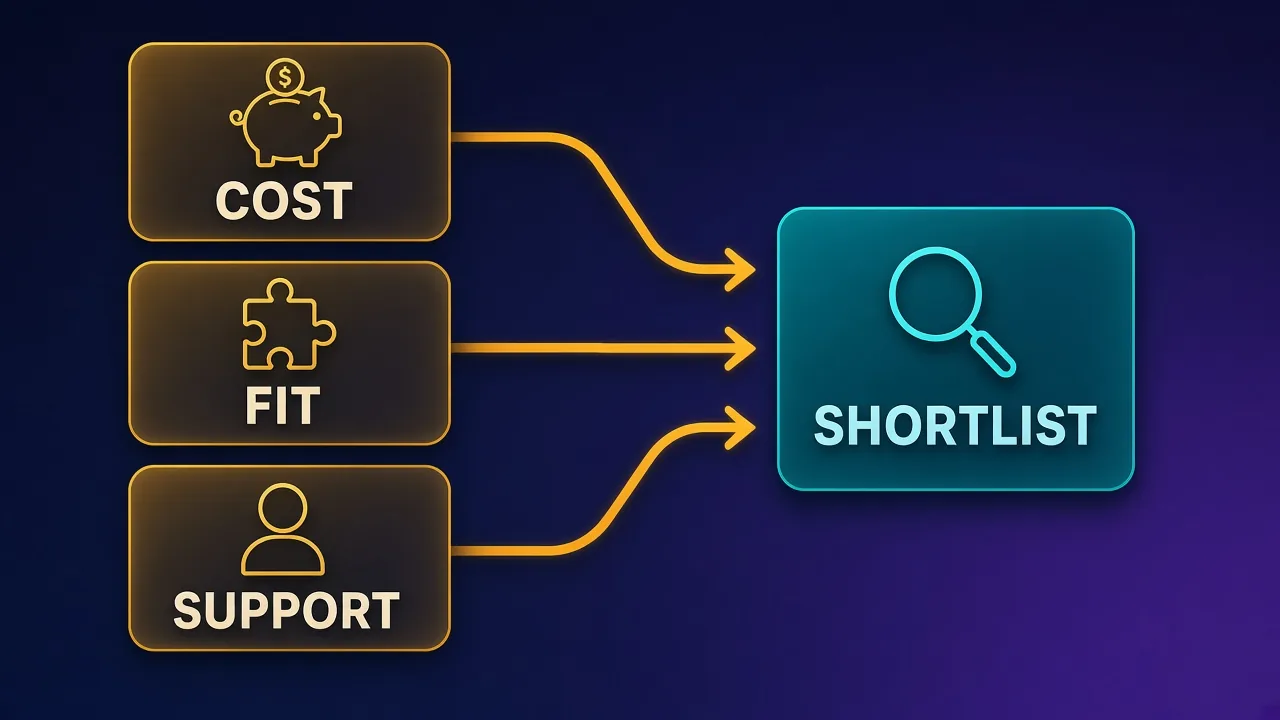
Switching has real costs. Your session syntax, geo parameters, allowlists, monitoring, and team habits are all tuned to Bright Data today. An alternative only wins if it is clearly better on the dimension that is actually hurting you.
What Bright Data is optimized for
Before replacing anything, be honest about which parts of Bright Data you rely on. In broad terms, the platform is built for:
- Breadth of proxy types under one account, so teams can mix residential, ISP, datacenter, and mobile exits.
- Unlocking and scraping products that handle retries, browser rendering, and anti-bot challenges on your behalf, returning results rather than raw connections.
- Enterprise procurement, with compliance documentation, account management, and contracts that larger organizations expect.
- Ecosystem tooling such as proxy managers, browser integrations, and ready-made datasets.
If you mostly use raw proxies, plenty of providers can replace you cleanly. If your pipeline is built on Bright Data's unlocking or scraping APIs, your realistic alternatives are a smaller group, because a residential proxy plan is not the same product as a managed scraping API. Keep the Bright Data card handy as your baseline while you compare.
Bright Data
Bright Data remains the most complete data-collection platform money can buy. No competitor matches its combination of network scale, targeting granularity, and compliance tooling — and for enterprise teams whose revenue depends on reliable data, that completeness justifies the premium. The trade-offs are real: it is one of the priciest providers per gigabyte, the interface overwhelms newcomers, and KYC verification adds friction before you can route a single request. Smaller projects will get better value from Decodo or IPRoyal. But if you need city-level residential targeting at scale, a managed unblocker for the hardest targets, and audit-ready compliance, Bright Data is the default — and our highest-rated proxy provider overall.
For a breakdown of how Bright Data bills its different product lines, see Bright Data pricing explained.
Evaluation checklist before you switch
- Map your workloads. Estimate the split between sticky account sessions, rotating scraping, and API-style requests. Each one points to different vendors.
- List must-have geos. Write down the countries, regions, and cities that matter. Coverage claims are easy to make and harder to deliver on niche locations.
- Check protocol and session needs. HTTP or SOCKS5, how long sticky sessions must hold, and how session IDs are passed in the username or headers.
- Confirm compliance posture. Read each vendor's acceptable-use policy and verification process. Make sure your use case is welcome before you build around it.
- Decide on a support model. Who do you page at 2 AM, and how quickly do they respond?
- Plan your exit. Can you dual-run for a week or two with mirrored or canary traffic before cutting over?
Do not switch on sticker price alone
A cheaper unit price can disappear quickly through higher retry rates, more captchas, or weaker sticky behavior. Always compare cost per successful request on your own targets, not cost per gigabyte on a pricing page.
Oxylabs: the enterprise peer
Oxylabs is the most natural like-for-like comparison. It also offers residential, ISP, datacenter, and mobile proxies alongside scraping APIs, and it is built for enterprise procurement and support. Teams moving here usually want a different commercial relationship, a different support experience, or a dual-enterprise setup for resilience, rather than a fundamentally different product.
Choose Oxylabs when you need enterprise breadth and API products but want a second opinion on pricing, support, or performance for your targets. Be careful if your main complaint is that Bright Data is "too much platform." Oxylabs is also a large platform, so you may recreate the same feeling.

Oxylabs
Oxylabs is the enterprise provider that gets the fundamentals right. The network is huge and well-maintained, the scraper APIs are genuinely best-in-class, and the documentation and SDKs make integration faster than almost any competitor. What sets it apart from Bright Data is service: dedicated account managers, responsive support, and cleaner tooling mean less time fighting the platform and more time shipping. The cost is higher entry pricing, and the deepest discounts favor high-volume commitments. For serious commercial data operations that can justify the spend, Oxylabs is a top-two choice and frequently the one teams stay with long-term.
Bright Data
Proxy
Oxylabs
Proxy
Editor score
User rating
Starting price
Founded
We cover this matchup in detail in Bright Data vs Oxylabs.
Decodo: the mid-market path
Decodo is often the first stop for teams who want serious residential and ISP proxies without an enterprise-shaped relationship. Its positioning leans toward self-serve onboarding, a practical dashboard, and plans that a small or mid-sized team can start on quickly.
Choose Decodo when your traffic is mostly raw proxies for scraping or account work, you want to iterate quickly without long procurement, and Bright Data feels oversized for your team. Map carefully if you rely on a specific Bright Data API feature, and confirm Decodo has an equivalent before you migrate that workload.

Decodo
Decodo offers the best price-to-performance ratio in the industry. It delivers roughly 90% of what the enterprise leaders provide — high success rates, a large clean pool, sticky sessions, an unblocker — at a fraction of their cost. The dashboard is the friendliest of any major provider, the 14-day money-back guarantee removes the risk of trying it, and support actually responds. The main gaps are enterprise-grade compliance tooling and the very deepest targeting, neither of which most teams need. For startups, solo developers, and any team that wants professional results without enterprise pricing, Decodo is our top value pick and an easy recommendation.
Bright Data
Proxy
Decodo
Proxy
Editor score
User rating
Starting price
Founded
SOAX: flexible geo targeting
SOAX tends to come up when location control matters. Teams that need fine-grained country, region, or city targeting, or that want flexible rotation settings for mixed social and data tasks, often put SOAX on the trial list. Its packaging generally sits in the mid-market rather than the very top of the enterprise tier.
Choose SOAX when geo precision and adjustable rotation are central to your workflow. Validate first that your critical cities are well covered at the volume you need, because coverage at small scale does not always mean coverage at production scale.

SOAX
SOAX is the targeting specialist. City- and ISP-level selection on every plan — not locked behind premium tiers — is genuinely rare, and the continuously cleaned pool keeps success rates high where it matters. It is not the fastest network, the interface could use a refresh, and SOCKS5 coverage is uneven. Those are real but minor gripes against a provider that nails the fundamentals of precision and reliability. For ad verification, localized market research, and social-media work that depends on appearing in an exact location, SOAX is one of the best mid-market options available.
SOAX
Proxy
Bright Data
Proxy
Editor score
User rating
Starting price
Founded
NetNut: ISP-leaning stability
NetNut is usually evaluated when the pain is about stability rather than diversity. If your workload depends on long-lived, consistent exits, such as account management, ad verification, or monitoring a stable set of pages, an ISP-leaning provider can be a better fit than a giant rotating residential pool.
Choose NetNut when stable ISP-style IPs are the core requirement and you are comfortable with a more specialized stack. Keep Bright Data or another broad provider in the mix if you still need wide rotating residential coverage across many targets. Our residential vs ISP vs datacenter proxies guide explains the trade-off in more depth.

NetNut
NetNut's direct-ISP architecture is more than marketing — it genuinely delivers steadier, faster sessions than peer-to-peer networks, because it does not depend on consumer devices staying online. That makes it a standout for uptime-critical workloads like brand protection and ad verification, where a dropped session means lost data. The trade-offs are business-oriented pricing, higher minimum commitments, and a dashboard that takes some learning. If session stability is your priority and you operate at business scale, NetNut is one of the most reliable residential networks available and well worth the 7-day trial.
NetNut
Proxy
Bright Data
Proxy
Editor score
User rating
Starting price
Founded
IPRoyal: approachable sticky and residential testing
IPRoyal is a common choice for smaller teams and individual operators who want residential and sticky options without a big commitment. It works well as a testing lane or a secondary provider for specific workloads, especially when you want to experiment before committing budget elsewhere.
Choose IPRoyal when you want a low-friction way to test residential or static options and keep a secondary lane available. Benchmark it on your hardest targets before treating it as a full enterprise replacement.

IPRoyal
IPRoyal is the best pure pay-as-you-go deal in proxies. Non-expiring traffic is a genuinely customer-friendly policy that no major rival matches — buy what you need, use it whenever, lose nothing. The pool is smaller than the premium networks and success rates can soften on the most heavily defended targets, so high-volume enterprise scraping is not its strength. The dashboard is also fairly basic. For intermittent scraping, account work, and sneaker copping on a predictable budget, IPRoyal is an easy recommendation and one of the best value picks for occasional users.
Webshare: budget and self-serve carve-outs
Webshare is not a Bright Data clone, and it does not try to be. It is a self-serve provider known for accessible datacenter plans and lighter residential options. Many teams use it to move low-risk or internal workloads off a premium platform, freeing up the expensive plan for traffic that truly needs it.
Choose Webshare when you are carving out cost-sensitive, low-difficulty traffic such as internal tools, test environments, or lightly protected targets. Do not assume it matches premium residential performance on heavily protected sites without your own bake-off. See Webshare vs Bright Data for the full comparison.

Webshare
Webshare is the developer's self-service favorite. Instant activation, a free tier that is actually free, and the cheapest fast datacenter proxies in the market make it the easiest provider to just start using. The custom plan builder — pick your IP count, bandwidth, and threads — is a genuinely good model that lets you avoid paying for capacity you do not need. The residential pool is newer and less battle-tested than specialists, and support is thin on the lower tiers. For datacenter proxies, API-driven workflows, and anyone who wants to try before paying, Webshare is one of the best-value options around.
Webshare
Proxy
Bright Data
Proxy
Editor score
User rating
Starting price
Founded
Zyte: when you are really replacing a scraping API
If the part of Bright Data you depend on most is the managed scraping or unlocking layer, a raw proxy provider will not replace it. Zyte is a scraping-first company whose products focus on extraction and handling anti-bot challenges, which makes it a more relevant comparison for API-centric pipelines than a residential reseller.
Choose Zyte when you want results rather than raw connections and your team prefers to offload retries, rendering, and parsing. Compare carefully how each service bills successful versus failed requests, since that changes the real cost.

Zyte
Zyte API is the most complete scraping-as-a-service offering from the most credible engineering lineage in the space (they wrote Scrapy). Automatic ban handling, escalation, and rendering behind a success-priced API genuinely deletes the proxy-ops workload. It is not a general-purpose proxy — account management and browser-based workflows need conventional providers — and heavy scraping teams with anti-bot expertise can beat its per-request economics. For developer teams whose product is the data, not the infrastructure, it is the benchmark.
Comparison table: which alternative fits which exit reason
| Exit reason | First alternative to trial | Also consider | Stay on Bright Data if |
|---|---|---|---|
| Want an enterprise peer or second source | Oxylabs | Keep both in a multi-vendor setup | One vendor and one contract matter most |
| Platform feels too big for the job | Decodo | SOAX, IPRoyal | You use several product lines heavily |
| Need fine geo control | SOAX | Decodo | Your key geos already perform well |
| Need stable ISP exits | NetNut | IPRoyal static options | Rotating residential diversity is core |
| Budget carve-out for easy traffic | Webshare | IPRoyal | Most traffic hits hard targets |
| Replacing a scraping or unlocking API | Zyte | Oxylabs scraping APIs | Your parsing pipeline is deeply integrated |
API-centric vs proxy-centric stacks
The most common mistake when choosing a Bright Data alternative is ignoring how your production code actually talks to the vendor.
- Proxy-centric teams pass a host, port, username, and password into scrapers, headless browsers, or anti-detect profiles. For them, the realistic comparison set is Decodo, SOAX, NetNut, IPRoyal, Webshare, and the Oxylabs proxy lines. The key tests are session behavior, subnet quality, and geo coverage.
- API-centric teams send a URL and receive rendered HTML or parsed data. For them, raw proxy plans are not substitutes. Compare Oxylabs scraping APIs, Zyte, or staying on Bright Data's unlocking products.
Many organizations are hybrids. The cleanest move is often to keep an API product where it earns its cost and move simple, proxy-friendly traffic to a mid-market provider. That way you stop paying premium rates for requests that never needed premium handling.
Migration playbook
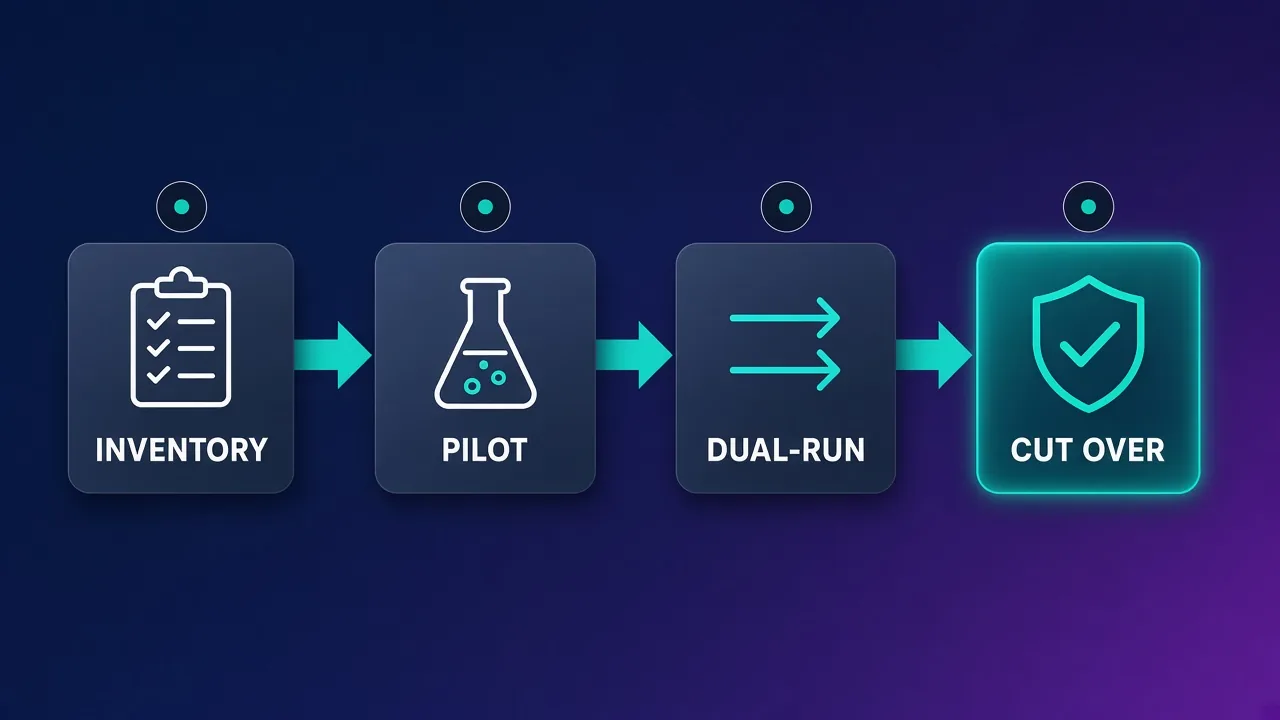
- Inventory everything. List every Bright Data zone or product, the session syntax each service uses, the geos involved, and which internal systems depend on them.
- Pick one pilot workload. Choose a single traffic class and geo, for example sticky US sessions for account work, and move only that first.
- Dual-run. Send mirrored or canary traffic to the alternative for several days, ideally across a full weekly cycle.
- Measure on your terms. Track success rate, latency distribution, sticky integrity, and support responsiveness with your own metrics, not vendor dashboards alone.
- Cut over in stages. Move workloads one by one and watch error rates after each move.
- Keep rollback ready. Leave Bright Data credentials active until the new setup has been stable for a while.
Abstract your session logic
Every vendor formats sticky sessions and geo targeting differently. Wrap "create session, pick country, rotate" in a small internal helper so swapping or adding providers is a config change, not a code rewrite.
Pricing posture without invented numbers
We do not quote list prices here because they change often and vary by commitment. In broad strokes, Bright Data and Oxylabs present as premium enterprise platforms. Decodo and SOAX tend to compete as more approachable mid-market options. NetNut is frequently evaluated on ISP value. IPRoyal and Webshare lean toward self-serve affordability. Zyte prices around scraping outcomes rather than raw bandwidth. For current figures, use the live cards:
Decodo
Proxy
SOAX
Proxy
Editor score
User rating
Starting price
Founded
Oxylabs
Proxy
NetNut
Proxy
Editor score
User rating
Starting price
Founded
When you talk to sales or read pricing pages, ask how each product line is billed, whether unused traffic rolls over, how failed requests are counted on API products, and what the minimum commitment is. Those mechanics often matter more than the headline unit price.
Quality signals to measure in every bake-off
- Sticky integrity: does the same session key keep the same IP for as long as you need?
- Target success rate: what share of requests to your real domains succeed without a challenge?
- Latency spread: look at typical and worst-case response times, not just an average.
- Subnet diversity: are you concentrated on a few networks that a target can easily rate-limit?
- Replacement speed: how quickly can you get a fresh IP when one is burned?
- Usage accuracy: do the vendor's meters match your own request and bandwidth counts?
Record the results in a shared sheet with dates and test conditions. Vendor demos are useful, but your own measurements are the only data that should drive a migration decision.
Who should not leave Bright Data yet
- Teams whose success rates on hard targets are already good, where migration risk outweighs any savings.
- Teams deeply integrated with Bright Data's unlocking APIs or datasets, with custom parsing built on top.
- Organizations that just completed a security review or procurement cycle and would have to restart it.
- Teams without the engineering time to dual-run and measure properly.
In many of these cases the best move is not an exit but an addition: keep Bright Data for what it does best and add a mid-market or specialist provider for a specific lane.
Practical shortlists by team type
| Team type | Shortlist | Why |
|---|---|---|
| Enterprise data organization | Oxylabs, Zyte (plus keep Bright Data) | Peer breadth, API depth, dual-source resilience |
| Growth or social media agency | Decodo, SOAX, NetNut | Sticky and ISP options with simpler onboarding |
| Startup scraping public pages | Decodo, Webshare, IPRoyal | Fast to start, easy to scale up later |
| Ad verification or monitoring | NetNut, SOAX, Oxylabs | Stable exits and precise geo targeting |
If you are also weighing Oxylabs itself, our Oxylabs alternatives guide uses the same framework from the other side.
Conclusion
The best Bright Data alternative depends on why you want to leave. Oxylabs is the enterprise peer. Decodo and SOAX cover mid-market flexibility and geo control. NetNut leans toward stable ISP exits. IPRoyal and Webshare handle testing and budget carve-outs. Zyte is the comparison to make when you are really replacing a scraping API. Pick two or three, test them on your own targets, compare cost per successful request rather than sticker price, and migrate one workload at a time. Often the strongest setup is not a clean break but Bright Data plus one well-chosen specialist.
Frequently asked questions
It depends on why you are switching. Oxylabs is the closest enterprise peer, Decodo and SOAX suit mid-market teams, NetNut is often tried for stable ISP exits, and IPRoyal or Webshare work for testing and budget workloads. If you mainly use a scraping API, compare Zyte. Check live plans on Proxyaxis after testing on your own targets.
Consider leaving or adding a second vendor when the platform is bigger than your workload, the commercial terms no longer fit your traffic, you want a different support model, or another provider measurably performs better on your targets. Do not switch on headline price alone.
Neither is better for everyone. Both are broad enterprise platforms with proxies and scraping APIs. The right choice depends on the product lines you use, the support you expect, and how each performs on your real targets in a side-by-side test.
Decodo is a strong option for teams that mostly need residential or ISP proxies and want faster self-serve onboarding. If you depend on a specific Bright Data API product, confirm Decodo has an equivalent before migrating that workload.
For some workloads, yes. Webshare works well for cost-sensitive, lightly protected, or internal traffic. It is not a drop-in replacement for premium residential performance on heavily protected sites, so test it on your hardest targets first.
A raw proxy plan will not replace a managed scraping or unlocking API. Compare scraping-first services such as Zyte, or Oxylabs scraping APIs, and pay close attention to how each bills successful versus failed requests.
Inventory every zone, session format, and geo you use, then pilot one workload on the new provider. Dual-run canary traffic for several days, compare your own success and latency metrics, and cut over in stages while keeping Bright Data credentials active for rollback.
Often yes. Many teams keep Bright Data for hard targets or API work and add a mid-market or specialist provider for other lanes. A small internal helper that abstracts session settings makes running several vendors much easier.