Table of contents
Multilogin and AdsPower sit at the center of most antidetect browser shortlists — and for different reasons. Multilogin is the long-running enterprise-leaning platform that helped define fingerprint isolation for agencies and larger multi-account teams. AdsPower is the more accessible challenger that made profile management, local sync, and proxy pairing feel approachable for solo operators and growing e-commerce crews. Both create isolated browser profiles with coherent fingerprints and proxy bindings, but they diverge on team workflows, pricing posture, fingerprint depth, automation surface, and how comfortably they sit next to residential or ISP proxies. This comparison walks through those trade-offs so you can choose once instead of migrating later.

Multilogin
Browser

AdsPower
Browser
Editor score
User rating
Starting price
Founded
What an Antidetect Browser Is Solving
Modern sites do not trust cookies alone. They assemble a browser fingerprint from canvas and WebGL output, fonts, audio quirks, hardware concurrency, screen metrics, time zone, language, and dozens of other signals. That fingerprint is stable enough to reconnect sessions after a cookie clear and consistent enough that two accounts opened from the same machine look linked. An antidetect browser breaks that linkage by giving every profile its own internally consistent fingerprint — not random noise, but plausible device configurations — then binding each profile to its own proxy so the network identity matches the browser story.
That last part matters as much as the fingerprint engine. A perfect profile behind a noisy datacenter IP still fails. Pairing antidetect browsers with quality residential or sticky ISP proxies is the usual production pattern; if you need a refresher on proxy types, see our guides on SOCKS5 vs HTTP proxies and cheap residential proxies.
Fingerprint coherence beats random noise
Randomizing every value independently often creates impossible combinations (wrong fonts for the OS, GPU strings that do not match rendering). Strong antidetect tools substitute real, consistent device profiles so each account blends into the crowd.
Multilogin at a Glance
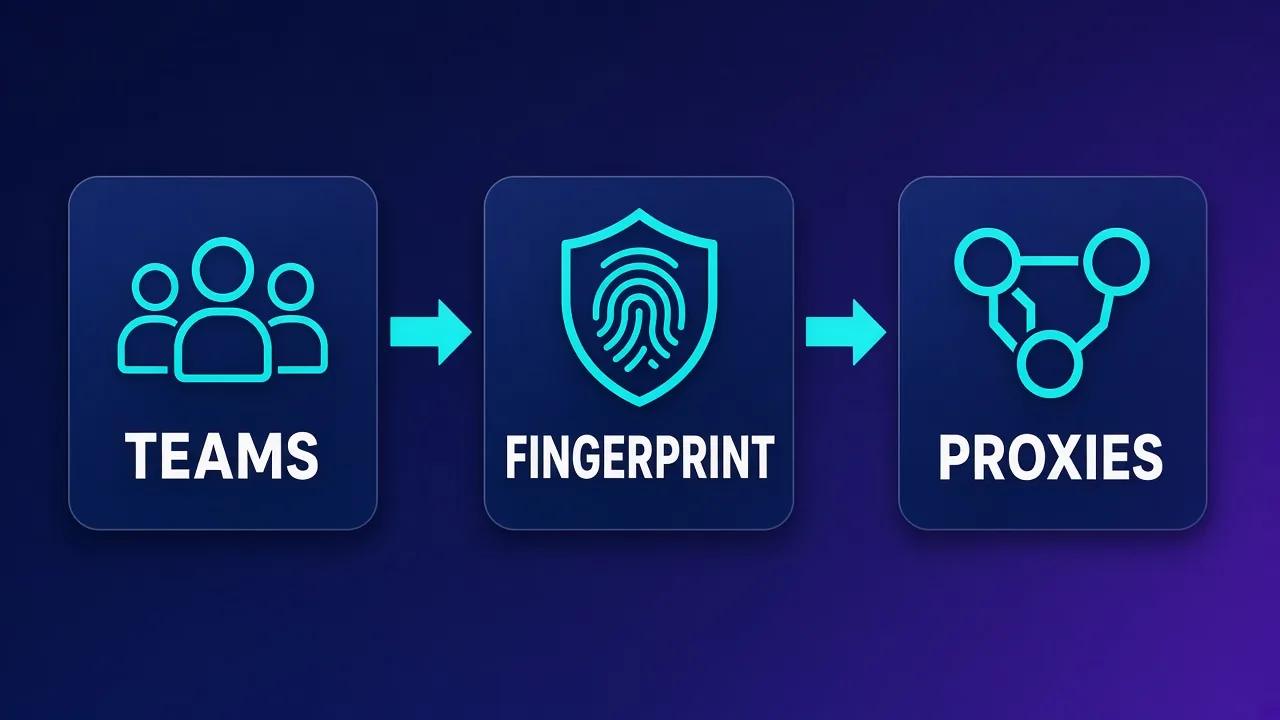
Multilogin is built for operators who treat multi-account work as infrastructure. Profiles are first-class objects with team permissions, cloud sync options, and a fingerprint stack tuned for consistency across Chromium- and Firefox-based engines depending on the plan and workflow. The product surface emphasizes controlled collaboration: who can open which profile, how credentials are shared, and how automation hooks into those profiles without leaking state across accounts.
In practice, Multilogin tends to show up in agencies, ad ops teams, and compliance-sensitive shops that need auditability and fewer "works on my laptop" surprises. The trade-off is complexity and a pricing posture aimed at professional use rather than casual experimentation. Live plan details and ratings change — check the card below rather than trusting outdated screenshots.
Why teams pick Multilogin
- Stronger enterprise-style team controls and profile governance
- Mature fingerprint isolation story for high-stakes account portfolios
- Workflows that assume many operators sharing a controlled profile library
- Proxy-per-profile discipline that matches agency SOPs
Multilogin
Multilogin is the original enterprise anti-detect browser and still the benchmark, with the most battle-tested fingerprints, two engines (Chromium Mimic and Firefox Stealthfox), included residential proxy traffic, and best-in-class team controls. The costs are a premium price and a heavyweight app — so it's overkill for solo hobbyists, but the safest choice for serious teams that treat multi-accounting as infrastructure.
AdsPower at a Glance
AdsPower optimizes for approachability: fast profile creation, clear local/cloud sync choices, and a UI that solo sellers and small teams can learn without a training week. Fingerprint configuration is still the core product, and proxy binding is first-class, but the overall posture is lighter — fewer enterprise gates, more "open, configure, run" energy. That makes AdsPower a frequent pick for e-commerce operators, affiliate testers, and freelancers who need dozens of profiles without building an internal platform team.
The trade-off is that organizations with strict permission matrices, SSO expectations, or heavy multi-seat governance may outgrow the lighter model. Again, pricing and feature lists move; use the live card rather than memorizing tiers.
Why operators pick AdsPower
- Lower friction onboarding for individuals and small crews
- Practical profile + proxy pairing without heavy process overhead
- Comfortable local workflows when cloud sync is optional or secondary
- Good fit for e-commerce and affiliate multi-account routines
AdsPower
AdsPower delivers remarkable feature-per-dollar: dual Chromium/Firefox engines, a genuine no-code RPA robot, team roles, a free 5-profile tier, and plans from around $5.40/mo. The trade-offs are a cluttered, learning-curve interface and support that leans to Asian time zones, but for cost-conscious e-commerce and ad teams it's hard to beat.
Head-to-Head Comparison Table
Use this table as a qualitative map — not a scorecard with invented ratings. Where commercial details matter, open the live cards above.
| Dimension | Multilogin | AdsPower |
|---|---|---|
| Primary buyer | Agencies, larger teams, governance-heavy ops | Solo operators, SMBs, e-commerce crews |
| Team posture | Permissions and shared profile libraries as core | Lightweight collaboration; individual-first UX |
| Fingerprint depth | Enterprise-leaning consistency focus | Practical profile isolation with simpler defaults |
| Proxy pairing | Strict per-profile proxy discipline | Straightforward proxy bind per profile |
| Pricing posture | Professional / team-oriented packaging | Accessible entry for smaller budgets |
| Learning curve | Steeper; process-heavy setups benefit | Faster day-one productivity |
| Automation | Suited to structured, multi-operator pipelines | Suited to personal scripts and lighter RPA |
| Best when | You need governance more than speed of setup | You need speed of setup more than deep governance |
Read live cards before you commit budget
Plan names, seat limits, and included profile counts change. The [[provider:]] tokens above pull current Proxyaxis data — treat any blog screenshot elsewhere as stale.
Teams and Collaboration
If multiple people will touch the same account portfolio, Multilogin's team model is usually the safer default. Shared libraries, clearer ownership of profiles, and governance around who can launch or export reduce the "someone opened the wrong profile" class of incidents. AdsPower can support small teams, but its sweet spot remains operators who mostly own their own profile sets and only occasionally share.
Ask yourself: do you need role boundaries and audit-friendly habits, or do you need one person to spin up twenty shop profiles this afternoon? That answer alone eliminates half the decision tree.
Fingerprint Depth and Consistency
Both products exist to produce coherent fingerprints. The meaningful difference is how much control and rigor you need when targets are aggressive about cross-checking signals. Multilogin's enterprise-leaning positioning reflects years of serving buyers who fail expensive accounts when fingerprints drift or clash with proxy geolocation. AdsPower's defaults are good enough for many storefront and marketing workflows where the threat model is real but not maximum.
Neither tool replaces good operational hygiene. Reusing the same proxy across "unrelated" profiles, mixing time zones with IP countries, or cloning cookies between profiles will undermine any fingerprint engine. Treat the browser as one layer in a stack that also includes proxy quality, session discipline, and human-like pacing.
Proxy Pairing: What Actually Matters
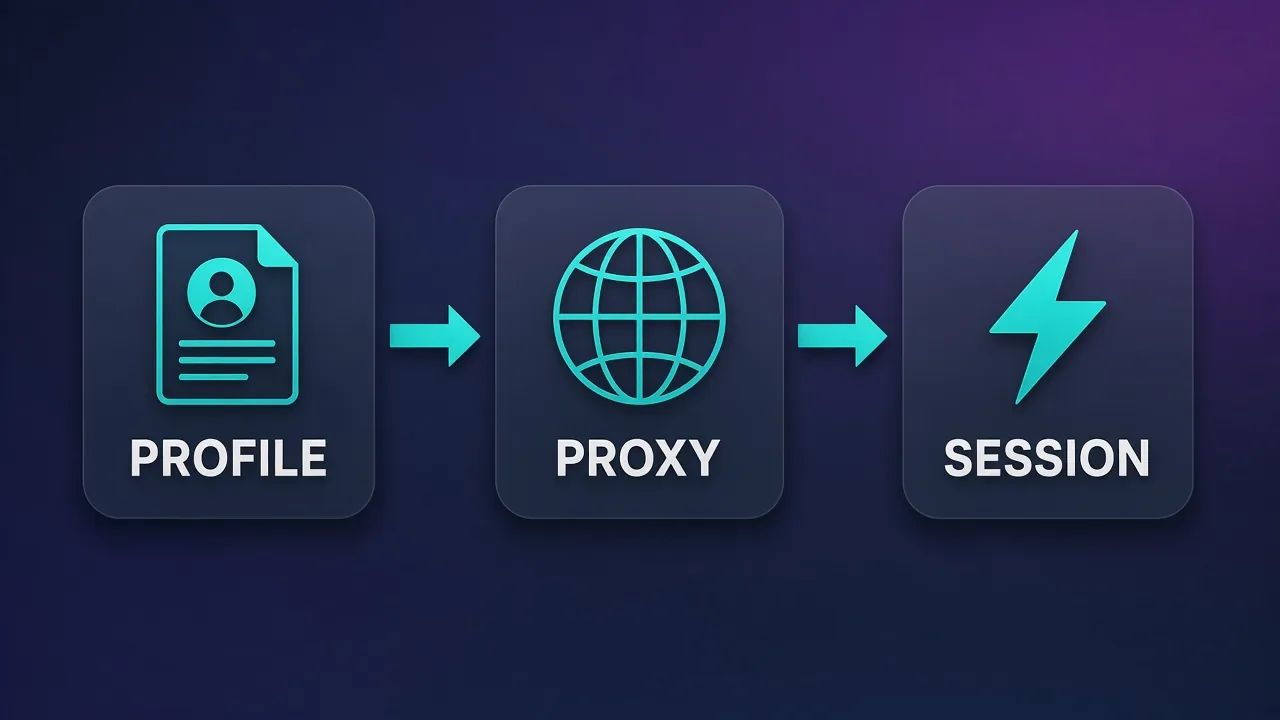
Antidetect browsers do not magically clean a bad IP. Pair Multilogin or AdsPower with sticky residential or ISP proxies when accounts need long-lived identities, and reserve rotating residential for research-style tasks that tolerate IP churn. HTTP proxies are usually enough for Chromium-based browser traffic; SOCKS5 helps when your tooling needs a generic tunnel. For protocol trade-offs, see SOCKS5 vs HTTP.
Operational checklist that applies to both browsers:
- One primary sticky proxy per long-lived account profile
- Match proxy country/city posture to the account's claimed locale
- Keep DNS and WebRTC leakage controls aligned with the proxy path
- Never share a sticky IP across profiles that must look unrelated
- Test login and checkout paths after every proxy change before scaling
Proxy quality beats browser brand arguments
Switching from AdsPower to Multilogin (or the reverse) will not fix recycled residential IPs or datacenter ranges flagged by your target. Fix the network layer first, then optimize the browser stack.
Pricing Posture Without Invented Numbers
We do not publish fabricated list prices here. Multilogin generally prices like a professional tool: you pay for reliability, team features, and fingerprint maturity. AdsPower generally prices to win individuals and small teams who would otherwise stay on risky shared browsers. Which is "cheaper" depends on seats, profile caps, cloud sync needs, and how expensive a single banned account is to your business.
A useful internal metric: cost per successfully retained account per month, not cost per profile slot. If a cheaper seat causes more bans, it is not cheaper.
Automation and Daily Workflow
Both ecosystems support automation to varying degrees — browser automation APIs, profile start/stop hooks, and integration with common scripting stacks. Multilogin fits structured pipelines where profiles are inventory managed by a team. AdsPower fits personal automation where one operator's scripts drive their own profiles. If your roadmap includes Selenium-style control of browser profiles, keep the proxy auth story clean early; our guide on proxies with Selenium covers the common failure modes that also appear when antidetect browsers launch automated sessions.
Who Should Choose Multilogin
- Agencies managing client account portfolios with multiple operators
- Teams that need clearer permissions and shared profile discipline
- Operations where a single fingerprint mistake is expensive
- Buyers already standardized on enterprise-adjacent tooling
Who Should Choose AdsPower
- Solo sellers and freelancers standing up profiles quickly
- Small e-commerce or affiliate teams without a platform admin
- Operators who prioritize approachable UX and lighter process
- Budgets that need accessible entry before enterprise packaging
Migration and Dual-Stack Reality
Some teams run both: AdsPower for experimental or low-risk profiles, Multilogin for revenue-critical accounts. That works if you keep proxy pools and cookie stores strictly separated. What fails is casually exporting sessions between tools without resetting fingerprint and proxy bindings — you recreate the linkage problem the browsers exist to solve.
If you migrate, move in waves: document proxy maps, recreate profiles rather than blindly cloning, verify locale/IP alignment, then cut traffic. Do not hot-swap a live high-value account mid-campaign without a rollback plan.
Security, Sync, and Where Profiles Live
Where profiles sync — local disk, vendor cloud, or a hybrid — changes your threat model. Local-first workflows reduce third-party exposure of cookies and session material but complicate multi-seat collaboration. Cloud sync makes handoffs easier and creates a clearer backup story, yet it means trusting the vendor's access controls and encryption posture. Multilogin's team-oriented packaging generally assumes shared infrastructure; AdsPower commonly leaves more room for local-centric habits. Neither choice removes the need for device hygiene: full-disk encryption, unique OS users for high-risk work, and no casual profile exports to chat apps.
Also decide what "backup" means operationally. Exporting a profile bundle can save recovery time after a laptop failure, but exported bundles are sensitive credentials. Store them like secrets, rotate proxies if a bundle may have leaked, and never email unencrypted profile archives.
Common Failure Modes on Both Platforms
Most bans blamed on "the browser" are actually operational. Watch for these patterns whether you run Multilogin or AdsPower:
- Locale drift: profile language and time zone disagree with the proxy country.
- IP reuse: two "unrelated" shops share a sticky residential exit.
- Session cloning: cookies copied between profiles that should never meet.
- Burst behavior: dozens of logins from a fresh profile in minutes with no warm-up.
- Extension sprawl: the same rare extension set across every profile creates a secondary fingerprint.
Fixing these costs less than switching vendors. Run a weekly audit of proxy maps and profile metadata before you rewrite your stack.
Decision Framework: A Practical Scorecard
Score each option 1–5 for your context (not for the internet's opinions):
- Team size today and in six months — will you add operators who need bounded access?
- Account replacement cost — how expensive is a ban in time and revenue?
- Process maturity — do you already document proxy maps and SOPs?
- Automation roadmap — personal scripts versus multi-operator pipelines?
- Budget posture — optimize for seat price or for retained-account yield?
If scores cluster toward governance and high replacement cost, Multilogin is the better default. If they cluster toward speed, solo ownership, and accessible packaging, AdsPower usually wins. If scores split evenly, run a two-week pilot on non-critical profiles with identical proxy quality so the browser — not the IP pool — is the variable.
Conclusion: Pick the Fit, Not the Hype
Multilogin vs AdsPower is less "which fingerprint is magic" and more "which operating model matches your team." Choose Multilogin when governance, multi-operator safety, and enterprise-leaning fingerprint discipline matter most. Choose AdsPower when speed, approachability, and small-team economics matter most. In both cases, invest in proxy pairing and session hygiene — those decide outcomes more often than brand loyalty.
Compare the live cards above, map your team size and risk tolerance, and pilot with a handful of non-critical profiles before migrating a full portfolio. For adjacent reading, explore GoLogin vs Multilogin if you are still surveying the broader antidetect field.
Frequently asked questions
Neither is universally better. Multilogin fits agencies and governance-heavy teams; AdsPower fits solo operators and small e-commerce crews that want faster setup. Match the tool to team size, risk, and process — not to marketing slogans.
Yes. Both bind proxies per profile. Use sticky residential or ISP proxies for long-lived accounts, keep one primary IP per unrelated profile, and align locale signals with the proxy country. Proxy quality matters more than which antidetect brand you pick.
Proxies change the network identity; antidetect browsers change the device fingerprint. Using only proxies on a normal Chrome install still leaves shared fingerprints that can link accounts. Serious multi-account work usually needs both layers.
List prices and seat rules change, so check the live Proxyaxis cards instead of blog screenshots. AdsPower often presents a more accessible entry for individuals; Multilogin prices more like professional team software. Measure cost per retained account, not cost per profile slot.
Often yes when multiple operators share client portfolios and need clearer permissions. Some small agencies still succeed on AdsPower. Pilot with non-critical profiles and evaluate collaboration friction before standardizing.
Sticky residential or ISP proxies are the usual default for account longevity. Rotating residential fits research-style tasks that tolerate IP changes. Avoid sharing one sticky IP across profiles that must look unrelated.
Treat migration as a controlled rebuild: document proxy maps, recreate profiles carefully, verify fingerprint and locale alignment, then move traffic in waves. Blind session cloning between tools can recreate account linkage.
Yes, but operational hygiene matters as much. Coherent fingerprints help; mismatched time zones, reused IPs, and cookie sharing still get stores flagged. Start with solid proxy pairing and consistent profile habits, then refine fingerprint settings.