Table of contents
“Cheap residential proxies” can mean two very different things: a fair mid-market pool that still passes real targets, or a race-to-the-bottom list that looks affordable until you factor in retries, CAPTCHAs, and burned sessions. This roundup focuses on value — providers that often make sense when budget matters — with explicit quality caveats. We do not invent list prices, success rates, or pool sizes; live commercials stay on Proxyaxis provider cards.
If you are still deciding whether you need residential at all versus ISP or datacenter, start with Residential vs ISP vs Datacenter Proxies. For enterprise-shaped alternatives with different budget postures, see Oxylabs Alternatives and the Bright Data vs Oxylabs comparison.
How we define “cheap” here
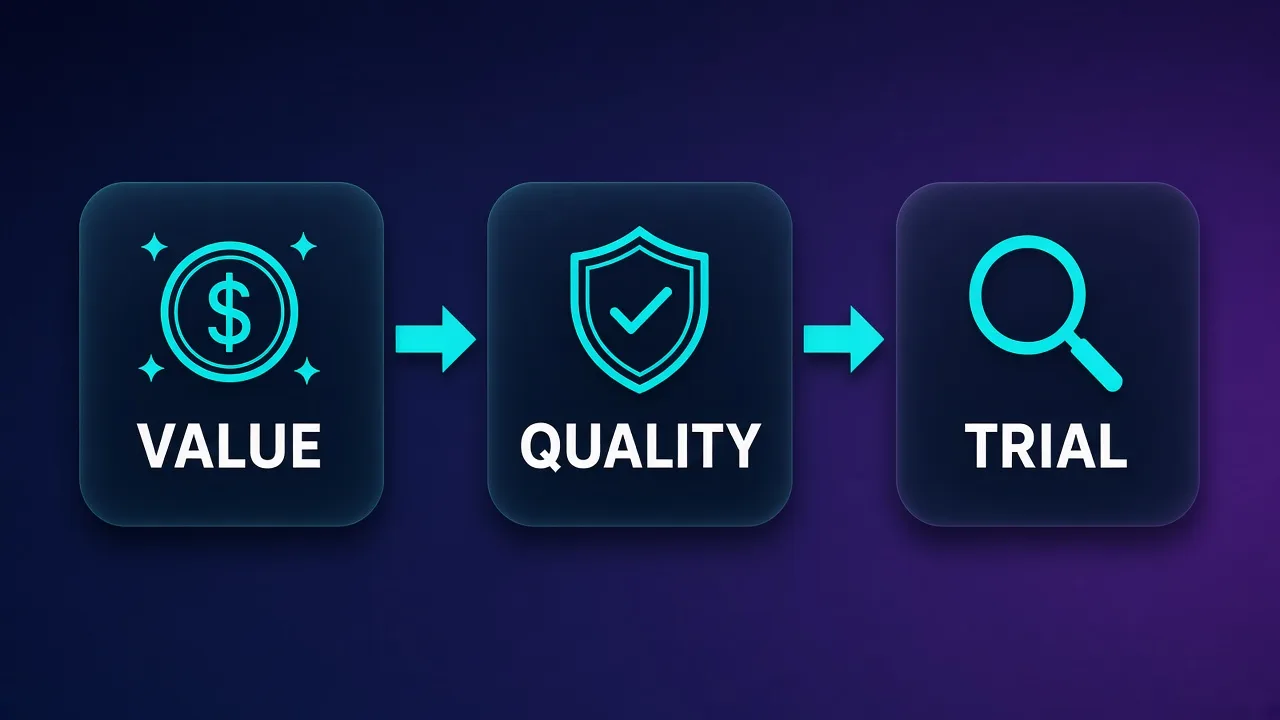
Value = acceptable success on your targets per dollar of effective spend — including bandwidth waste from retries — not the lowest sticker on a pricing page. Always verify current plans on the live cards below.
What “residential” means for budget buyers
Residential proxies exit through IP addresses assigned by consumer or small-business ISPs to real devices (or equivalent ethically sourced networks, depending on vendor). Targets generally treat them as more “human” than datacenter ranges, which is why they cost more per GB than bulk datacenter. Budget residential products still must solve the same hard problems: ethical supply, ASN diversity, sticky sessions, geo targeting, and support when a subnet goes hot.
Paying less only helps if the pool can complete your jobs. A plan that is half the headline rate but doubles your retry volume is not cheaper. Treat trials and small top-ups as measurement tools, not as proof that a logo is permanently “best.”
- Rotating residential — new exit often per request or short session; common for SERP, public pages, light monitoring.
- Sticky residential — same exit for minutes; needed for logins, carts, multi-step flows.
- Geo / city targeting — narrower targeting often costs more or shrinks available capacity.
- Bandwidth vs request pricing — know which meter you are on before comparing vendors.
Value checklist before you buy
- Target difficulty — soft public pages tolerate thinner pools; aggressive anti-bot stacks may need premium ASNs.
- Session model — sticky TTL must match your flow length.
- Protocol fit — HTTP vs SOCKS5 for your client (match HTTP vs SOCKS to your client — our Selenium proxy guide covers practical wiring).
- Ethics & compliance — prefer vendors transparent about sourcing; comply with site terms and law.
- Support & dashboard — cheap plans with no usable diagnostics waste engineering time.
- Trial realism — test the same paths, concurrency, and geos you will run in production.
Comparison snapshot (qualitative)
| Provider | Value posture | Often fits | Watch-outs |
|---|---|---|---|
| Webshare | Approachable entry / self-serve | Small teams, mixed proxy types | Validate residential depth for hard targets |
| IPRoyal | Mid-market residential focus | Scrapers needing flexible residential | Match plan type to sticky needs |
| PacketStream | Peer-network style pricing narrative | Cost-sensitive rotating jobs | Quality variance — measure your niches |
| DataImpulse | Budget-oriented positioning | High-volume public-page pulls | Confirm geo coverage you need |
| Proxy-Cheap | Price-forward branding | Experiments and lighter workloads | Do not skip success-rate tests |
| Decodo | Broader product mid-market | Teams graduating from pure bargain tiers | Compare against true enterprise needs |
| SOAX | Flexible targeting / mid-market | Geo-sensitive residential work | Align SKUs with actual session model |
| Geonode | Developer-friendly packaging | Builders who want simple integration | Verify pool for your vertical |
No fabricated prices
Plan amounts, per-GB rates, and “success %” figures change often and differ by volume tier. Use the live cards — not blog prose — for commercials.
Webshare — accessible self-serve value
Webshare is a frequent shortlist pick when teams want a low-friction signup and clear self-serve packaging across proxy types. For “cheap residential” searches it often appears because the entry experience is approachable, not because every residential subnet will beat enterprise pools on the hardest sites. Use it when you need to stand up rotating or mixed traffic quickly and can measure outcomes yourself.
Qualitative fit: indie scrapers, agencies testing new verticals, and side projects that must stay cost-aware. Stress-test sticky behavior and your exact geos before you commit monthly bandwidth.

Webshare
Webshare is the developer's self-service favorite. Instant activation, a free tier that is actually free, and the cheapest fast datacenter proxies in the market make it the easiest provider to just start using. The custom plan builder — pick your IP count, bandwidth, and threads — is a genuinely good model that lets you avoid paying for capacity you do not need. The residential pool is newer and less battle-tested than specialists, and support is thin on the lower tiers. For datacenter proxies, API-driven workflows, and anyone who wants to try before paying, Webshare is one of the best-value options around.
IPRoyal — flexible mid-market residential
IPRoyal commonly lands on value shortlists for residential and related products with a mid-market feel: more self-serve than enterprise RFPs, more structured than anonymous gray-market lists. Teams use it for rotating residential pulls and for workflows that need controllable sessions without jumping straight to top-tier enterprise contracts.
Qualitative fit: SEO/SERP collectors, ecommerce monitors, and general web data jobs. Confirm whether your plan’s sticky TTL matches checkout or login flows if those are in scope.

IPRoyal
IPRoyal is the best pure pay-as-you-go deal in proxies. Non-expiring traffic is a genuinely customer-friendly policy that no major rival matches — buy what you need, use it whenever, lose nothing. The pool is smaller than the premium networks and success rates can soften on the most heavily defended targets, so high-volume enterprise scraping is not its strength. The dashboard is also fairly basic. For intermittent scraping, account work, and sneaker copping on a predictable budget, IPRoyal is an easy recommendation and one of the best value picks for occasional users.
PacketStream — cost-sensitive rotating work
PacketStream’s positioning emphasizes an affordable residential bandwidth model that attracts cost-sensitive rotating workloads. That can be a genuine value win for softer targets — and a false economy if your vertical needs pristine ASN reputation. The right way to evaluate is identical to every budget pool: run your URLs, your concurrency, your parse success — then compute effective cost per successful record.
Qualitative fit: broad public-page collection and experiments. Be cautious for account-sensitive automation until tests say otherwise.

PacketStream
PacketStream is the cheapest legitimate way to put residential IPs in front of a scraper. The flat $1/GB price and true pay-as-you-go model make it the obvious starting point for small projects and learning. The trade-off is consistency: the P2P pool is smaller and churns more than premium networks, targeting stops at country level, and hard targets will produce more retries than you would like. Use it for light scraping, testing, and price-sensitive workloads; graduate to a bigger network when success rates start costing you more than the savings.
DataImpulse — budget-oriented residential positioning
DataImpulse markets toward buyers who want residential capacity without enterprise sales cycles. That makes it relevant to this roundup’s “cheap but serious enough to trial” lane. As with peers, treat dashboard claims as hypotheses: your anti-bot surface area decides whether the pool is cheap or expensive in practice.
Qualitative fit: high-volume HTTP(S) scraping of public content, research crawls, and price-check jobs with moderate difficulty.

DataImpulse
DataImpulse delivers the most convincing $1/GB offer we have seen: real pay-as-you-go pricing with country and city targeting, SOCKS5, and sticky sessions included rather than upsold. For budget scraping it resets expectations of what cheap should include. As a young network its long-term consistency is still being proven, and heavy-duty targets expose the gap to premium pools. For light-to-moderate scraping, testing, and cost-sensitive production work, it is arguably the best value in the market right now.
Proxy-Cheap — price-forward experiments
Proxy-Cheap’s branding signals what many buyers type into search: minimize spend. Use that signal carefully. Price-forward providers can be perfect for sandboxes, CI geolocation checks, and early pipeline wiring — and disappointing if you assumed enterprise-grade unblocking. Keep workloads reversible until metrics stabilize.
Qualitative fit: prototypes, student/research budgets, and non-critical monitors. Graduate to stronger pools when target difficulty rises.

Proxy-Cheap
Proxy-Cheap is one of the best value plays in the mid-market, and its cheap static residential (ISP) proxies are the headline: a stable, residential-grade identity per account at a price small operators can actually afford. The rotating residential pool is decent for everyday targets but not a match for premium networks on the hardest sites, and the product experience — dashboard, docs, support — feels a step behind the polish of bigger rivals. For multi-account work and general-purpose proxying on a budget, it earns its place. For high-stakes, high-volume scraping, look up-market.
Decodo — when “cheap” means stepping up a tier
Sometimes the cheapest sticker is the wrong optimization. Decodo sits in a broader mid-market lane that can still be “good value” relative to enterprise suites when you need more predictable product breadth, targeting, or support. If bargain pools fail your hard targets, compare a mid-market residential SKU before assuming you must jump to the most expensive enterprise bundle.
Qualitative fit: teams that outgrew pure budget rotating plans but still want transparent self-serve energy.

Decodo
Decodo offers the best price-to-performance ratio in the industry. It delivers roughly 90% of what the enterprise leaders provide — high success rates, a large clean pool, sticky sessions, an unblocker — at a fraction of their cost. The dashboard is the friendliest of any major provider, the 14-day money-back guarantee removes the risk of trying it, and support actually responds. The main gaps are enterprise-grade compliance tooling and the very deepest targeting, neither of which most teams need. For startups, solo developers, and any team that wants professional results without enterprise pricing, Decodo is our top value pick and an easy recommendation.
SOAX — targeting flexibility on a mid-market budget
SOAX often appeals when geo or ASN-sensitive residential routing matters and you want more control than the absolute cheapest rotating endpoint. Value here is less about shaving the last cent per GB and more about spending bandwidth on the right exits. If city-level accuracy is part of the job, include SOAX in trials alongside cheaper global rotating plans.
Qualitative fit: localized SERP, regional ecommerce, and workflows where wrong-city exits create junk data.

SOAX
SOAX is the targeting specialist. City- and ISP-level selection on every plan — not locked behind premium tiers — is genuinely rare, and the continuously cleaned pool keeps success rates high where it matters. It is not the fastest network, the interface could use a refresh, and SOCKS5 coverage is uneven. Those are real but minor gripes against a provider that nails the fundamentals of precision and reliability. For ad verification, localized market research, and social-media work that depends on appearing in an exact location, SOAX is one of the best mid-market options available.
Geonode — simple integration for builders
Geonode tends to show up for developers who want straightforward integration and pragmatic packaging. For cheap residential shopping, that matters: hours spent fighting obscure auth or undocumented sticky syntax are part of total cost. Put Geonode on the list when your team values clean APIs and will actually run measurement scripts.
Qualitative fit: engineering-led scraping squads and internal tools that need residential exits without a heavy procurement story.

Geonode
Geonode's appeal is its pricing model. Unlimited residential plans billed by concurrency — not bandwidth — make costs predictable for high-volume, data-heavy scraping that would rack up huge per-GB bills elsewhere. The residential pool is smaller than the leaders and the "unlimited" plans cap concurrent connections rather than offering infinite throughput, so read the tiers carefully. A pay-as-you-go option keeps it accessible for smaller jobs. For bandwidth-hungry scrapers who want to escape per-GB metering, Geonode is a genuinely differentiated and cost-effective choice.
How to measure true cost (not sticker cost)
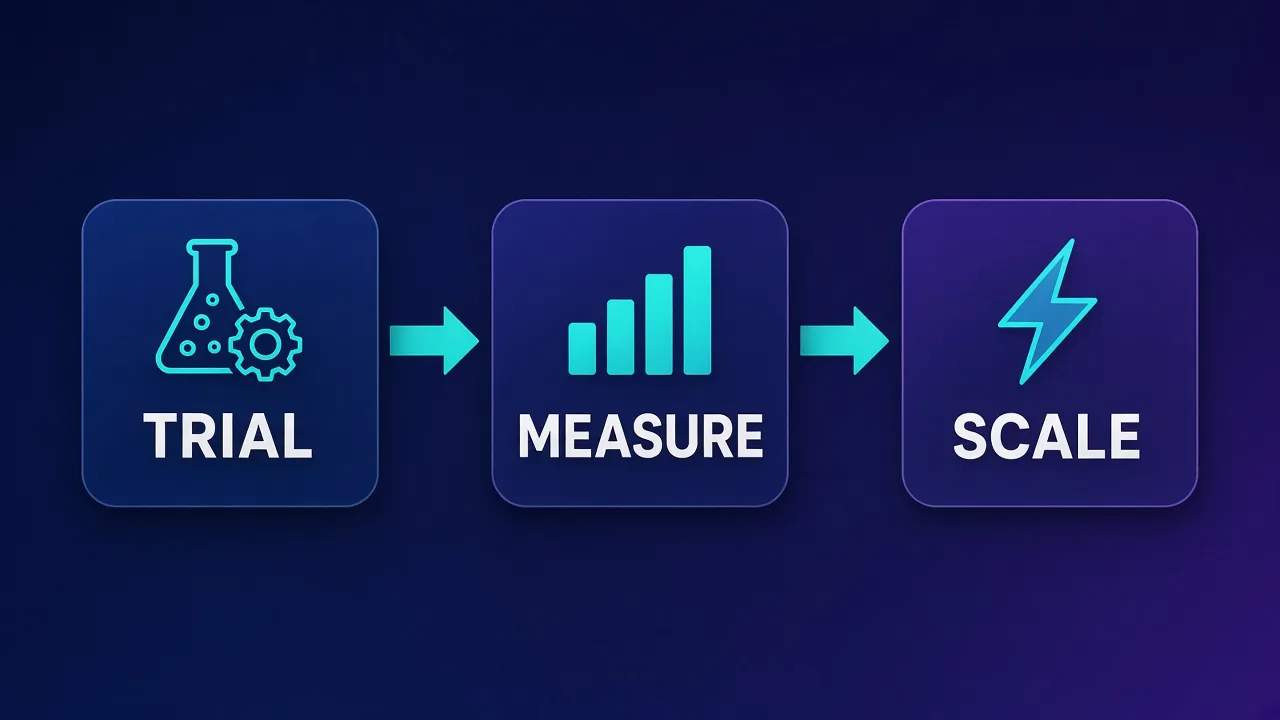
Use a simple effective-cost model during trials:
- Define a fixed URL set and success predicate (HTTP 200 + parseable fields, or logged-in page marker).
- Run the same concurrency and retry policy you will use in production.
- Record successful results, bandwidth consumed, and wall-clock time.
- Compute cost per successful result from the vendor’s actual billed units (GB or requests).
- Repeat after 48–72 hours — some blocks appear only after patterns emerge.
A provider that looks twice as expensive on the pricing card can win if it halves bandwidth waste. Conversely, ultra-cheap bandwidth that yields 30% parse success loses quickly.
Instrumentation tip
Log exit ASN, status code, and retry count per request. When a “cheap” pool degrades, you will see it in ASN concentration and rising retries before the invoice surprises you.
Pitfalls that burn budget buyers
- Buying residential for a datacenter-shaped job — public APIs or soft sites may not need residential prices.
- Ignoring sticky needs — rotating exits mid-login creates fake “bad proxy” narratives.
- Over-targeting geos — city pins on thin budget pools cause capacity starvation.
- Shared subnet fame — popular cheap subnets get abused; diversity matters.
- No compliance filter — unauthorized access stays unauthorized on a bargain IP.
- Credential stuffing & ToS abuse — not a proxy-quality problem you can solve with spend.
Who should (and should not) optimize for cheap residential
Good candidates: startups validating data products, SEO teams on controlled budgets, ecommerce price monitors on public pages, researchers with modest concurrency, and engineers building pipelines who will re-evaluate quarterly.
Poor candidates: regulated enterprise procurement that needs MSA/SLA theater from day one; account-heavy social ops that really need sticky ISP; workloads already failing premium pools (protocol or fingerprint issues will not vanish on a cheaper IP).
Setup notes that save money
- Prefer HTTP endpoints for standard scrapers unless you need SOCKS5 features.
- Cap retries; unbounded retry loops turn cheap GB into expensive GB.
- Cache immutable assets; do not re-download the same static files through residential.
- Separate “discovery” traffic (broad crawl) from “precision” traffic (hard targets) onto different plans if needed.
- Keep sticky session IDs stable for multi-step flows; rotate aggressively for one-shot public GETs.
# Sketch: track success vs bandwidth proxy — wire your real client/metrics
import time

def run_batch(fetch, urls):
    ok = 0
    bytes_out = 0
    t0 = time.time()
    for url in urls:
        status, n = fetch(url)  # return HTTP status, response body length
        bytes_out += n
        if status == 200:
            ok += 1
    return {"ok": ok, "bytes": bytes_out, "seconds": time.time() - t0}
Related Proxyaxis reading
Pair this roundup with type selection (residential vs ISP vs datacenter), enterprise comparisons (Bright Data vs Oxylabs), and alternatives framing (Oxylabs alternatives). Browse the full directory at proxyaxis.com/proxies when you need live cards beyond this shortlist.
Bandwidth math: where “cheap GB” disappears
Residential billing is usually metered in gigabytes (sometimes in requests for API-shaped products). HTML itself is small; the waste is elsewhere. Heavy pages pull megabytes of images, scripts, and third-party tags if your client is a full browser. Headless browsers without request blocking can multiply bandwidth 10–50× versus a raw HTTP fetch of the same article body. On a budget plan that multiplier is the difference between a sustainable monitor and a surprise top-up.
Practical controls that protect cheap residential budgets:
- Prefer HTTP clients for structured public HTML when a full browser is unnecessary.
- Block image, font, and media URLs in Playwright/Puppeteer when you only need DOM text.
- Stop following irrelevant pagination once your parser has the fields you need.
- Deduplicate URLs aggressively; residential is the wrong place to re-crawl identical product pages hourly without a change-detection strategy.
- Compress where clients and targets allow; avoid downloading the same sitemap daily in full.
Also separate environments: development and CI should not share the production residential key. Engineers debugging selectors on a hot reload loop can burn more GB than the overnight job.
Ethical sourcing and reputation risk
Not all inexpensive residential supply is equal. Responsible vendors emphasize consent-based or otherwise clearly disclosed participation models and publish acceptable-use policies. Opaque resellers of mixed traffic may be cheaper at the invoice and costlier in sudden pool death, payment processor issues, or legal exposure. Budget buyers still need a sourcing story they can defend internally.
Red flags that deserve extra diligence:
- No clear explanation of how peers or devices join the network
- Pressure to pay only via hard-to-trace methods with zero KYC when volumes are large
- Support channels that disappear after purchase
- Pools that only work on a handful of soft sites in your trial but are marketed as universal
Cheap does not mean unchecked
If your company has security or legal review, involve them early. Switching providers later because procurement rejected the supplier is more expensive than starting with a vendor that can answer sourcing questions.
Mixing cheap residential with ISP and datacenter
A mature cost strategy rarely uses residential for everything. Datacenter exits handle high-volume soft targets and internal tooling. Sticky ISP (static residential) handles account continuity where rotating consumer IPs are the wrong tool. Rotating residential covers the middle: public pages that fingerprint datacenter ranges but do not require a month-long sticky lease.
Example split many teams converge on after measurement:
- Datacenter for sitemaps, robots, and soft JSON endpoints
- Budget rotating residential for category and SERP-like public HTML
- Mid-market or premium residential for stubborn geos or tougher antibot
- Sticky ISP for logged-in or identity-sensitive browser profiles
That architecture lets “best cheap residential” stay in its lane instead of pretending one discount pool replaces every product line on Proxyaxis.
Support, SLAs, and the hidden cost of silence
When a subnet goes bad at 2 a.m., the cheapest dashboard with no chat and a ticket black hole becomes expensive. Mid-market value providers that answer quickly — even without a formal enterprise SLA — often win on total cost of ownership. During trials, intentionally open a support question about sticky syntax or geo coverage. Response quality is a product feature.
Document what you need from support before you buy: replacement subnets, refund policy on unused bandwidth, concurrency limits, and whether residential and datacenter share authentication formats. Ambiguity here causes weekend outages later.
Conclusion
The best cheap residential proxy is the one that minimizes effective cost on your targets — not the one with the loudest discount banner. Webshare, IPRoyal, PacketStream, DataImpulse, Proxy-Cheap, Decodo, SOAX, and Geonode are reasonable value-oriented names to trial, each with different postures from price-forward to mid-market flexible. Use live provider cards for commercials, run an honest measurement loop, and graduate tiers when your anti-bot reality demands it.
Stay compliant, instrument ASN and retries, and treat residential budget as an engineering metric you revisit — not a one-time coupon decision.
Frequently asked questions
Value depends on your targets. Common shortlist names for budget-aware residential trials include Webshare, IPRoyal, PacketStream, DataImpulse, Proxy-Cheap, plus mid-market options like Decodo, SOAX, and Geonode. Compare live plans and measure success on your own URLs.
Low sticker rates can hide high retry rates, thin geos, and burned subnets. Effective cost is billed bandwidth or requests divided by successful results. A slightly pricier pool that completes jobs cleanly is usually cheaper overall.
Use a fixed URL set, production-like concurrency, and a clear success predicate. Log status codes, parse success, ASN, and retries for at least a few days. Compute cost per successful result from actual billed units.
No. Soft public endpoints may work on datacenter or ISP exits at lower cost. Choose residential when target policy or geo realism demands consumer-like IPs, not by default for every scrape.
Buying proxies is not a license to violate laws or site terms. You remain responsible for how traffic is used. Prefer ethically sourced providers and authorized data collection practices.
Rotating exits suit one-shot public page fetches. Sticky sessions keep the same exit for minutes so logins and multi-step flows do not break. Using rotate where you need sticky looks like “bad proxies” but is really a session mismatch.
Treat marketing percentages cautiously. Success is target-specific and changes as defenses evolve. Your own trial metrics on your URLs are the only numbers that should drive purchasing.
Upgrade when effective cost rises because of failures, when geo targeting cannot be met, or when account-sensitive workflows need more stable ASN reputation—often sticky ISP rather than more rotating residential.