Table of contents
"Why pay for a VPN when there are free ones?" is one of the most common questions in online privacy — and the answer matters more than most people realise. Free and paid VPNs can look similar on the surface, but they differ fundamentally in how they make money, what they do with your data, and what you actually get. This guide breaks down the real differences between free and paid VPNs, when a free one is genuinely fine, when it's a serious risk, and how to choose the right option for you.
Free vs paid VPNs at a glance
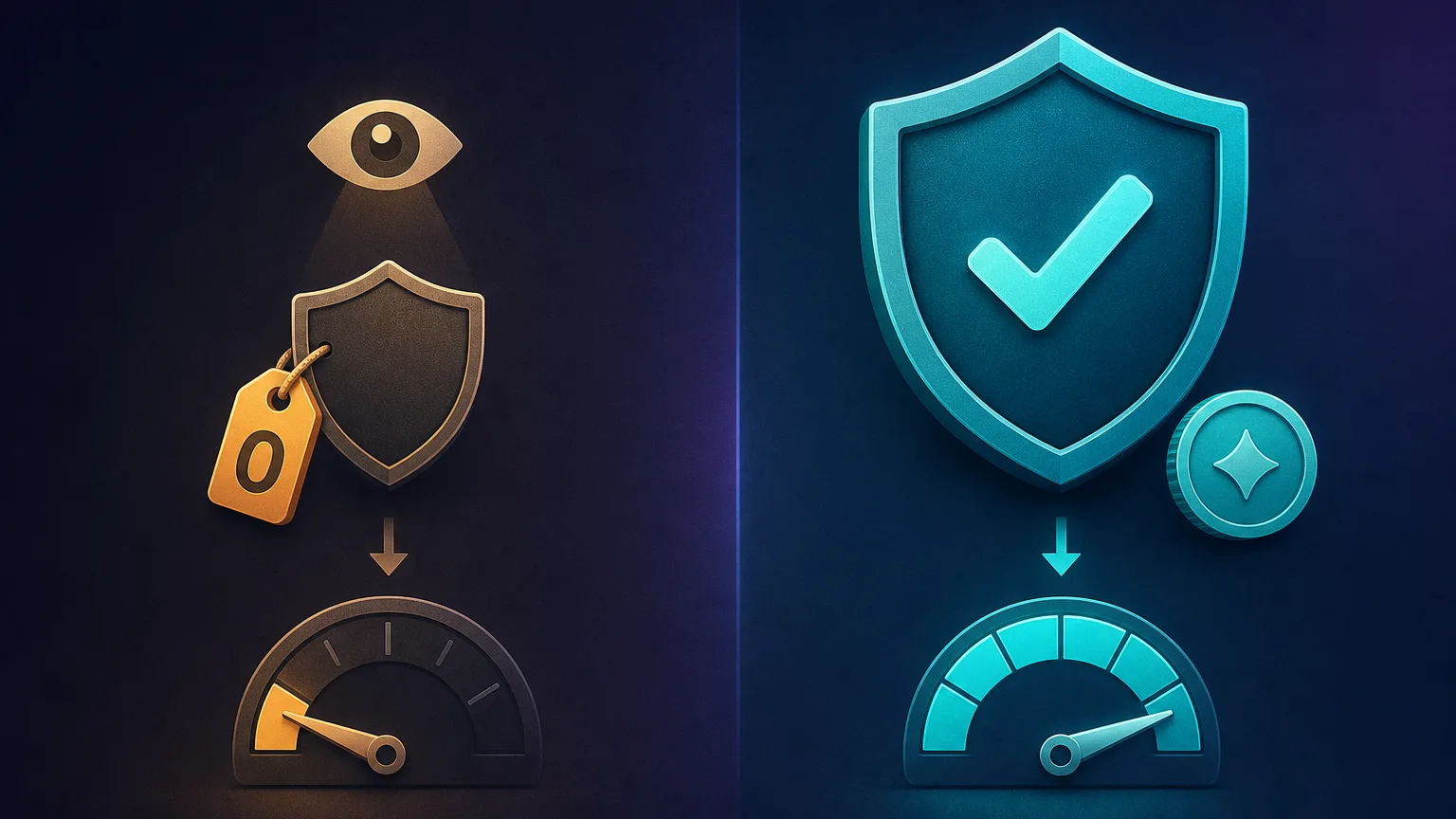
The short version: paid VPNs sell you a service — you're the customer, and their incentive is to protect you well enough that you keep subscribing. Many free VPNs sell something else — often your data or your attention — because running a global server network costs real money that has to come from somewhere. There are honest exceptions (reputable providers offering a genuine free tier to upsell you later), but the core rule holds: if you're not paying, it's worth asking how the service stays afloat.
How "free" VPNs actually make money
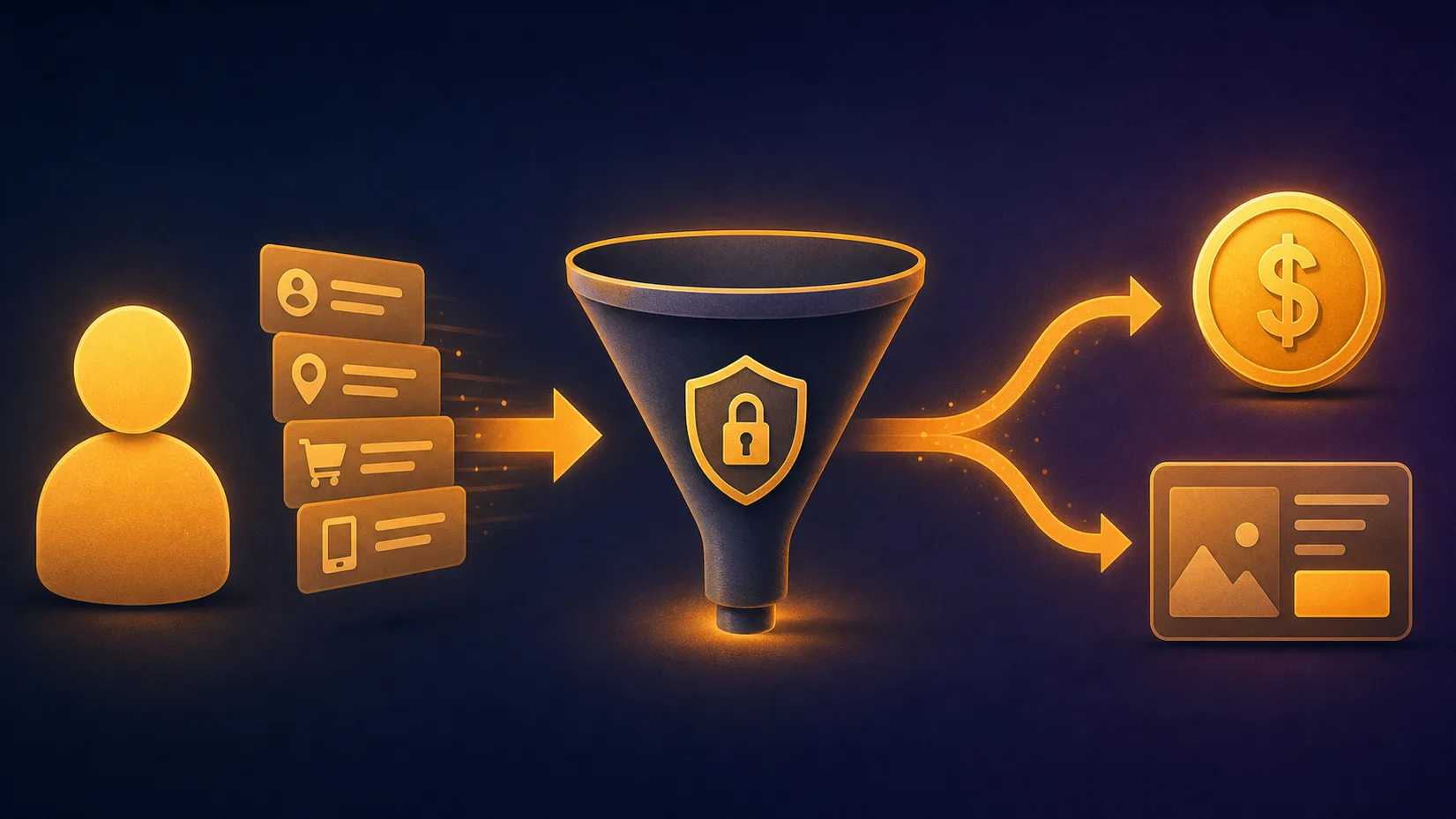
This is the crux, and it's where the real difference lives. A VPN provider pays for servers, bandwidth, and staff whether you pay them or not — so a truly free service needs another revenue source. The common ones:
- Selling or sharing your data. Some free VPNs log your browsing and sell it to advertisers or data brokers — the exact opposite of what a VPN is for.
- Injecting ads or trackers. Displaying ads, or inserting tracking into your traffic, to earn ad revenue.
- Upselling to paid. The honest model — a reputable provider gives you a limited free tier hoping you'll upgrade. Here the free version is a genuine (if capped) product, not a trap.
- Selling your bandwidth. A few free apps have quietly routed other people's traffic through users' devices — a serious security and legal risk.
"If you're not paying, you may be the product"
This old adage fits VPNs especially well. A VPN sees all your traffic, so a dishonest free provider is in the perfect position to harvest it. That doesn't mean every free VPN is malicious — but it means you should only trust free VPNs from providers with a clear reputation and, ideally, an independent audit.
What you give up with a free VPN
Even honest free tiers come with real limits, because the provider is steering you toward paying:
- Data caps. Most free tiers limit you to a few gigabytes a month — fine for occasional use, useless for streaming or daily browsing.
- Slower speeds. Free users often share crowded servers and get throttled, so connections are slower.
- Few server locations. A handful of countries rather than the dozens paid plans offer, limiting what you can access.
- Weak streaming/torrenting support. Free VPN IPs are usually blocked by streaming services, and P2P is often disabled.
- Fewer features. Advanced protocols, a kill switch, split tunneling, and specialty servers are frequently paid-only.
- Limited or no support. Free users rarely get real customer support.
What a paid VPN gets you
Paying aligns the provider's incentive with your privacy, and unlocks the full service:
- No data caps and fast speeds on well-provisioned servers, with modern protocols like WireGuard.
- Large server networks across many countries and cities for reliable access and geo-flexibility.
- Stronger, audited privacy. Reputable paid VPNs publish independently-audited no-logs policies — they make money from subscriptions, not your data.
- Streaming and torrenting that actually work, with IPs and servers maintained for it.
- Full features: kill switch, split tunneling, specialty servers, and more devices per account.
- Real support and regular app updates.
Free vs paid: side-by-side
| Factor | Free VPN | Paid VPN |
|---|---|---|
| Price | $0 (other trade-offs) | A few dollars/month |
| Data cap | Usually limited | Unlimited |
| Speed | Slower, throttled | Fast |
| Server choice | Few locations | Many countries/cities |
| Privacy | Varies — some log/sell data | Audited no-logs (reputable) |
| Streaming | Usually blocked | Generally works |
| Devices | Often 1 | Several to unlimited |
| Support | Minimal | Full support |
Are free VPNs safe?
It depends entirely on which free VPN. A free tier from an established, audited provider is generally safe — it's a capped taster of a real product. An unknown free VPN app, especially from an app store with no track record, can be genuinely dangerous: studies over the years have repeatedly found free VPN apps that leak data, contain trackers, or request alarming permissions. The dividing line isn't "free vs paid" so much as reputable vs unknown. If you're going to use a free VPN, use one from a provider you'd trust to pay — just on their free plan.
Reputable free VPNs worth trusting
A few well-regarded providers offer genuine, safe free tiers — usually to introduce you to their paid plans. Two of the best:
Proton VPN — the best genuinely-free tier
From the team behind Proton Mail, its free plan is unusual for having no data cap and no ads, backed by a strong privacy reputation and open-source, audited apps — a rare free VPN you can genuinely trust.

Proton VPN
The privacy purist's choice that no longer compromises on speed or streaming. The free tier is genuinely free and safe — unique in this industry. Paid plans are competitive with the very best.
Windscribe — generous free allowance
Offers a solid monthly free data allowance across several countries, with a capable app and a good privacy stance — a strong pick if you only need a VPN occasionally.

Windscribe
The most flexible pricing in the industry and a genuinely useful free tier. Apps are quirky and speeds vary by location, but for casual or budget users Windscribe punches well above its weight.
When a free VPN is actually fine
Free VPNs aren't all bad — for the right, limited use they're perfectly sensible:
- Occasional, light use — encrypting the odd session on public Wi-Fi.
- Casual geo-unblocking of a site now and then, where speed and reliability don't matter much.
- Trying a provider before committing to a paid plan.
- A privacy top-up when your needs are minimal and you've chosen a reputable provider.
When you really need a paid VPN
- Streaming region-locked libraries — free IPs are almost always blocked.
- Torrenting / P2P — usually disabled or too slow on free tiers.
- Daily, always-on use — data caps and throttling make free plans impractical.
- Privacy-critical situations — where you need an audited no-logs provider you can trust completely.
- Covering many devices or your whole household.
Money-back guarantees make paid low-risk
Most reputable paid VPNs offer a 30-day money-back guarantee, so you can test the full service risk-free. Combined with cheap long-term plans, that often makes a paid VPN a better value than fighting a free tier's limits — try it, and refund if it doesn't fit.
Best paid VPNs to consider
If you decide a paid plan fits your needs, these two are consistently reliable, fast, and easy to use:
NordVPN — fast, feature-rich all-rounder
A large audited network, fast WireGuard-based speeds, strong streaming support, and a polished app across every platform.

NordVPN
Still the benchmark. NordVPN combines top-tier speeds, a repeatedly audited no-logs policy, and the broadest feature set in the industry at a mid-range price. The default recommendation for most people.
Surfshark — best value with unlimited devices
Allows unlimited simultaneous connections on one plan, making it excellent value for households, with solid speeds and features.

Surfshark
The value king. Unlimited connections, strong speeds, and a feature set close to NordVPN at roughly half the intro price. The 14-eyes Netherlands jurisdiction is the main caveat for hardliners.
For specific needs, see our guides to the best VPNs for Netflix and gaming, or the full VPN directory.
How to spot a dangerous free VPN
Before installing any free VPN, run through these red flags — any one of them is a reason to walk away:
- No clear privacy policy, or one that admits to logging and sharing data with "partners."
- Excessive app permissions — a VPN has no reason to want your contacts, messages, or location beyond the connection itself.
- No named company or jurisdiction, or a provider that hides who is behind it.
- No independent audit and no track record — trust in privacy has to be earned and verified.
- Aggressive ads or bundled software in the app, a sign the real product is your attention.
- Unrealistic promises like "unlimited everything, totally free, 100% anonymous" — the economics don't add up.
A trustworthy free tier, by contrast, comes from a transparent company with a published policy, reasonable permissions, and ideally a third-party audit.
Free VPN myths, debunked
- "All free VPNs are scams." False — reputable providers like Proton VPN offer genuinely safe free tiers. The problem is unknown free apps, not the concept of free.
- "Paid VPNs never log anything." Not automatically true — a paid VPN is only as trustworthy as its policy and audits. Paying raises the odds, but you should still verify, not assume.
- "A free VPN makes me anonymous." No VPN makes you truly anonymous, and a limited free one certainly doesn't — it's a privacy layer, not an invisibility cloak.
- "Free is always worse than paid." For light, occasional use a reputable free tier can be perfectly adequate; the gap only really bites when you need speed, streaming, or heavy daily use.
Is a free VPN better than no VPN?
It's a genuinely nuanced question. A reputable free VPN is better than no VPN on public Wi-Fi — the encryption protects you from local snooping, which is worthwhile. But a shady free VPN can be worse than no VPN, because instead of an untrusted café network seeing your traffic, a single company sees all of it and may be logging and selling it. So the honest answer is: a trustworthy free VPN beats nothing; an unknown one may be a downgrade. The identity of the provider matters more than the mere presence of a VPN.
What to check before trusting any VPN
Free or paid, judge a VPN on the same fundamentals:
- No-logs policy — clearly stated and, ideally, independently audited.
- Jurisdiction — the country the provider operates from affects what it can be compelled to hand over.
- Security — modern protocols (WireGuard/OpenVPN) and a working kill switch.
- Transparency — a named company, audits, and a track record rather than anonymous marketing.
- Reputation — independent reviews and a history of honest behaviour.
Applying these to both free and paid options is the real skill — price is just one input, not the whole decision.
How to choose between free and paid
- Choose free if you use a VPN rarely, for light tasks, and you pick a reputable, audited provider like Proton VPN or Windscribe.
- Choose paid if you stream, torrent, use a VPN daily, care deeply about privacy, or need to cover multiple devices.
- Never use an unknown free VPN app with no reputation for anything sensitive — the privacy risk outweighs the saving.
New to VPNs entirely? Our guide on how to use a VPN walks through setup step by step.
Free tier vs free trial — not the same thing
One distinction worth clearing up, because people conflate them. A free tier is a permanently free but limited plan — capped data, fewer servers, basic features — that you can use indefinitely. A free trial (or a money-back guarantee) gives you the full paid service for a limited window, after which you either pay or cancel. If you want to genuinely test a premium VPN's speed and streaming, a free trial or refund window is the better route, since a free tier deliberately holds those features back. Use a free tier for ongoing light use; use a free trial to evaluate a paid plan before committing.
The bottom line
The real difference between free and paid VPNs isn't just price — it's the business model behind them, and that shapes everything else. Paid VPNs make money from your subscription, so their incentive is to protect you; unknown free VPNs often make money from your data or attention, so their incentive can run against you. Reputable free tiers like Proton VPN and Windscribe bridge the gap for light users, but for streaming, daily use, or anything privacy-critical, a paid VPN's speed, servers, audited no-logs policy, and features are well worth the few dollars a month. Match the choice to how you'll actually use it — and if you go free, go reputable, never anonymous. Still weighing your options? Compare current pricing and ratings across the full VPN directory to find the plan that fits.
Frequently asked questions
It depends on the provider. A free tier from a reputable, audited company (like Proton VPN or Windscribe) is generally safe. Unknown free VPN apps can be genuinely risky — some log and sell data, inject trackers, or request alarming permissions. The safe rule is to only use a free VPN from a provider you'd trust to pay for.
Running a VPN costs money, so a free service earns it another way — data caps that push you to upgrade, slower shared servers, few locations, ads, or in the worst cases logging and selling your data. Honest providers use a limited free tier to upsell paid plans; dishonest ones monetise your traffic directly.
Some do — it's one of the main ways a truly free VPN covers its costs, and it's the opposite of what a VPN should do. Reputable providers with audited no-logs policies don't, because they make money from subscriptions instead. Always check the privacy policy and look for independent audits before trusting a free VPN.
For most regular users, yes. Paid VPNs remove data caps, are much faster, offer far more servers, support streaming and torrenting, and — crucially — align the provider's incentive with your privacy through audited no-logs policies. With plans costing only a few dollars a month and money-back guarantees, the value is strong.
Usually not. Streaming services actively block known VPN IP ranges, and free VPNs rarely have the resources to keep refreshing IPs, so their addresses are almost always already blocked. Data caps also make streaming impractical. For reliable streaming you generally need a paid VPN maintained for it.
Proton VPN's free tier is widely considered the best because it has no data cap, no ads, and comes from a provider with a strong, audited privacy reputation. Windscribe is another good option with a generous monthly allowance. Both are reputable providers offering free tiers to introduce their paid plans.
Because bandwidth and servers cost money. Limiting free users to a few gigabytes a month controls those costs and nudges heavy users toward a paid plan. It's the standard model for honest free tiers — the free version is a genuine but capped taste of the full service.
Choose a reputable free VPN if you only need it occasionally for light tasks. Choose paid if you stream, torrent, use a VPN daily, care deeply about privacy, or need multiple devices covered. Whatever you do, avoid unknown free VPN apps with no track record for anything sensitive.