Table of contents
Dolphin Anty and AdsPower are two of the most popular antidetect browsers for managing many online accounts without them getting linked or banned. Both are affordable, capable, and far cheaper than enterprise names like Multilogin — but they've grown up serving slightly different crowds. Dolphin Anty is a favourite of affiliate marketers and media buyers; AdsPower is the go-to all-rounder for e-commerce and multi-account operations at scale. So which is better for you? This detailed comparison breaks down fingerprint stealth, browser engines, automation, teams, pricing and ease of use, so you pick the right tool for your workflow.
Dolphin Anty vs AdsPower: the quick verdict
If you're short on time: AdsPower is the better all-round choice for e-commerce sellers, social-media managers and anyone who wants powerful no-code automation, both Chromium and Firefox engines, and broad multi-account features. Dolphin Anty is the better choice for affiliate marketers and media buyers, with strong profile management, a focus on the traffic-arbitrage community, and mobile (Android) profile emulation. Both are solid, affordable and offer free plans — so the "right" one depends on your niche and how much automation you need.
Here they are side by side — live pricing, ratings and any current deals pull straight from our reviews:

Dolphin Anty
Browser

AdsPower
Browser
Editor score
User rating
Starting price
Founded
What is an antidetect browser (and what it isn't)?
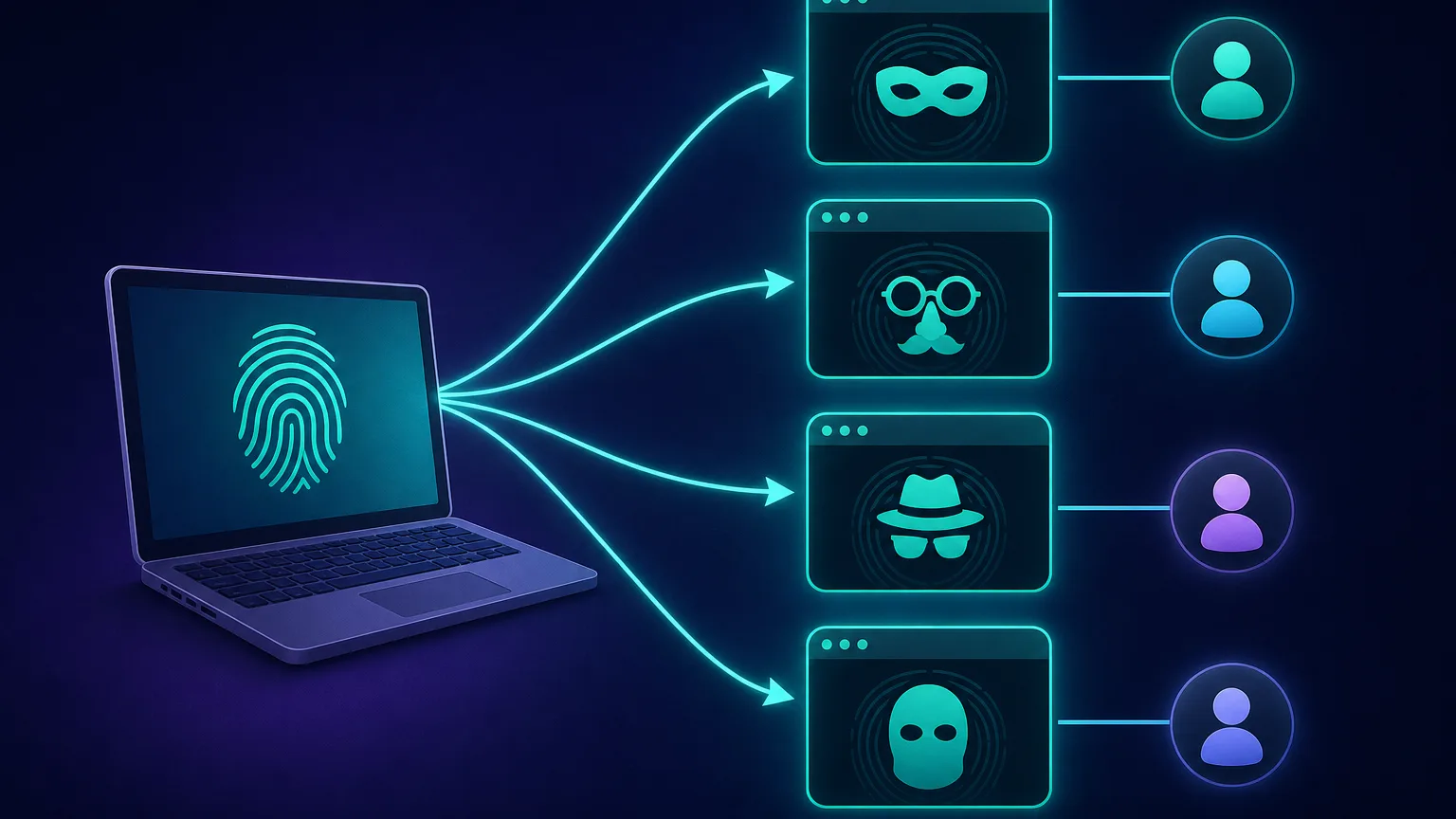
An antidetect browser lets you run many separate browser profiles on one computer, each with its own unique, consistent digital fingerprint — a distinct combination of user agent, screen size, fonts, canvas/WebGL signals, time zone and more. Because each profile looks like a different device and person, websites can't easily link your accounts together, which is what makes them useful for managing multiple accounts on platforms that normally ban that.
Crucially, this is not the same as an AI agentic browser (which uses AI to complete tasks) — an antidetect browser is about identity separation, not autonomy. And it works hand-in-hand with proxies: the browser spoofs your fingerprint, but you still need a separate IP address per profile (more on that below). Both Dolphin Anty and AdsPower are Chromium-based antidetect browsers that do this core job well.
How antidetect browsers keep accounts unlinked
To choose well, it helps to know what's actually happening under the hood — because both Dolphin Anty and AdsPower rely on the same three mechanisms. Websites identify and link users through a bundle of signals, and an antidetect browser has to convincingly separate all of them per profile:
- A unique, consistent fingerprint. Each profile gets its own user agent, screen resolution, fonts, canvas and WebGL signatures, hardware hints and time zone. The key word is consistent — a good antidetect browser makes these values agree with each other, because a mismatched fingerprint (say, a Windows user agent paired with Mac fonts) is itself a red flag.
- Fully isolated storage. Cookies, local storage, cache and sessions are sandboxed per profile, so activity in one account never bleeds into another.
- A separate IP address. The fingerprint and storage mean nothing if every profile shares your one home IP — which is why a distinct proxy per profile is mandatory, not optional.
Get all three right and each profile looks like a genuinely different person on a different device. Get any one wrong — a reused IP, an inconsistent fingerprint, shared cookies — and platforms can tie your accounts together. Both browsers handle the fingerprint and storage well; the IP is the part you supply.
What is Dolphin Anty?
Dolphin Anty is a Chromium-based antidetect browser that became hugely popular in the affiliate marketing and media-buying community. It's known for clean profile management, cookie import/collection tools, a free starter plan, team features, and Android profile emulation for managing mobile-first accounts. It also includes built-in automation for repetitive tasks. If your world is traffic arbitrage, Facebook/TikTok ad accounts and affiliate campaigns, Dolphin Anty was practically built for you. It has grown a large, active community and ships regular updates — which matters in a category where staying ahead of platform detection is a constant race.
What is AdsPower?
AdsPower is one of the most widely used antidetect browsers, especially for e-commerce and broad multi-account management (dropshipping, Amazon, TikTok, social media). It offers both a Chromium engine and a Firefox-based engine, a standout no-code RPA automation robot, a local API for Puppeteer/Selenium integration, team collaboration with roles, and an affordable entry plan plus a free tier. Its breadth and automation have made it a default choice for agencies and sellers running many stores or accounts. Its large user base and frequent updates give it real momentum, and the sheer number of integrations makes it easy to slot into an existing workflow.
Same core job, different flavour
Both browsers spoof fingerprints to keep your accounts unlinked — that fundamental capability is comparable. The real differences are in engines, automation depth, and which community's workflow each is tuned for.
Head-to-head: how they compare
Fingerprint management and stealth
This is the core job, and both do it well. Each generates realistic, consistent fingerprints per profile and lets you tweak the parameters (user agent, resolution, WebGL, canvas, time zone, geolocation, and so on). In day-to-day use, both are effective at keeping profiles unlinked on mainstream platforms. Neither can promise "100% undetectable" — no antidetect browser can — but both are credible, actively updated options.
Browser engines
Here AdsPower has an edge: it offers both a Chromium engine and a Firefox-based engine, which is useful if a platform behaves differently across browsers or you simply prefer Firefox. Dolphin Anty focuses on Chromium (with strong Android emulation on the mobile side). If cross-engine flexibility matters, AdsPower; if you're Chromium-only and want mobile profiles, Dolphin Anty.
Automation and API
Both support automation, but AdsPower's is the more prominent selling point. Its no-code RPA robot lets non-developers build automated workflows, and its local API integrates cleanly with Puppeteer and Selenium for scripted control. Dolphin Anty also offers automation and an API, capable for many workflows, but AdsPower's automation is generally considered deeper and more accessible to non-coders. If heavy automation is central to your operation, lean AdsPower.
Profiles, teams and collaboration
Both handle bulk profile creation, folders/tags, cookie management and team sharing with roles and permissions — important for agencies where several people manage the same accounts. Feature parity is close here; the choice usually comes down to which dashboard you find more intuitive and which plan tiers fit your profile count.
Ease of use
Both are reasonably beginner-friendly by antidetect-browser standards, with clean dashboards and quick profile setup. AdsPower's breadth means slightly more to learn, while Dolphin Anty's affiliate-focused workflow feels streamlined for its audience. Newcomers can get productive on either within an hour.
Pricing and free plans
Both are positioned as affordable relative to premium antidetect browsers, and — importantly — both offer free plans that let you run a handful of profiles at no cost, ideal for testing. Paid tiers scale with the number of profiles and team members. AdsPower's entry pricing is notably budget-friendly; Dolphin Anty's plans are competitive too. Because pricing and profile limits change, check the live figures on the cards rather than relying on fixed numbers.

Community and who each is built for
This is where the two most clearly diverge. Dolphin Anty is deeply embedded in the affiliate and media-buying scene, with tooling and content aimed at that workflow. AdsPower has a broader base skewed toward e-commerce, dropshipping and social-media multi-account management. Neither is limited to those niches, but each feels most at home there.
The honest downsides of each
No tool is perfect. Dolphin Anty's weaknesses: it's Chromium-only (no Firefox engine), and its automation, while capable, isn't as deep or no-code-friendly as AdsPower's. AdsPower's weaknesses: its breadth of features can feel busy for someone who just needs a few profiles, and as a very large platform, support response times can vary at peak. Both, like all antidetect browsers, require you to supply your own quality proxies to actually stay unlinked.
Dolphin Anty vs AdsPower: comparison table
| Dimension | Dolphin Anty | AdsPower |
|---|---|---|
| Best for | Affiliate marketing, media buying | E-commerce, broad multi-account |
| Browser engines | Chromium (+ Android emulation) | Chromium + Firefox-based |
| Automation | Built-in automation + API | No-code RPA robot + local API |
| Teams & roles | Yes | Yes |
| Free plan | Yes | Yes |
| Ease of use | Streamlined for its niche | Broad but approachable |
| Community focus | Affiliate / traffic arbitrage | E-commerce / dropshipping |
Round-by-round: who takes each category
- Fingerprint stealth: roughly a tie
- Browser engine choice: AdsPower (Chromium + Firefox)
- No-code automation: AdsPower
- Mobile / Android profiles: Dolphin Anty
- Affiliate / media-buying workflow: Dolphin Anty
- E-commerce multi-account at scale: AdsPower
- Free plan & value: both strong
The pattern: AdsPower wins on breadth, engines and automation; Dolphin Anty wins on mobile and its affiliate-tuned workflow. Your niche largely decides it.
Which wins for your use case?
- Affiliate marketing & media buying: Dolphin Anty — built for that community.
- Dropshipping & e-commerce stores: AdsPower — broad multi-account plus automation.
- Heavy no-code automation: AdsPower — the RPA robot is the differentiator.
- Mobile-first / Android accounts: Dolphin Anty — profile emulation is its strength.
- Agencies needing Firefox as well as Chromium: AdsPower.
- Just testing the waters: either — both have free plans.
Which should you choose?
- Choose AdsPower if you run e-commerce or many varied accounts, want deep no-code automation and a local API, or need both Chromium and Firefox engines.
- Choose Dolphin Anty if you're in affiliate marketing or media buying, want a streamlined workflow for that niche, or need strong mobile/Android profile emulation.
The pragmatic move
Both have free plans, so don't agonise — spin up a few profiles on each, run your actual workflow, and see which dashboard and automation fit your hands better. The "best" antidetect browser is the one your team will actually use smoothly every day.
Dolphin Anty — best for affiliates and media buyers
Streamlined profile management with mobile emulation, tuned for the traffic-arbitrage community.
Dolphin Anty
Dolphin Anty is one of the most polished choices for affiliate and paid-social teams, pairing a genuinely useful 10-profile free tier with warming automation and bulk proxy tools that were clearly built by people who run ad accounts. Just weigh its Russian origins against your vendor policy, and know that its strengths are wasted if your work isn't media buying.
AdsPower — best all-rounder with automation
Dual engines, a no-code RPA robot and broad multi-account features at a budget-friendly price.
AdsPower
AdsPower delivers remarkable feature-per-dollar: dual Chromium/Firefox engines, a genuine no-code RPA robot, team roles, a free 5-profile tier, and plans from around $5.40/mo. The trade-offs are a cluttered, learning-curve interface and support that leans to Asian time zones, but for cost-conscious e-commerce and ad teams it's hard to beat.
Don't forget: you still need proxies
An antidetect browser is only half of the multi-account equation. It spoofs your fingerprint, but every profile still needs its own IP address — otherwise all your accounts share one IP and get linked instantly, no matter how good the fingerprinting is. That means assigning a separate, clean proxy to each profile (both Dolphin Anty and AdsPower let you set a proxy per profile). For account safety, residential or mobile proxies are strongly preferred over datacenter, since platforms trust them far more. Our proxy directory and guide to choosing a trustworthy proxy provider will help you pair the right IPs with your browser.
Alternatives worth considering
Dolphin Anty and AdsPower aren't the only options. Multilogin is the premium, enterprise-grade choice; GoLogin and Octo Browser are strong mid-tier competitors; and Kameleo is popular for automation and mobile. Compare them all in our antidetect browser directory.
Common mistakes to avoid
Whichever browser you pick, these are the errors that get multi-account setups caught:
- Reusing one IP across profiles. The single fastest way to link accounts — assign a dedicated proxy per profile.
- Using cheap datacenter proxies for sensitive accounts. They're easily flagged; residential or mobile IPs are far safer.
- Mismatched geo. Keep each profile's time zone, language and IP location consistent — a US fingerprint on a German IP stands out.
- Logging into everything at once from a fresh setup. Warm profiles up gradually with natural activity rather than bulk-logging on day one.
- Sloppy cookie hygiene. Import and manage cookies carefully; empty or shared cookie jars look suspicious.
- Choosing on price alone. The cheapest plan is no bargain if its workflow doesn't fit yours — test the free plan first.
The bottom line
Dolphin Anty and AdsPower are both excellent, affordable antidetect browsers that do the core job — keeping your accounts unlinked — comparably well. AdsPower wins on breadth: dual engines, deep no-code automation and broad e-commerce features. Dolphin Anty wins for affiliate marketers and media buyers, with a tuned workflow and strong mobile emulation. Both offer free plans, so the smartest move is to test each on your real accounts — and remember to pair whichever you choose with quality residential or mobile proxies, one per profile, to actually stay unlinked.
Frequently asked questions
It depends on your use case. AdsPower is the better all-rounder for e-commerce and broad multi-account work, with dual browser engines and deep no-code automation. Dolphin Anty is better for affiliate marketers and media buyers, with a streamlined workflow and strong mobile (Android) profile emulation.
Both offer free plans that let you run a small number of profiles at no cost, which is great for testing. Paid tiers scale with the number of profiles and team members you need; check the live pricing on our review cards since both adjust plans over time.
An antidetect browser runs many separate browser profiles on one computer, each with its own unique digital fingerprint, so websites can't link your accounts together. It's used to manage multiple accounts on platforms that normally detect and ban that, and it works alongside proxies for separate IPs.
The software itself is legal and used by agencies, marketers and privacy-conscious users. However, running multiple accounts often violates a platform's terms of service, which can get those accounts banned, and it must never be used for fraud. Legality depends on how and where you use it.
AdsPower, generally. Its broad multi-account management, dual engines and no-code automation are well suited to running many stores or social accounts. Dolphin Anty can do it too, but AdsPower is more oriented toward e-commerce workflows at scale.
Dolphin Anty is the community favourite here. Its tooling, mobile emulation and workflow are tuned for traffic arbitrage and ad-account management, which is why many affiliate marketers and media buyers prefer it.
Yes, both do. AdsPower stands out with a no-code RPA automation robot and a local API that integrates with Puppeteer and Selenium. Dolphin Anty also offers automation and an API that's capable for many workflows, though AdsPower's automation is generally deeper.
Yes, absolutely. The browser only spoofs your fingerprint; each profile still needs its own IP address, or all your accounts share one IP and get linked instantly. Assign a separate residential or mobile proxy to each profile for the best account safety.