Table of contents
Travel prices are some of the most aggressively personalized data on the web. The exact same flight or hotel room can show a different price depending on the country you appear to browse from, your currency, and even your device — and airlines and OTAs guard that pricing behind serious anti-bot systems. That's why travel fare aggregation lives and dies on proxies: without a pool of trustworthy IPs in the right locations, you either get blocked or collect the wrong prices. This guide covers why fare aggregation needs proxies, what kind to use, and the best proxy providers for the job in 2026.
What is travel fare aggregation?
Travel fare aggregation is the process of collecting flight, hotel, car-rental and package prices from many sources — airline sites, online travel agencies (OTAs), and metasearch engines — and normalizing them so they can be compared, monitored, or resold. Price-comparison sites, travel apps, revenue teams, and market researchers all do it. The challenge is that this data is geo-personalized, dynamic, and defended: prices change by the minute, differ by market, and the sites actively try to stop automated collection.
Why fare aggregation needs proxies
Three hard realities make proxies essential rather than optional:
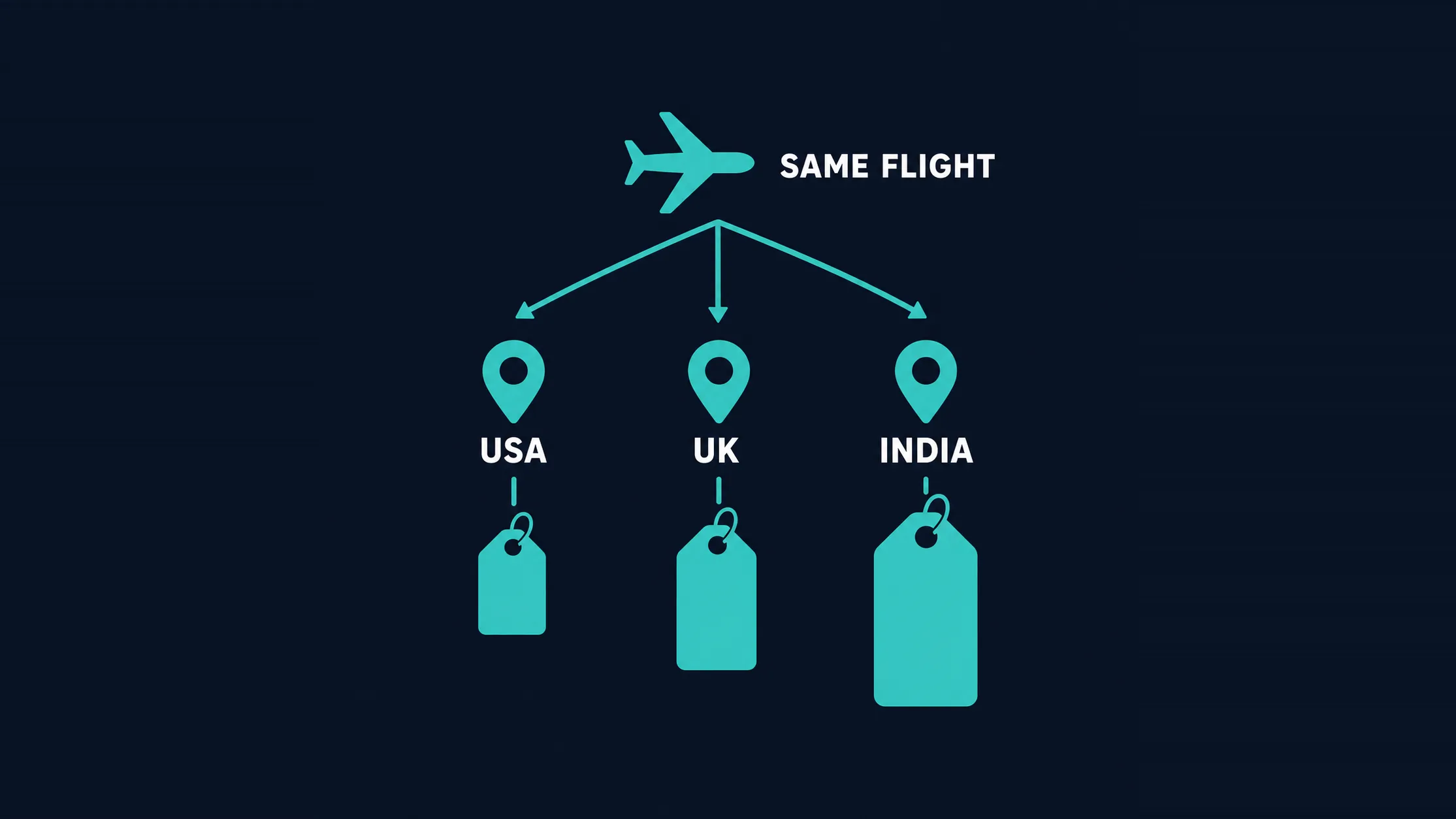
- Prices are location-specific. Airlines and OTAs show different fares (and currencies) to visitors from different countries — a New York IP and a London IP can see materially different prices for the same seat. To collect a market's real price, you must appear to be in that market.
- Volume triggers rate limits and blocks. Aggregation means many searches across many routes and dates. From one IP, that pattern is obviously automated and gets throttled or banned fast.
- Anti-bot systems flag datacenter IPs. Travel sites lean heavily on bot detection; low-trust IPs are challenged with CAPTCHAs or served decoy prices. You need IPs that look like real travelers.
What kind of proxy should you use?
The proxy type decides whether you collect clean, accurate fares or get blocked and fed junk:
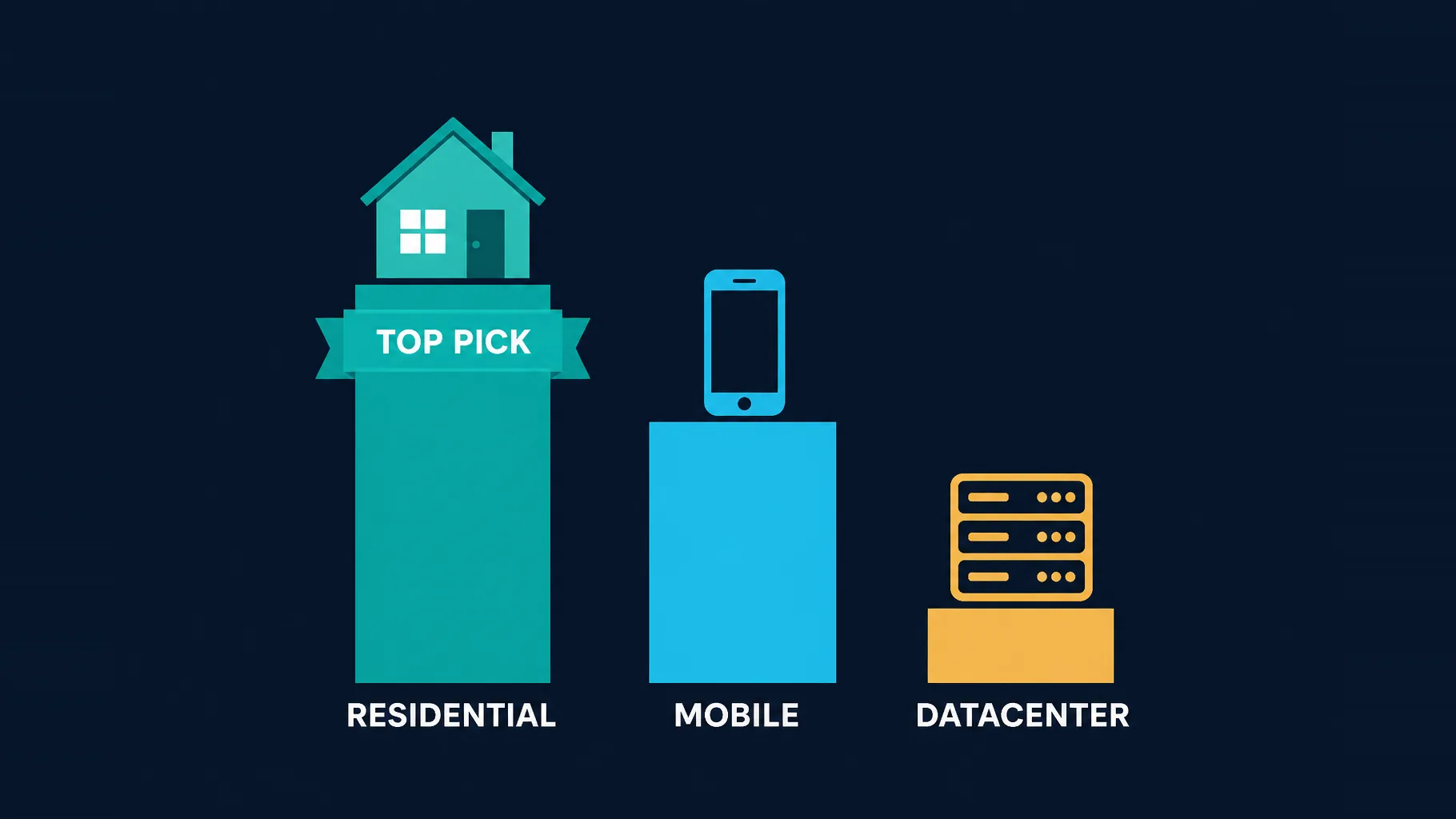
- Residential proxies — the default. IPs from real homes across the world give you the broad geographic coverage fare aggregation demands, and sites trust them. This is the workhorse for most travel data.
- Mobile proxies — for the strictest targets. Carrier IPs are the most trusted of all, useful for mobile-app fares or particularly defensive sites, but they're the priciest.
- Datacenter proxies — limited use. Cheap and fast, fine for lenient sources or high-volume non-personalized data, but easily detected and blocked by major travel sites.
Whatever you pick, geo-targeting is non-negotiable — you need to choose the exact country (and often city) each request appears from. See our guide to geo-targeting in proxies and the broader types of proxies.
The best proxies for travel fare aggregation in 2026
These five combine large, geo-diverse pools, strong success rates on defended sites, and the tooling serious aggregation needs:
Bright Data — best for scale and coverage
One of the largest residential and mobile networks with very granular country/city targeting and dedicated scraping tools — the go-to for high-volume, global fare collection.
Bright Data
Bright Data remains the most complete data-collection platform money can buy. No competitor matches its combination of network scale, targeting granularity, and compliance tooling — and for enterprise teams whose revenue depends on reliable data, that completeness justifies the premium. The trade-offs are real: it is one of the priciest providers per gigabyte, the interface overwhelms newcomers, and KYC verification adds friction before you can route a single request. Smaller projects will get better value from Decodo or IPRoyal. But if you need city-level residential targeting at scale, a managed unblocker for the hardest targets, and audit-ready compliance, Bright Data is the default — and our highest-rated proxy provider overall.
Oxylabs — best for reliability
A large, well-maintained network with high success rates and strong support, popular with enterprise data teams that need consistent results across many markets.

Oxylabs
Oxylabs is the enterprise provider that gets the fundamentals right. The network is huge and well-maintained, the scraper APIs are genuinely best-in-class, and the documentation and SDKs make integration faster than almost any competitor. What sets it apart from Bright Data is service: dedicated account managers, responsive support, and cleaner tooling mean less time fighting the platform and more time shipping. The cost is higher entry pricing, and the deepest discounts favor high-volume commitments. For serious commercial data operations that can justify the spend, Oxylabs is a top-two choice and frequently the one teams stay with long-term.
SOAX — best for flexible geo-targeting
Clean residential and mobile pools with fine country/city/carrier filtering, well suited to collecting accurate localized fares across specific markets.

SOAX
SOAX is the targeting specialist. City- and ISP-level selection on every plan — not locked behind premium tiers — is genuinely rare, and the continuously cleaned pool keeps success rates high where it matters. It is not the fastest network, the interface could use a refresh, and SOCKS5 coverage is uneven. Those are real but minor gripes against a provider that nails the fundamentals of precision and reliability. For ad verification, localized market research, and social-media work that depends on appearing in an exact location, SOAX is one of the best mid-market options available.
Decodo — best balance of value and features
A capable residential network with a friendly dashboard and solid geo-coverage at a competitive price — a strong mid-market pick for growing aggregation projects.

Decodo
Decodo offers the best price-to-performance ratio in the industry. It delivers roughly 90% of what the enterprise leaders provide — high success rates, a large clean pool, sticky sessions, an unblocker — at a fraction of their cost. The dashboard is the friendliest of any major provider, the 14-day money-back guarantee removes the risk of trying it, and support actually responds. The main gaps are enterprise-grade compliance tooling and the very deepest targeting, neither of which most teams need. For startups, solo developers, and any team that wants professional results without enterprise pricing, Decodo is our top value pick and an easy recommendation.
IPRoyal — best budget-friendly option
Affordable residential and mobile proxies that are easy to plug into a scraper, good for smaller projects or getting started without a big commitment.

IPRoyal
IPRoyal is the best pure pay-as-you-go deal in proxies. Non-expiring traffic is a genuinely customer-friendly policy that no major rival matches — buy what you need, use it whenever, lose nothing. The pool is smaller than the premium networks and success rates can soften on the most heavily defended targets, so high-volume enterprise scraping is not its strength. The dashboard is also fairly basic. For intermittent scraping, account work, and sneaker copping on a predictable budget, IPRoyal is an easy recommendation and one of the best value picks for occasional users.
Quick comparison
| Provider | Best for | Residential | Mobile | Geo-targeting |
|---|---|---|---|---|
| Bright Data | Scale & coverage | Yes | Yes | Country + city + ASN |
| Oxylabs | Reliability | Yes | Yes | Country + city |
| SOAX | Flexible targeting | Yes | Yes | Country + city + carrier |
| Decodo | Value + features | Yes | Limited | Country + city |
| IPRoyal | Budget | Yes | Yes | Country |
How fare aggregation works with proxies
The pipeline is straightforward once you see it: your aggregator issues searches for specific routes and dates; each request is routed through a proxy in the target market's country so the site returns that market's localized price and currency; the responses flow back and are normalized into a comparable dataset. Rotating or sticky sessions keep each search flow consistent, and spreading requests across many IPs keeps you under rate limits. The proxy layer is what turns "one IP getting blocked" into "thousands of clean, location-accurate fares."
Match currency and locale to the proxy
Getting the IP's country right is only half of it. Set the site's currency, language and locale to match the proxy's location too — a US IP requesting prices in euros produces inconsistent, sometimes wrong results. Consistency across IP, currency and locale is what yields accurate fares.
Key features to look for
- Wide, accurate geo-coverage in the specific countries and cities you need fares from.
- A large IP pool so high query volumes don't reuse and burn addresses.
- Session control — sticky sessions to complete a multi-step search, rotating for breadth.
- High success rates on defended travel sites (ask for or test this).
- An API and good docs for integrating with your scraping stack.
What travel data can you aggregate?
"Fares" covers more than just flight tickets. A complete aggregation setup typically collects:
- Flights — base fares, fare classes, and availability across airlines and OTAs.
- Hotels — nightly rates, room types, and availability by date and occupancy.
- Car rentals — daily rates and vehicle classes by pickup location.
- Packages and ancillaries — bundled deals, plus extras like baggage and seat fees that change the true price.
Each of these is priced by market and date, so all of them benefit from the same geo-targeted, proxy-backed approach.
Flights vs hotels: different challenges
The two biggest categories behave differently, which affects how you scrape them. Flight prices are extremely volatile — they can change within minutes as demand and inventory shift — and airline sites are among the most heavily defended on the web, so you need clean IPs and frequent re-checks. Hotel prices are also dynamic but usually change less minute-to-minute; the harder part is the sheer combinatorial volume (every property, date range and occupancy), which demands a large IP pool to cover breadth without burning addresses. In both cases, residential proxies with accurate geo-targeting are the foundation — the difference is mostly in cadence and scale.
Sticky vs rotating sessions
Fare searches are often multi-step — a search page, then a results page, sometimes a details or checkout step — and the site expects those requests to come from the same IP. That calls for a sticky session that holds one IP for the duration of a search flow. For breadth — sweeping many routes, dates or properties independently — rotating sessions spread requests across many IPs to stay under rate limits. Most serious setups use both: sticky IPs to complete each individual search cleanly, rotation across the overall workload. Getting this wrong (rotating mid-search) is a common cause of broken or inconsistent results.
Handling dynamic pricing
Travel pricing is a moving target, and that shapes your whole collection strategy. A fare you scraped an hour ago may already be stale, so aggregation is rarely a one-off — it's a schedule. Decide how fresh your data needs to be (near-real-time for a live comparison site, less frequent for trend research) and set your re-check cadence accordingly, balancing freshness against proxy cost and site load. Time-stamp every price so downstream users know how current it is, and don't cache aggressively on volatile routes. Treating prices as snapshots with a short shelf life, rather than fixed facts, is what keeps a fare dataset trustworthy.
How to test a proxy for travel scraping
Before committing, validate a provider against your actual targets:
- Check geo accuracy. Route through several target countries and confirm the exit IP really geolocates where you asked — mislabeled IPs give wrong prices.
- Measure the success rate on the specific travel sites you care about, not just a generic test page.
- Test speed and stability under realistic concurrency, since aggregation runs many requests at once.
- Confirm session control — that sticky sessions actually hold an IP long enough to complete a search flow.
A short trial against your real routes tells you far more than any headline pool-size number.
Common challenges and mistakes
- Geo/currency mismatch. The most common cause of wrong prices — align IP, currency and locale.
- Ignoring dynamic pricing. Fares change constantly; a single snapshot goes stale fast, so schedule regular re-checks.
- Using datacenter IPs on major sites. Cheap but quickly blocked or fed decoy prices.
- Hammering too fast. Aggressive request rates get you flagged; pace and rotate.
- Not handling blocks. Retry on a fresh IP rather than failing — see why proxies get blocked.
Is scraping travel fares legal?
Collecting publicly displayed fares is a widespread, established practice, and aggregating public pricing data is legal in many contexts — but it's genuinely nuanced. It can violate a site's terms of service, and some jurisdictions and data types carry more risk than others. Scraping personal data or circumventing access controls is a different matter entirely. The responsible approach is to collect only public pricing, respect rate limits and robots guidance, and understand the terms and laws that apply to your specific use case. Proxies are a technical tool, not legal permission.
How to choose
- High volume, global coverage? Bright Data.
- Enterprise reliability? Oxylabs.
- Precise market targeting? SOAX.
- Best value with good features? Decodo.
- Small project or tight budget? IPRoyal.
Building the scraper too? See how to use proxies with Puppeteer and our Amazon price monitoring guide for a related workflow, or browse the full proxy directory.
Who uses travel fare aggregation?
It's a broad field, and knowing where you fit helps you size your proxy needs:
- Price-comparison and metasearch sites that show users the cheapest options across providers.
- OTAs and booking platforms monitoring competitor pricing to stay competitive.
- Airlines and hotels tracking market rates for revenue management.
- Travel apps and deal alerts that notify users when fares drop.
- Analysts and researchers studying pricing trends across markets.
A deal-alert app watching a few routes has very different volume needs from a global metasearch engine, but all rely on the same geo-targeted, proxy-backed collection.
What does it cost?
Proxy pricing for travel data is usually driven by bandwidth (residential and mobile plans typically bill per GB), so your cost scales with how many searches you run and how heavy each response is. Prices change and vary by provider, so check the live figures on the cards above rather than any number quoted here. Two practical levers keep costs down: block unnecessary resources (images, fonts, media) so each request transfers less data, and tune your re-check cadence so you're not re-scraping stale-tolerant data more often than needed. Start with a modest plan to validate your success rates on real targets, then scale bandwidth as your route and market coverage grows.
The bottom line
Travel fare aggregation is only as good as the proxies behind it, because the data itself is location-specific and heavily defended. Residential proxies with accurate geo-targeting are the default; mobile for the toughest sites; datacenter only for lenient sources. Of the picks here, Bright Data leads on scale, Oxylabs on reliability, SOAX on flexible targeting, Decodo on value, and IPRoyal on budget. Match your IP, currency and locale to each target market, rotate to stay under the radar, handle blocks gracefully, and keep your collection to public pricing — do that, and you'll gather clean, accurate fares at scale.
Frequently asked questions
Residential and mobile proxies with strong geo-targeting are best, because travel prices are location-specific and heavily bot-protected. Bright Data leads on scale and coverage, Oxylabs on reliability, SOAX on flexible country/city targeting, Decodo on value, and IPRoyal on budget. The right pick depends on your volume, the markets you need, and your budget.
Because travel prices differ by the country you appear to browse from, collecting a market's real fare means appearing to be in that market — which requires a geo-targeted proxy. Proxies also spread your many searches across many IPs so you don't hit rate limits, and provide the trusted residential IPs that travel sites don't block. Without them you get blocked or collect the wrong prices.
Residential proxies are the default for travel fares because their IPs come from real homes and are trusted by airline and OTA sites, and they offer the broad geo-coverage you need. Datacenter proxies are cheaper and faster but easily detected and often blocked or served decoy prices on major travel sites, so reserve them for lenient sources only.
Airlines and online travel agencies personalize pricing by market — showing different fares and currencies to visitors from different countries based on their IP location, local demand, and pricing strategy. The same seat can genuinely cost different amounts to a US visitor versus a UK or Indian one. That's exactly why aggregators route each search through a proxy in the target country.
Collecting publicly displayed pricing is a widespread practice and legal in many contexts, but it's nuanced. It can violate a site's terms of service, and scraping personal data or bypassing access controls carries real legal risk. The responsible approach is to collect only public pricing, respect rate limits and robots guidance, and understand the laws and terms that apply to your specific use case.
It depends on your volume and the number of markets. Aggregation across many routes, dates and countries needs enough IPs (usually a rotating residential pool measured in bandwidth) that you don't reuse and burn addresses. Rather than counting individual IPs, most providers sell residential access by bandwidth, so you scale by usage; size it to your query volume and target markets.
It's strongly discouraged. Free proxies are typically slow, unstable, and often already flagged or blocked by travel sites, so they'll fail or return unreliable prices — and some are outright unsafe. For accurate, consistent fares at any scale, a reputable paid residential or mobile provider is far more reliable and cost-effective in practice.
Use trusted residential or mobile IPs with accurate geo-targeting, match the site's currency and locale to the proxy's country, pace your requests and rotate IPs rather than hammering from one address, and retry on a fresh IP when you hit a block. Handling blocks gracefully and behaving like a real user, rather than relying on the IP alone, is what keeps collection running.