Table of contents
If you scrape search results, monitor competitor prices, or harvest data at any real scale, the proxy you choose is the difference between a clean dataset and a folder full of CAPTCHAs and IP bans. Rotating proxies — which automatically cycle your requests across a large pool of IP addresses — are the backbone of reliable SEO research and web data collection. This guide explains how they work, the trade-offs between network types, the criteria that actually matter, and the providers worth your budget in 2026.
Why rotating proxies are non-negotiable for SEO and data collection
Modern websites and search engines defend aggressively against automation. Send a few hundred requests from a single IP and you will trip rate limits, get served misleading data, or be blocked outright. Rotating proxies spread that traffic so each request looks like it comes from a different, ordinary user.
- SERP tracking: Google personalizes and geo-localizes results. Rotation across clean residential IPs in the right location returns the rankings real users see, not a throttled or skewed view.
- Price & product monitoring: E-commerce sites show different prices by region and flag repeat visitors. Rotation keeps large catalog crawls quiet and consistent.
- Large-scale scraping: When you need millions of pages, a single IP is a non-starter. A rotating pool turns one blocked address into a rounding error.
How rotating proxies work
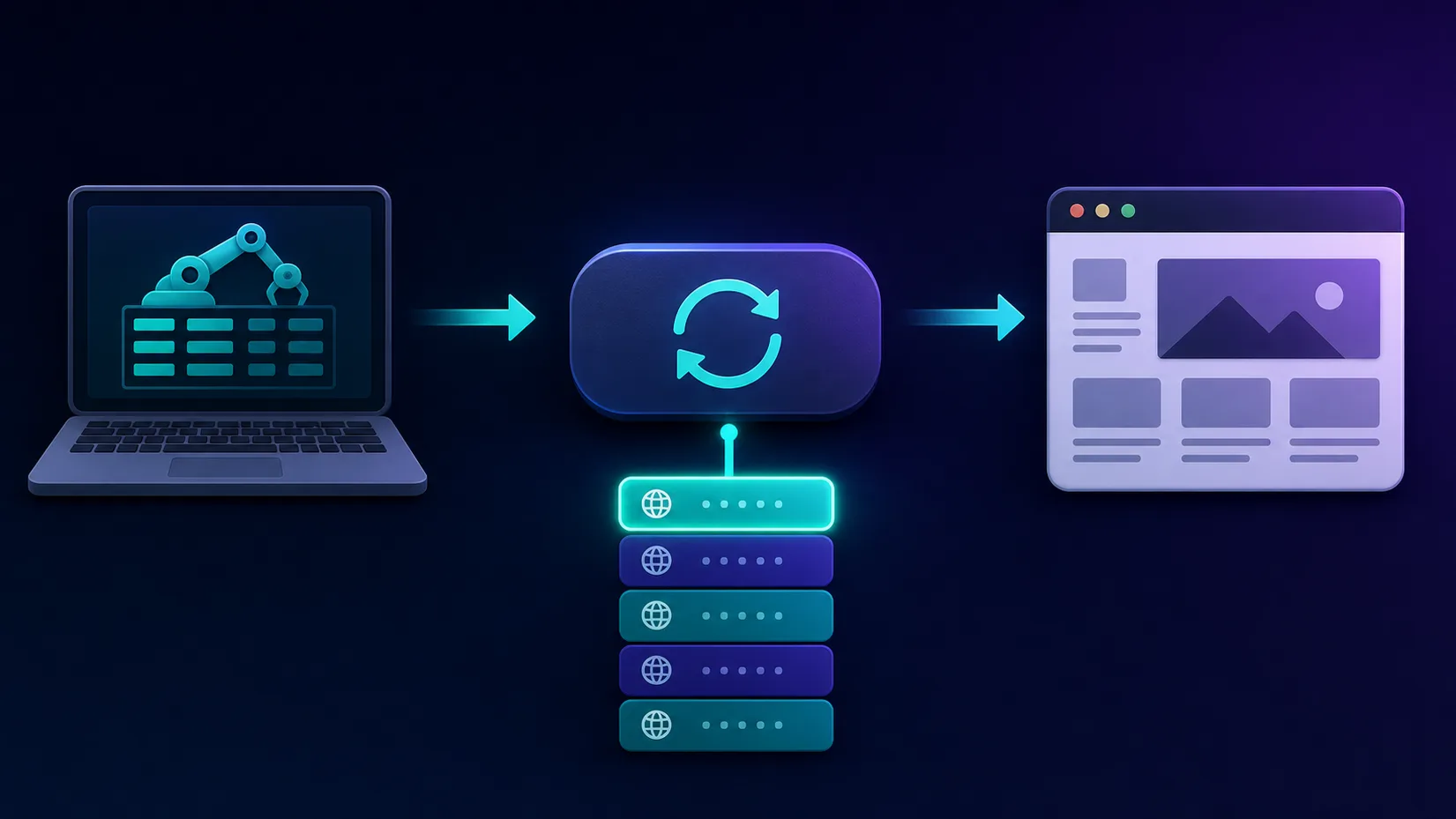
Instead of routing every request through one fixed address, a rotating proxy sits between your scraper and the target site and assigns a fresh IP from a managed pool. You connect to a single endpoint; the provider handles the cycling behind it.
There are two rotation models, and the right one depends on your task:
- Per-request rotation: every request gets a new IP. Ideal for high-volume, stateless jobs like SERP scraping or crawling independent product pages.
- Sticky sessions: the same IP is held for a set window (typically 1–30 minutes). Essential when a task spans multiple steps that must look like one user — logins, multi-page checkouts, paginated sessions.
Pick the right network: residential, ISP, datacenter, or mobile
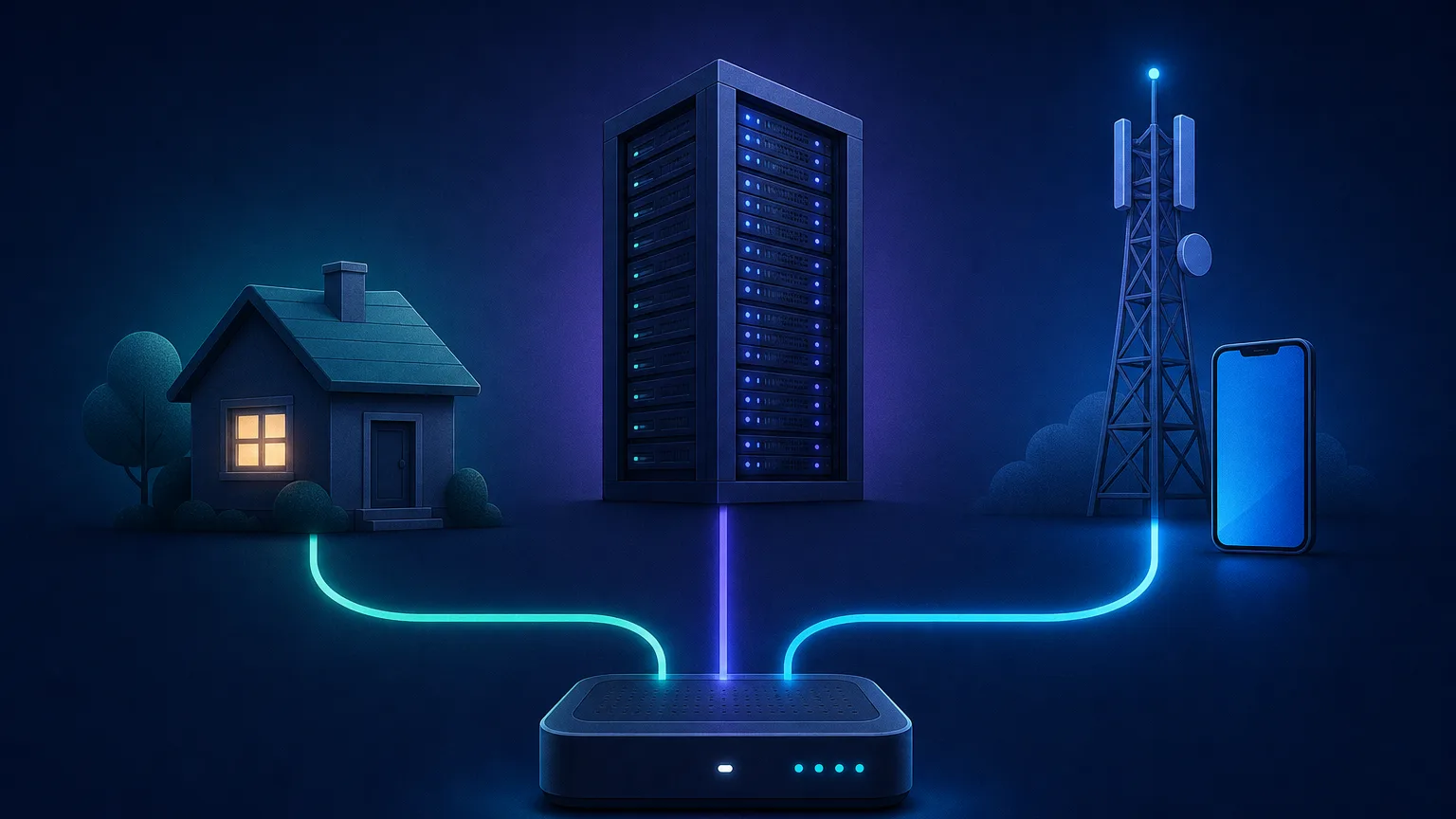
"Rotating" describes the behavior; the network type describes where the IPs come from — and that determines how trusted they look and how much they cost.
| Type | Trust level | Speed | Best for |
|---|---|---|---|
| Residential | High — real ISP-assigned home IPs | Moderate | SERP tracking, protected e-commerce, geo-accurate data |
| ISP (static residential) | High, with datacenter speed | Fast | Long sticky sessions that still need a residential footprint |
| Datacenter | Lower — easily fingerprinted | Very fast | High-volume scraping of sites with weak defenses |
| Mobile | Highest — shared carrier IPs | Variable | The hardest targets (social platforms, app data) |
Rule of thumb
Start with rotating residential for SEO and protected targets; reach for datacenter only when the target is easy and you need raw throughput; use mobile only for the toughest platforms, where its premium price is justified.
What separates the best rotating proxies
Pool size gets the marketing headlines, but these are the criteria that decide whether a network performs on real jobs:
- Pool size and freshness: millions of IPs only help if they are live and not already burned on your target.
- Geo-targeting granularity: country is table stakes; city- and ASN-level targeting matters for local SEO and regional pricing.
- Rotation control: can you choose per-request vs sticky, and set session length?
- Success rate on your targets: the only metric that counts. Always trial against the sites you actually scrape.
- Pricing model: per-GB (most common for residential) rewards efficient scraping; per-IP or unlimited-bandwidth suits heavy datacenter use.
- Compliance & sourcing: ethically sourced, consent-based IP pools reduce legal and reliability risk.
The best rotating proxies for SEO and data collection in 2026
We weighted each provider on the criteria above — pool quality and IP cleanliness, geo-targeting depth, rotation control, real-world success rate on protected targets, and value for money. No single provider wins every category, so each pick below is framed by the job it does best; the card under each links to our full review with live pricing and any current coupon.
Bright Data — best for enterprise scale and tooling
The industry's largest commercial network and its most feature-complete. You get city- and ASN-level targeting, a mature stack of scraping tools (Web Unlocker, Scraping Browser, a dedicated SERP API), and granular control over rotation and sessions. The trade-off is complexity and cost: there is a real learning curve, a KYC/compliance review for sensitive targets, and per-GB rates that add up fast. Best for large teams running mission-critical data pipelines who can use the tooling.
Bright Data
Bright Data remains the most complete data-collection platform money can buy. No competitor matches its combination of network scale, targeting granularity, and compliance tooling — and for enterprise teams whose revenue depends on reliable data, that completeness justifies the premium. The trade-offs are real: it is one of the priciest providers per gigabyte, the interface overwhelms newcomers, and KYC verification adds friction before you can route a single request. Smaller projects will get better value from Decodo or IPRoyal. But if you need city-level residential targeting at scale, a managed unblocker for the hardest targets, and audit-ready compliance, Bright Data is the default — and our highest-rated proxy provider overall.
Oxylabs — best for high-volume SERP and enterprise data
A direct peer to Bright Data with an excellent, well-maintained residential pool and a polished SERP API and Web Scraper API that return parsed results, not just raw HTML. Strong SLAs and dedicated account support make it a natural home for serious SEO and market-intelligence work. Like Bright Data it is priced and packaged for enterprise, so it is overkill for small one-off scrapes.

Oxylabs
Oxylabs is the enterprise provider that gets the fundamentals right. The network is huge and well-maintained, the scraper APIs are genuinely best-in-class, and the documentation and SDKs make integration faster than almost any competitor. What sets it apart from Bright Data is service: dedicated account managers, responsive support, and cleaner tooling mean less time fighting the platform and more time shipping. The cost is higher entry pricing, and the deepest discounts favor high-volume commitments. For serious commercial data operations that can justify the spend, Oxylabs is a top-two choice and frequently the one teams stay with long-term.
Decodo (formerly Smartproxy) — best balance of power and usability
The strongest all-rounder. Decodo pairs a large, reliable residential pool with a genuinely friendly dashboard, clear documentation, and pay-as-you-go pricing that starts well below the enterprise tier. You get per-request and sticky sessions, country/city targeting, and a generous trial. The pool and tooling are a step below the two giants at the very top end, but for the vast majority of SEO and scraping jobs it is the easiest "just works" choice.

Decodo
Decodo offers the best price-to-performance ratio in the industry. It delivers roughly 90% of what the enterprise leaders provide — high success rates, a large clean pool, sticky sessions, an unblocker — at a fraction of their cost. The dashboard is the friendliest of any major provider, the 14-day money-back guarantee removes the risk of trying it, and support actually responds. The main gaps are enterprise-grade compliance tooling and the very deepest targeting, neither of which most teams need. For startups, solo developers, and any team that wants professional results without enterprise pricing, Decodo is our top value pick and an easy recommendation.
SOAX — best for precise geo-targeting
SOAX's edge is location precision: clean, ethically sourced residential and mobile pools with fine-grained country, region, city, and ASN filtering, plus flexible rotation and session length. That makes it a fit for local-SEO rank tracking and region-specific price collection where a country-level proxy is too blunt. Per-GB pricing sits in the mid-to-premium band, so it rewards targeted jobs over indiscriminate bulk crawling.

SOAX
SOAX is the targeting specialist. City- and ISP-level selection on every plan — not locked behind premium tiers — is genuinely rare, and the continuously cleaned pool keeps success rates high where it matters. It is not the fastest network, the interface could use a refresh, and SOCKS5 coverage is uneven. Those are real but minor gripes against a provider that nails the fundamentals of precision and reliability. For ad verification, localized market research, and social-media work that depends on appearing in an exact location, SOAX is one of the best mid-market options available.
IPRoyal — best value for residential
The value pick. IPRoyal's "Royal Residential" proxies are competitively priced per GB, sold pay-as-you-go with no aggressive monthly minimums, and the traffic you buy doesn't expire on a tight clock — ideal for budget-conscious or intermittent scraping. IP sourcing is transparent and consent-based. You give up some of the advanced APIs and the sheer pool scale of the enterprise names, but for straightforward rotating-residential needs the price-to-performance is hard to beat.

IPRoyal
IPRoyal is the best pure pay-as-you-go deal in proxies. Non-expiring traffic is a genuinely customer-friendly policy that no major rival matches — buy what you need, use it whenever, lose nothing. The pool is smaller than the premium networks and success rates can soften on the most heavily defended targets, so high-volume enterprise scraping is not its strength. The dashboard is also fairly basic. For intermittent scraping, account work, and sneaker copping on a predictable budget, IPRoyal is an easy recommendation and one of the best value picks for occasional users.
Webshare — best entry point for datacenter rotation
The easiest on-ramp. Webshare offers a free tier and very cheap, self-serve rotating datacenter proxies with a simple API — perfect for learning, prototyping, and high-throughput scraping of low-defense sites. Just remember datacenter IPs are easily fingerprinted, so they struggle on Google SERPs and well-protected e-commerce; its residential offering is newer and smaller than the specialists above.

Webshare
Webshare is the developer's self-service favorite. Instant activation, a free tier that is actually free, and the cheapest fast datacenter proxies in the market make it the easiest provider to just start using. The custom plan builder — pick your IP count, bandwidth, and threads — is a genuinely good model that lets you avoid paying for capacity you do not need. The residential pool is newer and less battle-tested than specialists, and support is thin on the lower tiers. For datacenter proxies, API-driven workflows, and anyone who wants to try before paying, Webshare is one of the best-value options around.
Best practices to scrape without getting blocked
- Throttle politely: rotation is not a license to hammer a site. Add randomized delays and respect reasonable rate limits.
- Match IP geography to intent: scrape Google UK from UK IPs; mismatched geo skews SERP and pricing data.
- Pair rotation with good fingerprints: rotate user agents and headers too, or a fresh IP with a stale fingerprint still stands out.
- Use sticky sessions for stateful flows: never rotate mid-login or mid-checkout.
- Monitor success rates: a rising block rate is your early warning to slow down or switch network type.
Stay on the right side of the line
Collect public data only, honor robots and terms where they apply, never gather personal data without a lawful basis, and choose providers with consent-based IP sourcing.
How to choose, in one line
For most SEO and data-collection work, start with a rotating residential plan from a balanced provider like Decodo or IPRoyal, trial it against your real targets, and scale up to Bright Data or Oxylabs when volume and tooling demands grow — reserving datacenter and mobile for the specific jobs that need them. Here are the two value picks side by side:
Decodo
Proxy
IPRoyal
Proxy
Editor score
User rating
Starting price
Founded
Frequently asked questions
A rotating proxy automatically assigns a different IP address from a managed pool to your requests, so traffic appears to come from many different users instead of one. This prevents rate limits and IP bans during large-scale scraping or SEO research.
Residential proxies are better for SEO because search engines trust real ISP-assigned IPs and are far less likely to block them or serve skewed results. Datacenter proxies are faster and cheaper but easily detected, so they suit only low-defense targets.
Use per-request rotation for high-volume, stateless jobs like SERP and product-page scraping. Use sticky sessions, which hold one IP for several minutes, for multi-step flows such as logins or checkouts that must look like a single user.
Scraping publicly available data with proxies is generally legal in most jurisdictions, but you should respect site terms and robots rules, avoid collecting personal data without a lawful basis, and choose providers with ethically sourced, consent-based IP pools.
Rotating residential proxies are usually billed per gigabyte, so efficient scraping keeps costs down, while datacenter proxies are often priced per IP or with unlimited bandwidth. Entry plans are affordable for small projects, scaling to enterprise tiers for high volume.